
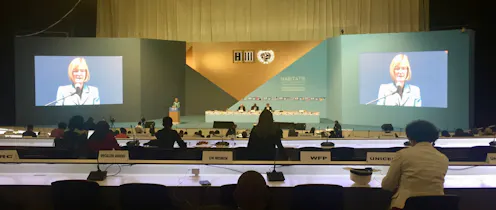
Australia and other United Nations member states signed up to the New Urban Agenda more than a year ago. But how well is health being integrated into sustainable urban development?
- Associate Professor in Construction and Environmental Performance, The University of Melbourne

With an ever-increasing cost to extract dwindling raw materials, it’s time to look at cities as urban mines. We’re developing the tools to do that.

Bigger houses take more energy to build them, and use more energy.

Informal settlements are often undocumented or hidden on official maps, but they house about a billion people worldwide. Their existence demands a more sophisticated approach to urban development.

Our cities need to become much more efficient not just to conserve precious resources but to improve the economy, wellbeing and resilience to environmental change and disasters.

Travelling to work can require as much water as you use at home.

Nation states, UN bodies and civil society gathered in Quito for Habitat III to adopt the New Urban Agenda. So how will the UN’s new global urban roadmap transform our cities over the next 20 years?

More than 25,000 delegates will meet in Quito in October to set out a New Urban Agenda for the UN, to be implemented over the next 20 years. But Australia is yet to play a major role in the process.

The political fallout over the ill-fated Home Insulation Program continues, with former prime ministers Kevin Rudd and Julia Gillard now having been summoned to appear before the Abbott government’s royal…

Energy efficient houses are often thought to be a promising way to reduce our environmental footprint by using less energy and producing fewer greenhouse gas emissions. Yet, surprisingly, if you consider…
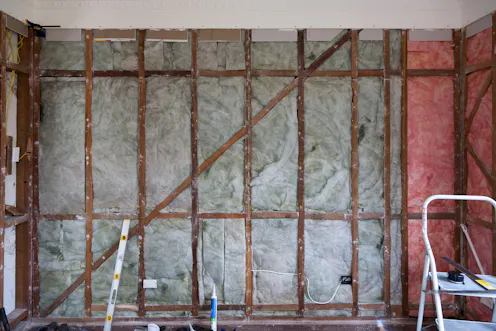
The words “pink batts scheme” are rarely heard without “debacle”. But a recent Insulation Council of Australia report by Energy Efficient Strategies (EES) has described the government’s home insulation…
Contact André for
- General
- Media request
- Speaking request
- Consulting / Advising
- Research collaboration
- Research supervision
- Location: Australia
- Website
- X (formerly Twitter): @astephan_bldgs
- Article Feed
- ORCID
- Joined
