

Human beings have always turned to oracles and divination for answers to difficult questions. Today, AI might be fulfilling that role.
- Professor of Statistics and Professor of EECS, University of Michigan

Face à la baisse des taux de réponse et à l’explosion des coûts des enquêtes, les « répondants synthétiques » apparaissent comme une solution séduisante. Mais ces systèmes ne mesurent pas l’opinion publique : ils en produisent une simulation fondée sur les données dont ils disposent.

AI models can simulate the answers thousands of people would provide to a survey, but the results aren’t a reliable measure of what real people would actually say.
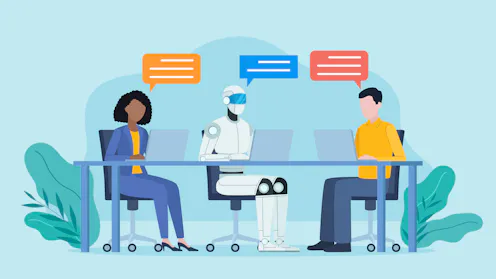
There are several methods for detecting whether a piece of text was written by AI. They all have limitations – and probably always will.
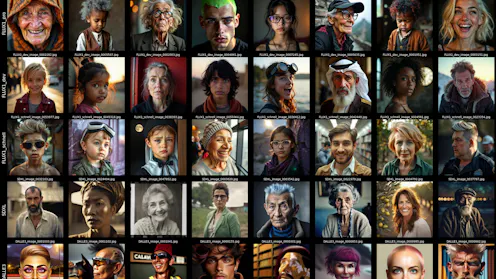
To overcome two challenges in training AI – scarce or hard-to-get data and data privacy – researchers have come up with a counterintuitive technique: fake it.

Computing pioneer Alan Turing suggested training machines with rewards and punishments. Two computer scientists put the idea into practice in the 1980s and set the stage for the likes of ChatGPT.

To deal with microplastic pollution, it helps agencies to know what kind of plastic they’ve got on their hands.

A machine learning expert breaks down where the money goes in building big AIs, and how DeepSeek found ways to do it far more cheaply.

The Nobel Prize shows that the field of artificial neural networks – and the deep learning AI revolution the technology unleashed – owe as much to physics as biology and computer science.

AIs that can see and hear have captured the public imagination. A machine learning expert explains why the sense of smell has lagged behind – and why that could change.
Contact Ambuj for
- General
- Media request
- Speaking request
- Consulting / Advising
- Research collaboration
- Research supervision
- Location: Ann Arbor, Michigan, U.S.
- Website
- LinkedIn: ambuj-tewari-454704136
- Article Feed
- ORCID
- Joined
