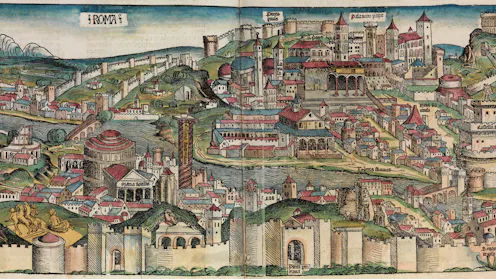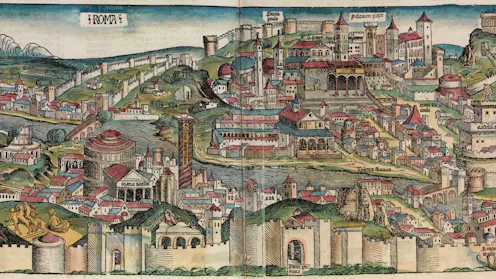
The Eternal City underwent a period of renewal spanning the late 14th century to the late 16th century, following a period of economic stagnation. Today, 84% of the palaces built during this period are still standing. Wikimediacommons

Palaces and the Pope: the fascinating story of how Renaissance Rome was rebuilt

Uncertainty over whether the seat of the papacy would remain in the city explains why Rome was a late developer when it came to palace-building, lagging behind Florence and Venice.
La « Ville éternelle » s’est fait une nouvelle beauté de la fin du XIVᵉ siècle à la fin du XVIᵉ siècle, après une période de stagnation économique. Aujourd’hui, 84 % des palais construits durant cette période sont encore debout. Wikimediacommons

Durant la Renaissance, le retour des papes à Rome créa une ère de construction de palais sans précédent pour la « Ville éternelle »

Près de 31 % des palais de Rome furent construits entre 1378 et 1599, après un siècle de stagnation économique. Comment expliquer un tel phénomène urbanistique ?

Contact Alyssa for

  • General
  • Media request
  • Speaking request
  • Consulting / Advising
  • Research collaboration
  • Research supervision