

If Spider-Man were real, he could help scientists revolutionize healthcare. Since he’s not, researchers develop creative ways to produce spider silk to study.
- Professor of Pharmaceutical Sciences, University of Iowa

Beyond deprioritizing scientific merit, the Trump administration’s proposal also restricts researchers’ ability to share their findings and collaborate with each other.

You need only trace amounts of selenium to survive. Falling outside of this narrow therapeutic window can have significant health consequences.

It costs money to maintain the various facilities, utilities and personnel that allow scientists to conduct research in the first place. Without federal support, institutions are left scrambling.

A member of a grant review panel explains the ins and outs of applying for research funding – and the consequences of when the process suddenly stops.

While scientists still aren’t sure how phosphine wreaks so much havoc on the body, some are developing medications that can help mitigate the harm it causes.
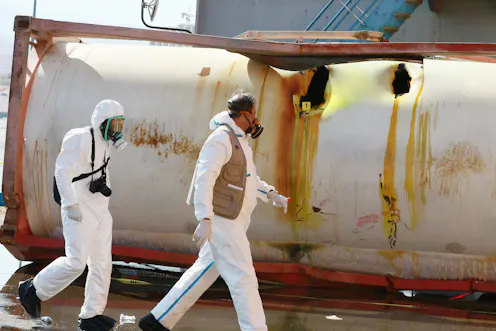
Chlorine is a widely used industrial chemical that’s frequently a factor in toxic accidents and workplace injuries. A pharmaceutical expert explains why it’s so hazardous.
Contact Aliasger for
- Media request
- Speaking request
- Consulting / Advising
- Research collaboration
- Research supervision
- Location: Iowa City, Iowa, U.S.
- Website
- X (formerly Twitter): @AliasgerSalem
- Article Feed
- ORCID
- Joined
