

An extinct koala species has been discovered in Western Australia. Climate change 28,000 years ago erased its habitat.
Western Australian Museum

The Western Australian Museum’s long and fascinating history reflects and documents the State’s rich and diverse natural and cultural heritage.
Established in 1891 in the old Perth gaol, it was known as the Geological Museum and its collections were geological, ethnological and biological. In 1897 it officially became the Western Australian Museum and Art Gallery.
During 1959 the botanical collection was transferred to the new Herbarium and the Museum and the Art Gallery became separate institutions. The Museum focussed its collecting and research interests in the areas of natural sciences, anthropology, archaeology and the State’s history. Over the 1960s and 1970s it also began to work in the emerging areas of historic shipwrecks and Aboriginal site management.
Today the Western Australian Museum comprises six public sites and a collection and research centre and houses more than 4.5 million objects from rare fossils to the iconic racing yacht Australia II.
The Museum also manages 200 shipwreck sites of the 1500 known to be located off the WA coast and manages eight Aboriginal land reserves.
Links
Articles
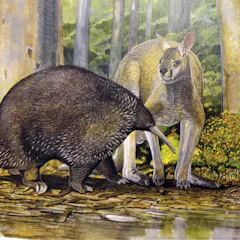
Australia doesn’t have any ‘kill sites’. In fact, there’s no hard evidence people hunted the megafauna.
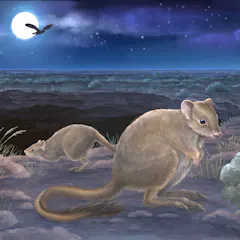
A case of mistaken identity has hampered efforts to save the woylie, one of Australia’s most endangered marsupials.
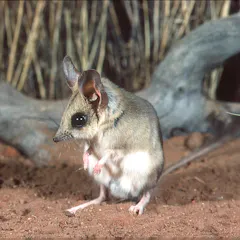
Scientists have discovered that the kultarr – one of Australia’s most elusive marsupials – is actually three different species.
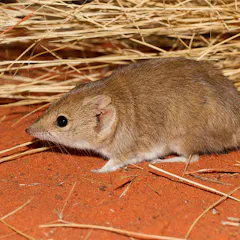
We found three previously unknown species of mulgaras hiding in museum collections – but all three have been driven to extinction since European colonisation of Australia.

After combing through museum collections, our team of researchers found a whopping 125 fluorescent mammal species – from polar bears and dolphins, to leopards, zebras and wombats.
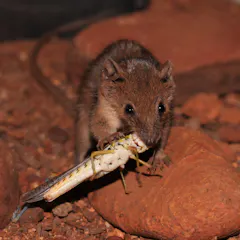
The tiny, mouse-like planigales are some of the smallest marsupials around – and there are two more species of them than anybody realised.
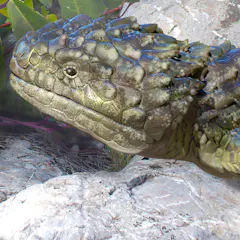
Researchers have found an armoured fossil skink 1,000 times heavier than the ones in your garden. Its closest living relative is the shingleback lizard.
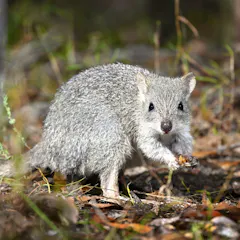
A new list of 404 Australian mammal species is a crucial conservation step in the face of the ongoing extinction crisis.
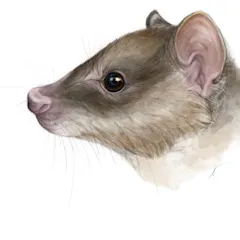
Two newly discovered species of quokka-sized kangaroos, which lived 18 million years ago in the Queensland rainforest, show evolution in the act of giving kangaroos a taste for leaves.
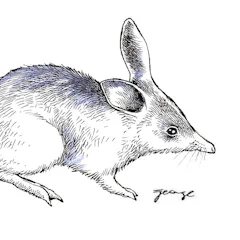
Very few bilby and bandicoot fossils have ever been found. Four new discoveries help fill in the picture of how these elusive animals evolved.
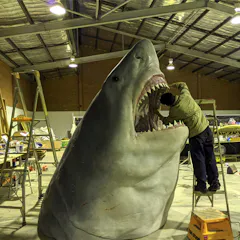
Two museum exhibits, one in the Smithsonian and one in Australia, have opened public displays featuring the spectacular meg. But while both models are mega impressive, they’re not the same. Why?

Etchings over much earlier Aboriginal engravings show foreign whalers made contact with Australia’s remote northwest long before colonial settlement of the area.
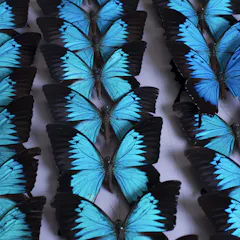
Australian taxonomy resources number around 70 million specimens, valued at over AU$5 billion. That’s big science.
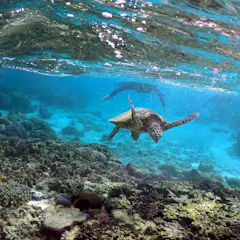
A new study provides insight into coral-dwelling microbial communities and how they react to pollution, overfishing, and climate change. What does it mean for the Great Barrier Reef?
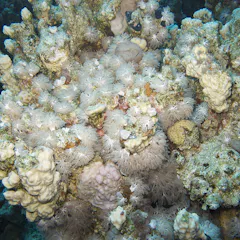
The world’s coral reefs will quickly dissolve if greenhouse gas emissions continue on current trends, a new simulation has found. Greenhouse gases cause the ocean to become warmer and more acidic, which…
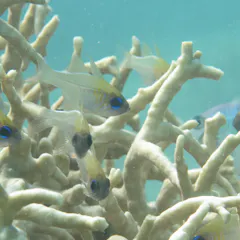
The fire coral (Millepora boschmai) is one of the rarest species of coral in the world. It is known only from a small number of locations in the Pacific Ocean, Panama and Indonesia, and it appears this…
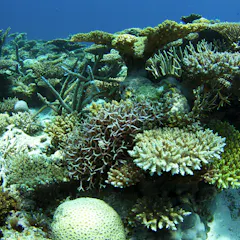
Earthquakes, volcanoes and movement of the Earth’s tectonic plates influence coral diversity patterns more than short-term environmental changes, a new study by Australian researchers has found. The study…
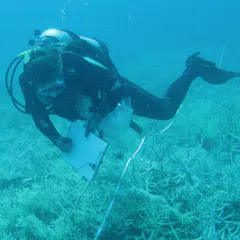
The health and productivity of coral reefs is rapidly declining. Hard corals are the principal builders of coral reef ecosystems; however they are struggling to survive due to pollution, catchment clearing…
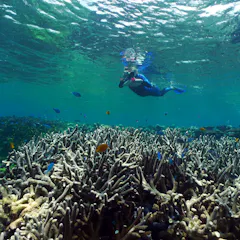
The Great Barrier Reef has lost half its coral cover in the last 27 years, and it could halve again by 2022 say researchers from the Australian Institute of Marine Science. A study published today in the…
Authors
-

Collections Manager (Palaeontology), Western Australian Museum
-
Project Coordinator (Biodiversity), Western Australian Museum
-
Curator of Mammals, Western Australian Museum; Curtin University
-
Research associate, Western Australian Museum
-
Head of Department, Earth & Planetary Sciences, Western Australian Museum
-
Curator of Maritime Archaeology, Western Australian Museum