

Different types of thoughts are meaningfully tied to our emotional well-being. By understanding these connections, we can identify new ways to support and improve our mental health.
University of Minnesota

The University of Minnesota is a research-intensive institution based in the US city of Minneapolis-St Paul. It is a member institution of the American Association of Universities.
The university is broadly organized into 19 colleges and schools, and it has sister campuses in Crookston, Duluth, Morris, and Rochester. The University’s enrollment has reached 64,964 but a 16-to-1 student-to-faculty ratio.
Contributing to the University’s academic prestige are 20 Nobel Laureates, 86 Guggenheim Fellows, and 2 MacArthur “Geniuses” currently on campus.
The world’s largest collections of Sherlock Holmes literature, artifacts, and memorabilia are housed in the University’s Andersen Library.
Minnesota’s athletic teams are known collectively as the Minnesota Golden Gophers and compete in the NCAA’s Division I as members of the Big Ten Conference.
Links
Articles
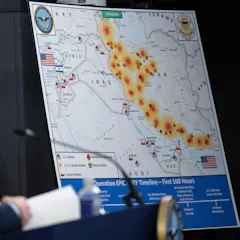
The speed and scale of war are being enhanced by AI systems – but they also bring new risks for civilians and military combatants.
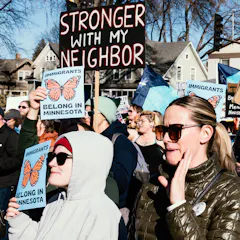
Minnesotans from all walks of life, including suburban moms, veterans and protest novices, have bucked their ‘nice’ stereotype to speak out.
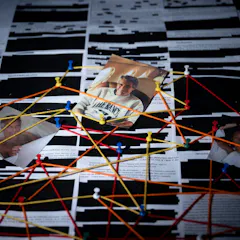
A small portion of university research funding comes from individual donors. Most universities have policies in place to protect against wrongdoing.
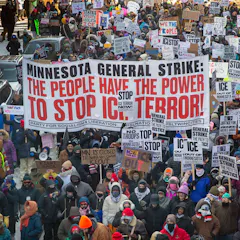
Daniel Cueto-Villalobos speaks to The Conversation Weekly podcast about the origins of people in Minneapolis coming together to protect their neighbours.
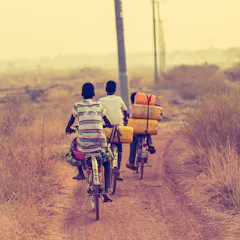
Even young children can make choices.

The impostor phenomenon shows up with allyship too, new research shows. When people wrongly feel like they don’t have the skills to support their colleagues, the result can be a vicious cycle.

The Trump administration and members of Congress propose cutting environmental reviews and public involvement to boost logging. But data show reviews aren’t the problem.
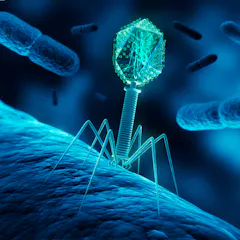
Quel pourrait être demain l’impact sur la santé humaine et sur l’environnement de la vie miroir faite de bactéries synthétiques, versions chimiquement inversées des cellules naturelles ?

Synthetic cells that look just like natural cells but are chemically reversed could outcompete other living organisms − with dire consequences for human health and the environment.
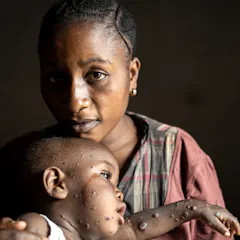
Virologist Wolfgang Preiser and paediatrician Ndia Sam-Agudu talk to The Conversation Weekly podcast about the latest mpox epidemic and how the disease has been ignored in Africa.
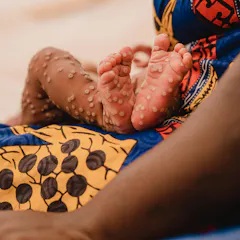
Los niños corren mayor peligro de contraer infecciones como el mpox porque su sistema inmunitario aún se está desarrollando. Especialmente en África, con un sistema de vacunación deficiente. ¿Cómo deberíamos responder?

Children are in danger of infections such as mpox because their immune systems are still developing.
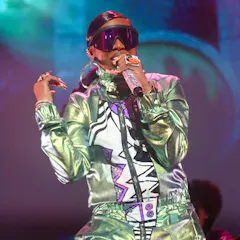
The six-time platinum-selling artist invites fans into an imagined future that celebrates Blackness and queerness.
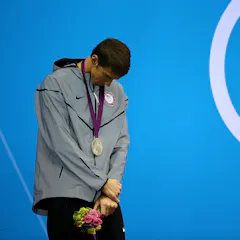
Researchers used AI to analyze photos of Olympic medalists and found that bronze medalists appeared happier than silver medalists. A cognitive process called ‘counterfactual thinking’ may explain why.

The education technology sector constantly offers new products to solve old problems. Will anything be different this time?

Climate change is often seen as solely a technical problem. This is a misguided belief. Understanding how to build a better world begins, and ends, with understanding the societies which inhabit it.

Not much is known about the predator fly Laphria saffrana. New research identified how they count the wingbeats of their favored prey, letting it slip out of focus before adjusting their heads.

Marriage on its own won’t do away with child poverty, and in fact it can create even more instability for low-income families.

A new study traces how Russia’s empire building, especially in Ukraine, resulted in long-term economic damage and fomented rebellion for over a century.
Authors
-

Assistant Professor, Ethnomusicology, University of Minnesota
-
Senior Research Scientist and Project Manager, Institute of Social Research and Data Innovation, University of Minnesota
-
Vice President for Research, University of Minnesota
-
Associate Professor, Department of Educational Psychology, University of Minnesota
-
Ph.D. Candidate in Sociology, University of Minnesota
-
Distinguished University Teaching Professor, Hubert H. Humphrey School of Public Affairs, University of Minnesota
-
Associate Professor American Studies and Asian American Studies, University of Minnesota
-
Assistant Professor of urban planning, University of Minnesota
-
Associate Professor of Natural Resource & Environmental Policy, University of Minnesota
-
Professor of learning technologies, University of Minnesota
-
Professor of Political Science and Law, Department of Political Science, University of Minnesota
-
Adjunct Professor, Public Policy, University of Minnesota
-
Assistant Professor of Genetics, Cell Biology and Development, University of Minnesota
-
Professor, Pediatric Infectious Diseases and Director, Global Pediatrics Program global health, University of Minnesota
-
Associate Professor of Marketing, University of Minnesota