

Hybrid warfare, including cyberattacks, poses a big threat, not only to Russia’s neighbours, but to the whole of Europe.
University of Liverpool

Founded in 1881 as the original ‘red brick’, the University of Liverpool is one of the UK’s leading research-intensive higher education institutions with an annual turnover of £597.6 million, including an annual research income of £146 million. A member of the prestigious Russell Group of the UK’s leading research universities, Liverpool is consistently ranked in the top 200 universities worldwide.
The University has 31,200 students, 7,900 of whom are international students, and a thriving community of more than 270,000 alumni in 187 countries. Its global focus has led to the establishment of a university in Suzhou near Shanghai, as well as partnerships with research institutes, universities, industry, governments and foundations all over the world.
91% of University of Liverpool research was rated world leading or internationally excellent, nine units are in the top 10 for outstanding research impact, and the University is ranked 19th in the UK for research power (REF2021). Liverpool is ranked among the world’s top 100 in the Times Higher Education Impact Rankings League, and the top institution for our partnership work in support of the UN Sustainable Development Goals (SDGs).
At the forefront of innovation and discovery, researchers at the University of Liverpool are advancing knowledge to improve lives. In 2020/21 there was £146 million total cost of research projects awarded.
The University of Liverpool has a strong heritage of public and global health research and knowledge leadership, enabling Liverpool to respond to Covid-19 with agility and at scale, delivering significant impact.
Associated with nine Nobel Laureates, Liverpool graduates have become pioneers across a variety of fields. The expansive alumni community includes the first female Director General of MI5; the first female judge to sit at the Old Bailey; five Nobel Prize winners, the first Chief Executive of Hong Kong and the founder of the Stirling prize for Architecture.
Links
Articles

Long-acting treatments could reduce missed doses and ease the burden of taking medicines every day, while giving patients more choice.

Cost keeps care out of reach for many people in England. Andy Burnham’s National Care Service could learn from how Germany, Norway and Sweden pay for it.

Her lyrics prove that Swift can be associated with continuity just as much as change.

Happy Days serves as a reminder to look after our planet while we still can.

Gossiping involves being able to read social codes and pick up a host of other signals.

New study suggests ancient campfires may have encouraged our ancestors to develop language.

Spaceflight can reproduce some changes associated with later life within weeks, offering clues about muscle loss, frailty and recovery.

Small challenges can activate cells’ protective systems. Scientists are exploring whether food compounds and medicines can make use of this effect.

Women in street sex work described pain, stigma and barriers to dental care.

Dahlia de la Cerda blends the myth of Greek tragedy with modern Mexican culture.

Pressure is mounting on Andy Burnham to address small boat crossings into the UK.

A study of 701 households in Nairobi found that rising food and fuel prices after Russia’s invasion of Ukraine forced many families to eat and cook less.

People reached the Mediterranean island at least 8,500 years ago.

New research found 574 people were diagnosed with TB only after death, exposing delays in recognising a preventable and treatable disease.

Many autocrats rig elections to stay in power. Nicaragua’s longtime president has gone one step further.

The magic flower is used by the nymph Calypso to purge Odysseus’ trauma.

With his first speech, the new prime minister tried to lay down a marker as a different kind of leader.
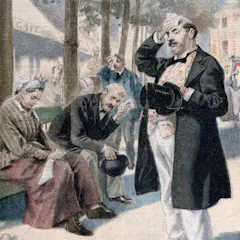
Bien avant que le changement climatique ne place les canicules au cœur des politiques publiques, les habitants de Londres, Paris et New York avaient déjà appris à composer avec la chaleur.

Media coverage of political institutions can undermine the legitimacy they rely on.
Authors
-

Professor, Department of Politics, University of Liverpool
-
Postdoctoral Research Associate, Communication and Media, University of Liverpool
-
Professor of Musculoskeletal and Ageing Science, University of Liverpool
-
Postdoctoral Research Associate in Chemistry, University of Liverpool
-
Senior Research Fellow in the Institute of Population Health & NIHR ARC North West Coast Social Care Theme Lead, University of Liverpool
-
PhD candidate, Avant-Garde Ireland, University of Liverpool
-
Senior Lecturer Sociology, Social Policy and Criminology, Part of School of Law and Social Justice, Faculty of Humanities and Social Sciences, University of Liverpool
-
Lecturer in Communication and Media, University of Liverpool
-
Professor of Pharmacology & Toxicology / MRC Senior Fellow Pharmacology & Therapeutics, University of Liverpool
-
Clinical Lecturer Dental NIHR, School of Dentistry, University of Liverpool
-
Postdoctoral Research Associate, Literature, University of Liverpool
-
Professor in Latin American Studies, University of Liverpool
-
Postdoctoral Research Associate in Musculoskeletal and Ageing Science, Faculty of Health and Life Sciences, University of Liverpool
-
Professor of Chemistry and co-Director of the Centre of Excellence for Long-acting Therapeutics, University of Liverpool
-
PhD in Institute of Irish Studies, University of Liverpool