
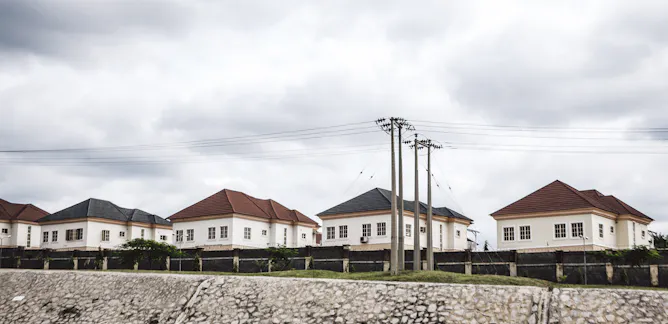
Nigeria’s housing policies have failed to meet the needs of its federal capital residents.
University of Lagos

Founded in 1962, the University of Lagos has, for over five decades, provided qualitative and research-oriented education to Nigerians and all those who have entered its domain in search of knowledge. At its inception, the University of Lagos was empowered to produce a professional workforce that would steer the political, social and economic development of a newly independent country. Over the last fifty years the University has pursued this mission with vigour, excellence and panache. The University has built a legacy of academic excellence and is now acclaimed publicly as “the University of First Choice and the Nation’s Pride”.
Links
Articles

Would lowering the voting age to 16 enhance young people’s participation in the political processes that affect their lives?
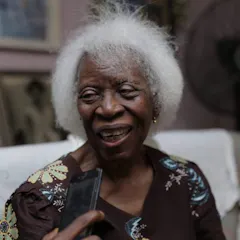
Mabel Segun, author of children’s books and Nigeria’s first female table tennis champion, died on 6 March 2025 aged 95.
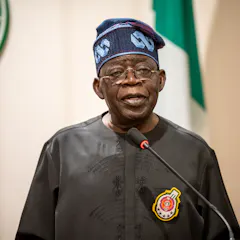
The Nigerian constitution grants the president the powers to declare a state of emergency but silent on suspension of a state governor.
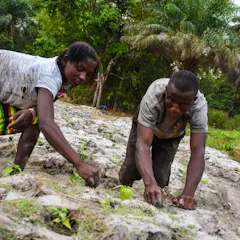
Women in the Grafton community of Sierra Leone are often left with restricted land ownership rights.

Unfair criminalisation of itinerant traders has been used to justify curbing street hawking in the traffic in Lagos.

It is important for intending migrants to be aware of the realities in the destination countries to avoid post-migration disappointments.
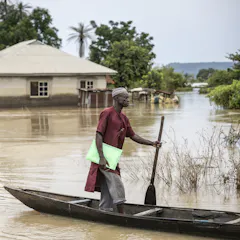
Nigeria’s representative at COP29 must realise that an unimpressive outing will leave citizens more at the mercy of climate change impacts.
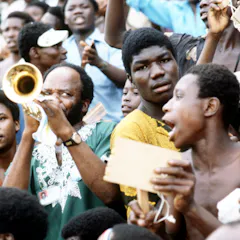
Football is about more than just sport. It also reflects political tensions in society.
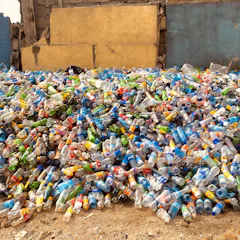
Nigeria is one of the top three plastic pollution hotspots globally.
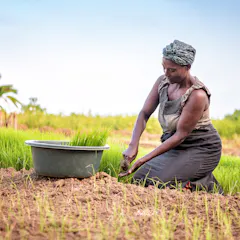
Despite being crucial to Sierra Leone’s agricultural sector, women lack access to land. The bora custom is making things worse.

A recent Supreme Court judgment in Nigeria on local government will promote democracy and enhance grassroots development.
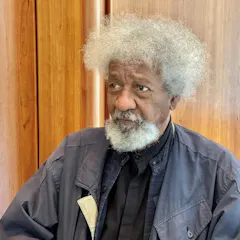
La remise en question l'oppression, la défense la justice et le changement social sont les caractéristiques de la vie de Soyinka.

Challenging oppression, advocating for justice, and inspiring social change are the hallmarks of Soyinka’s life.

The law prohibiting abuse of the naira violates Nigerian cultural and traditional practices.

Forest elephants are endangered in Nigeria. Habitat protection, community awareness campaigns, research and stronger regulations could save them from going extinct.
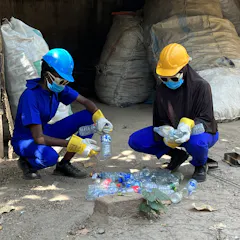
Banning single-use plastics in Nigeria is a step in the right direction. But its success will depend on provisions made for enforcement.
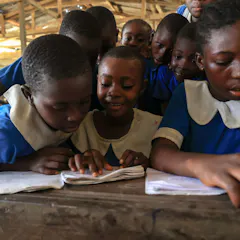
Education can spur peace and development. Here are five essential reads on the topic.
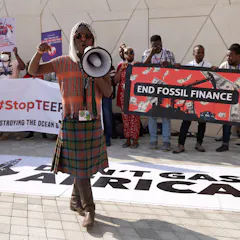
COP28 was Africa’s ‘most vocal COP ever’. African leaders’ assertiveness paid off with new climate finance deals being struck.

COP28 gives Nigeria another chance to fight for financing it needs to adapt to climate change.
Authors
-

Lecturer in African and African Diasporan Literature, University of Lagos
-
Associate professor, University of Lagos
-
Distinguished Professor of History and Strategic Studies, University of Lagos
-
Lecturer (Political Science), University of Lagos
-
PhD Candidate, University of Lagos
-
Professor of Genetics, Department of Cell Biology and Genetics, University of Lagos
-
Development historian and transdisciplinary scholar, University of Lagos
-
PhD Candidate, Sustainable Urbanisation, University of Lagos
-
Senior Lecturer, University of Lagos
-
Lecturer, Distance Learning Institute, University of Lagos
-
Professor of Environmental Physiology of Animals, University of Lagos
-
Lecturer, University of Lagos
-
Senior Lecturer, Ecotoxicology and Conservation Unit, Department of Zoology, Faculty of Science, University of Lagos
-
Lecturer in Sociology, University of Lagos, University of Lagos
-
Lecturer in Mass Communications, University of Lagos