

One Black Texas family’s Juneteenth memories show how food became a powerful expression of emancipation, self-determination and remembrance.
University of Illinois System

About the University of Illinois System The University of Illinois System is made up of people who want more. Our innovative, diverse, globally engaged citizens and leaders enrich our culture and society, create prosperity, and serve the public good. New breakthroughs from our universities foster economic growth and solve society’s biggest challenges. Combined, the three universities in Urbana-Champaign, Chicago, and Springfield bring resources, capabilities, and drive that are greater than the sum of their parts – it is altogether extraordinary.
We attract the nation’s most talented students with hundreds of undergraduate, graduate and professional programs, many of them ranked among the best in the United States. We are the state’s largest system of higher education, with more than 101,100 students. In addition to our three main campuses, the U of I System has regional campuses, the UI Health hospital and clinics, research facilities, and Extension offices throughout the state. The U of I System also leads the development of the Discovery Partners Institute, an interdisciplinary private-public research institute and hub of the Illinois Innovation Network.
Links
Articles

There is evidence of people who crossed gender boundaries even in ancient civilizations, though the terms naming them have evolved over time.

The term’s contradictory uses signal deeper worries about cultural fragmenting and algorithmic-induced flattening.
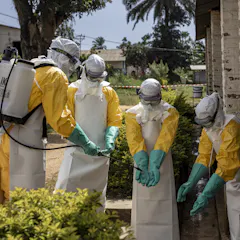
Geography may not provide meaningful protection once an outbreak is already underway.

A day of celebration for many, it is also a source of anxiety for those whose hopes of motherhood have been dashed by infertility, loss, and those who have chosen unconventional paths to parenthood.
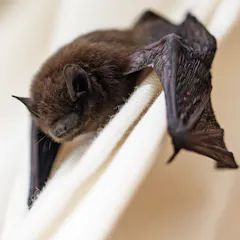
A bat biologist walks through the steps for persuading a bat to leave your home, and what to do when a whole family decides to roost in your attic.

Some over-the-counter and at-home remedies can help reduce eye irritation that causes rubbing. But if those don’t bring relief, it’s important to see an eye doctor.

What do US researchers make of all the Trump administration science-related policy changes? A survey of 280 academic scientists asked them.

To stop the spread of infectious diseases, governments need information and other resources that countries around the globe share through international organizations.

Few people probably know the female songwriters featured in this article, yet Motown relied heavily upon their contributions to cement its place in music history.
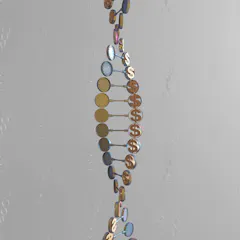
Epigenetic aging clocks allow scientists to study how populations age. They aren’t intended for individuals to make health decisions.
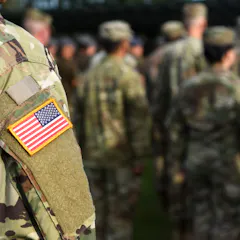
Pendant près de quatre-vingts ans, la vaccination contre la grippe allait de soi dans l’armée états-unienne. Sa remise en cause récente ne repose pas tant sur des arguments médicaux que sur une évolution politique autour de la notion de « liberté médicale ».
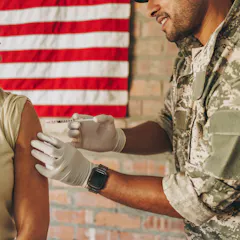
The US military helped create the first flu vaccine to keep service members in action – and the logic for requiring vaccination has not changed.
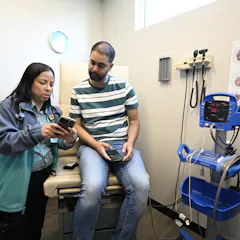
An increasing number of laws aim to roll back LGBTQ+ people’s ability to access health care, leading to cascading effects on their well-being.

The committee voted to exempt some oil and gas operations from the Endangered Species Act in the name of national security.

The judge’s decision is a win for public health, but the back-and-forth on vaccine policy may undermine the public’s trust in science.

As devices get smarter, families and communities bear a heavier burden of technology caregiving for older adults.

Nurses are leaving the profession faster than they’re being replaced – in part due to the emotional and physical toll they endure from disrespectful patients or their loved ones.

How various factions respond to the Trump administration’s threat to be the de facto ruler of the country could quickly inflame domestic tensions and lead to conflict.
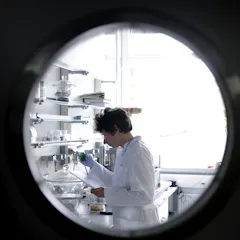
US science lost a great deal in 2025, including tens of billions of dollars of federal funding, entire research agencies and programs, and a generation of researchers.
Authors
-

Postdoctoral research associate, University of Illinois Urbana-Champaign
-
Professor and Department Head of Psychiatry, University of Illinois Chicago
-
Assistant Professor of Health and Kinesiology, University of Illinois Urbana-Champaign
-
Professor of Muscle Biology and Meat Science, University of Illinois Urbana-Champaign
-
Ph.D. candidate in Political Science, University of Illinois Urbana-Champaign; Universitas Gadjah Mada
-
Assistant Professor of Epidemiology and Biostatistics, University of Illinois Chicago
-
Assistant Professor of Health and Kinesiology, University of Illinois Urbana-Champaign
-
Associate Professor of Biology and Biomechanics, University of Illinois Urbana-Champaign
-
Associate Professor of Information Sciences, University of Illinois Urbana-Champaign
-
Associate Professor of Law, University of Illinois Chicago
-
Associate Clinical Professor of Medicine and Surgery, University of Illinois Chicago
-
Assistant Professor of Emergency Medicine, University of Illinois Chicago
-
Adjunct Lecturer in Communication, University of Illinois Chicago
-
Research assistant, University of Illinois Urbana-Champaign
-
Professor of Sport Management, University of Illinois Urbana-Champaign