

Publishing and having access to scientific articles is an expensive business for research institutions. Fortunately, there are content providers out there who deliver rigorous material that’s free of charge.
University of Bern

The University of Bern (German: Universität Bern, French: Université de Berne) is a university in the Swiss capital of Bern and was founded in 1834, although it can trace the roots of its predecessor institutions back to the 16th century. It is regulated and financed by the Canton of Bern. It is a comprehensive university offering a broad choice of courses and programs in eight faculties and some 150 institutes. With around 18,576 students, the University of Bern is the third largest university in Switzerland.
As a comprehensive university, Bern covers a wide range of classical university courses in some 39 bachelor, 71 master and 69 advanced study programs. The Physics Institute contributed to the first flight to the moon and still carries out experiments and provides apparatus for NASA and ESA space missions on a regular basis. In addition to the classical disciplines, the University of Bern has also established programmes in newer ones such as sports science and theatre studies. It is the only institution in Switzerland with a theatre studies course that enables students to major in dance in their master program. The University of Bern also offers the Master in Applied Economic Analysis (MAEA), which is the only university-level program in Switzerland with focus on applied economic analysis. The Graduate Schools for doctoral candidates offer further-reaching programmes that are closely linked to the university’s research priorities in the fields of climate science, health care and penal law and criminology.
Links
Articles

Publier et accéder à des articles scientifiques coûte très cher aux organismes de recherche. Découvrez des exemples concrets de publications qui allient gratuité, exigence et rigueur.

De nouveaux travaux portant sur l’analyse des données de naissance de 250 villes situées dans 13 pays permet de mieux cerner les effets des chaleurs extrêmes sur le risque d’accouchement prématuré.

Our study looked at 36.6 million summer births.

La investigación, que ha analizado 36,6 millones de nacimientos, señala que las altas temperaturas afectan más a las madres jóvenes y en situación de vulnerabilidad socioeconómica.
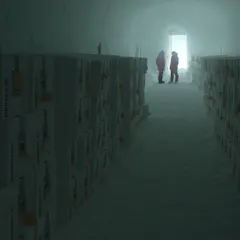
With an average temperature of -50°C, Antarctica’s first-ever 100% natural sanctuary protects endangered ice cores from global warming.

Grâce à sa température moyenne de -50 °C, le sanctuaire construit en Antarctique permettra de stocker sans assistance technique des carottes de glace déjà prélevées partout dans le monde.

President Rajoelina’s large-scale infrastructure projects didn’t meet the needs of most Malagasy citizens.
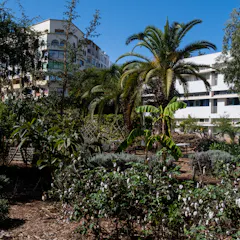
Using nature to solve environmental damage caused by humans can work on a local level, but can nature-based solutions be scaled up enough to address climate change?
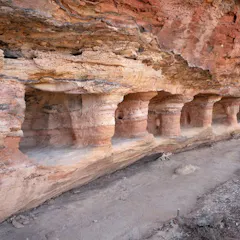
Les archéologues estiment que l'architecture taillée dans la roche à Teniky, à Madagascar, pourrait avoir été réalisée par une communauté d'origine zoroastrienne.
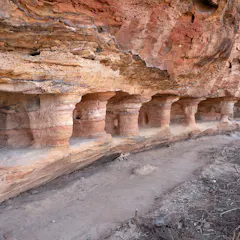
Archaeologists think the rock-cut architecture at Teniky in Madagascar may have been made by a community with Zoroastrian origins.

There have been 27 UN COP meetings. Despite these negotiations, the planet is on target to exceed emission thresholds for global warming. Given these failures, why continue with this process?
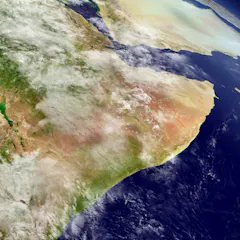
High intensity rain has actually increased, which is topping up underground water stores.
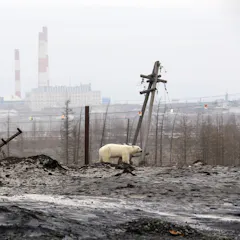
Les sanctions contre la Russie ont un impact sur la politique climatique de Vladimir Poutine mais aussi sur la science du climat nationale.
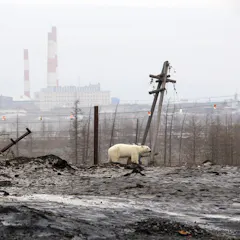
The war in Ukraine threatens to turn back the clock on Russia’s climate progress, with some calling on the country to leave the Paris Agreement and roll back environmental regulations.

We are not at risk of running out of oxygen due to climate change, but ocean creatures are – and that will harm the whole planet.

Les températures mondiales ont augmenté d’environ 1 °C en moyenne, mais le réchauffement fait déjà des ravages. Et ces effets s’aggraveront si les émissions continuent d’augmenter.

Les lieux de mémoire sonore sont en perpétuel mouvement, permettent de garder et d’actualiser les traces et les mémoires d’un passé. Bonnes feuilles.

Hasta el momento, la temperatura global ha aumentado de media alrededor de 1°C, pero el calentamiento ya está causando estragos. Los efectos serán más graves si las emisiones continúan aumentando.

Huge volcanic eruptions were once believed to be the cause of mass extinctions on Earth. However, new research has found that super eruptions did not necessarily result in mass extinctions.
Authors
-

Geographer, University of Bern
-
Head Climate Change & Health research group, University of Bern
-
Chercheur en géologie, University of Bern
-
Senior Research Assistant, University of Bern
-
Senior Research Scientist, University of Bern
-
Professor of Economics, University of Bern
-
Associate research scientist, University of Bern
-
PhD candidate in geography, University of Bern
-
Professor, University of Bern
-
Professor in Geology, University of Bern
-
Musicologue, University of Bern
-
PostDoctoral Researcher, Earth System Modelling, University of Bern
-
Senior researcher, Climate and Environmental Policy, University of Bern
-
Assistant professor, Geochemistry, University of Bern
-
Emeritus Professor of Climate and Environmental Physics, University of Bern