

Political policing in Uganda’s electoral landscape sustains the struggle for power.
Universität Bremen

High-performance, reform-oriented, and cooperative – that is the University of Bremen. Social responsibility has been its guiding principle since its foundation in 1971. The university is committed to the necessary social and ecological changes worldwide, to democracy, diversity, and justice. In its research, teaching, administration, and technological fields, the University of Bremen is particularly dedicated to the UN Sustainable Development Goals and climate justice. Its broad portfolio of around 100 degree programs combines exceptional performance and great potential for innovation with a pronounced interdisciplinary approach. The University of Bremen is strongly committed to the principle of research-based learning and teaching.
As an ambitious European research university, it cultivates close cooperations with universities and research institutes worldwide. In the region, it is part of the U Bremen Research Alliance and a transfer partner for many different stakeholders. As part of the European University Alliance YUFE – Young Universities for the Future of Europe, the 22,000 individuals at the University of Bremen actively shape academic cooperation across the globe and make an ongoing contribution to the development of our society.
In 2025, the universities of Bremen and Oldenburg founded the Northwest Alliance to strengthen north-western Germany as a leading region for science and innovation.
Links
Articles
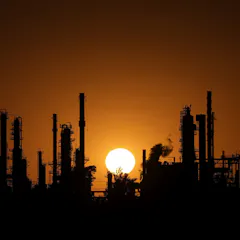
In 2025 the world has fallen short, again, of peaking and reducing its fossil fuel use. But there are many countries on a path to greener energy.
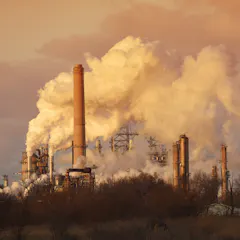
As world leaders gather at COP29 to consider reducing emissions, the latest global carbon budget shows CO₂ emissions from fossil fuels are still going up, not down, despite some promising signs.
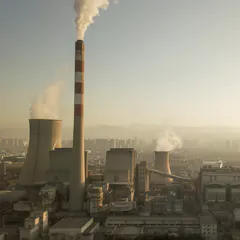
Kencangnya laju emisi mengurangi jatah CO2 yang bisa kita lepaskan untuk membatasi suhu Bumi 1,5°C. Dengan tingkat emisi saat ini, bujet karbon kita tersisa 7 tahun lagi.
Les quantités de CO₂ que nous pouvons encore émettre tout en respectant l’objectif de l’accord de Paris se réduisent à une peau de chagrin : au rythme de 2023, nous aurons épuisé ce budget carbone dans sept ans.
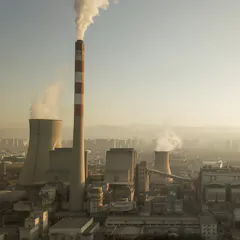
Record emissions are fast shrinking the remaining amount of carbon dioxide we can emit if we are to limit global warming. At current rates, we’ll use up the budget for a 1.5°C outcome in seven years.
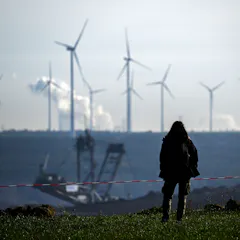
Aux niveaux actuels d'émissions, il y a 50 % de chances que la planète atteigne la hausse de température moyenne mondiale de 1,5 °C dans les 9 ans à venir.

Pada tingkat emisi saat ini, ada 50% kemungkinan bumi akan mencapai kenaikan suhu rata-rata global 1,5°C hanya dalam sembilan tahun.
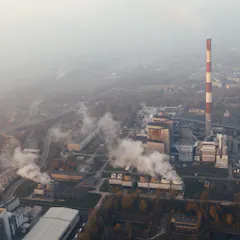
Con los niveles actuales de emisiones, hay un 50 % de posibilidades de que el planeta alcance el 1,5 °C de aumento de la temperatura media global en sólo nueve años.
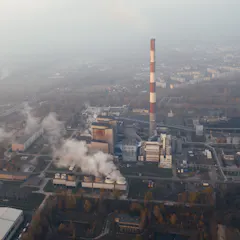
At current levels of emissions, there is a 50% chance the planet will reach the 1.5°C global average temperature rise in just nine years.

As missionaries expanded into Africa, they held a special grudge against polygamy. Here’s how that affected education.
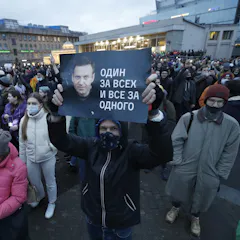
The Russian opposition leader remains in prison, but has now ended his hunger strike.

Back in 2016, the Brexit vote and US presidential election seemed like a nationalist one-two punch that could knock out the European Union. Instead, EU support actually rose, new research shows.

The toxic metal is poisoning polar wildlife but it can’t all come from the atmosphere. Are polluted Siberian rivers to blame?

Remember the big, somewhat bulky Mercedes Benz cars of the early 1990s? State-of-the-art at that time, they left their competitors behind on Germany’s autobahn. Mercedes is still here today, but the autobahns…
Authors
-

Postdoctoral Researcher at the University of Bremen, Research Center on Inequality and Social Policy (SOCIUM), Universität Bremen
-
Post-Doctoral Research Fellow, Universität Bremen
-
Postdoctoral Fellow, Institute for Intercultural and International Studies, Universität Bremen
-
Helmholtz Young Investigator group leader and deputy head, Marine Biogeosciences section at the Alfred Wegener Institute, Universität Bremen
-
Research fellow, Universität Bremen
-
Universität Bremen
-
Associate Researcher Environment and Sustainable Development, Universität Bremen