

South Africa and Nigeria promised to reduce greenhouse gas emissions from oil and coal. But instead they’re planning to increase production of fossil fuels.
Stockholm Environment Institute

We are an international non-profit research and policy organization that tackles environment and development challenges.
We connect science and decision-making to develop solutions for a sustainable future for all.
Our work spans climate, water, air and land-use issues, governance, the economy, gender and health. Stakeholder involvement is at the heart of our efforts to build capacity, strengthen institutions and equip partners for long-term change.
Our knowledge and findings are accessible to decision-makers and civil society: as our own open access material, in leading academic journals, and repackaged for effective decision support.
To promote debate and share knowledge we convene decision-makers, academics and practitioners and engage with policy processes, development action and business practice worldwide.
Links
Articles

Katherine Browne and Margaret Angula talk to The Conversation Weekly podcast about a UN pilot in Namibia that’s pioneering community-led climate adaptation.
L'Afrique peut limiter l'impact du climat sur la santé en prenant 37 mesures approuvées par les ministres de l'environnement.
Africa can check climate impact on health by taking 37 actions endorsed by environment ministers.

Getting climate funds to frontline communities may require rich countries and the UN easing control over how the money is spent.

For developing countries, such as Kenya, there is no template for moving to a low-carbon future while accelerating economic growth and development.
Les risques climatiques transfrontaliers peuvent traverser les frontières, les continents et les océans pour affecter des communautés à l'autre bout du monde. L'Afrique cherche à y remédier.
Transboundary climate risks can cross borders, continents and oceans to affect communities on the other side of the world. Africa’s new roadmap seeks to address this.
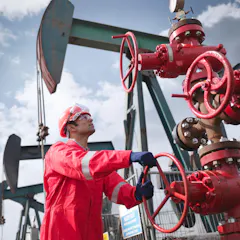
Smaller international deals and fossil free zones point a way forward.

Cuestiones como el cambio climático, la contaminación y la pérdida de biodiversidad están relacionadas con la situación de crisis que vivimos. Tengámoslas en cuenta.
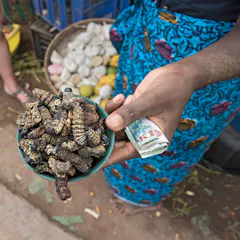
There needs to be more awareness of the benefits of insects as food, and support for farming and markets.
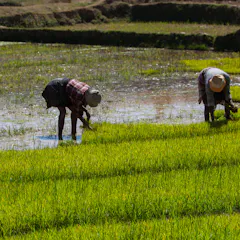
The private-sector plays an increasing role helping agriculture in sub-Saharan Africa adapt to a changing climate.
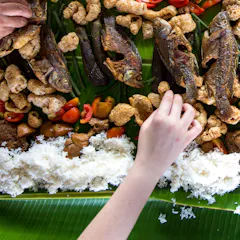
Si les pics de pollution à l’ozone sont bien connus des citadins, la menace que fait peser cette pollution sur les rendements agricoles l’est moins. Les scientifiques tentent de mieux l’évaluer.

When present in the lowest atmospheric layer, ozone becomes a concern for human and plant health.
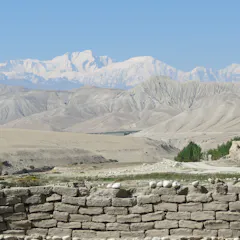
Remote mountain regions are closer to the climate problem than we think, particularly in the context of safeguarding essential ecosystem services such as safe and adequate water.
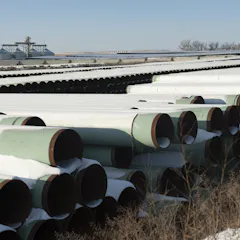
Big energy infrastructure projects – power plants, coal mines, long distance transmission lines – take time, resources and, typically, some political muscle. They create highly visible if short-lived construction…
Authors
-

Programme Leader, Energy and Climate Change, Stockholm Environment Institute
-
Communicator, Stockholm Environment Institute
-
Investigadora asociada en cambio climático y contaminación atmosférica, Stockholm Environment Institute
-
Senior Scientist, Stockholm Environment Institute
-
Research Associate, Stockholm Environment Institute, York, Stockholm Environment Institute
-
Senior Scientist and Equitable Transitions Program Director, Stockholm Environment Institute
-
Research Fellow, Stockholm Environment Institute
-
Associate Professor, University of Canberra, Stockholm Environment Institute
-
Senior Scientist, Stockholm Environment Institute
-
Senior Scientist, Stockholm Environment Institute
-
Research Fellow, Stockholm Environment Institute
-
Research Associate, Stockholm Environment Institute