
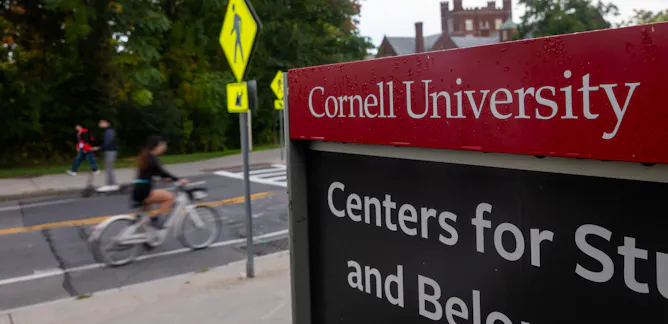
While universities can suspend and expel students for committing sexual violence and other kinds of illegal misconduct, they face logistical and financial limits to preventing such behavior.
Old Dominion University

Old Dominion University, located in the City of Norfolk in the metropolitan Hampton Roads region of coastal Virginia, is a dynamic public research institution that serves its students and enriches the Commonwealth of Virginia, the nation and the world through rigorous academic programs, strategic partnerships, and active civic engagement.
Links
Articles

US sanctions on foreign nations have lost some of their power to influence the behavior of other nations – with increasing costs for the US to boot.

Trade between Russia and US has fallen 90% since 2021 – blunting the impact of any proposed tariffs or sanctions.

Whether the popular video app ends up sold, banned or untouched, the ruling in favor of the government’s national security claims has implications for free speech.

In China, ‘private’ businesses aren’t entirely private and the ultimate boss is the CCP, not the CEO.

A recent study focusing on how offshore wind farms in Massachusetts waters could affect endangered right whales does not call for slowing the projects, but says monitoring will be critical.

When host communities unexpectedly receive large numbers of migrants, the influx can tax local services – and relations between migrants and residents.
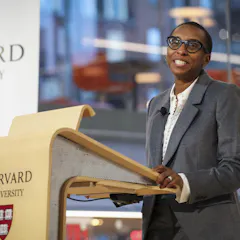
Despite what’s happening on the most prestigious campuses, fewer than a third of presidents at American colleges and universities are women.

By investing in learning, believing in your capabilities and vision, harnessing failure as fuel for growth and leaning on social support, anyone can become a psychologically resilient entrepreneur.

More than 2 million Ukrainians have fled the country since the Russian invasion. The EU has welcomed the refugees, but research shows that host communities may tire of the newcomers.

Glenn Youngkin, the newly elected Virginia governor, just gave the GOP a blueprint on how to win local elections with a national message – and without embracing Trump in public.
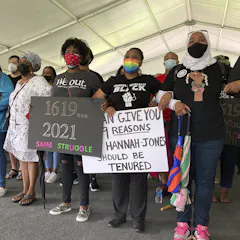
University trustees are among the least-studied groups in higher education. Increasingly, they’re making news – as the focus of a crisis. That raises the question: To whom are they accountable?

Though not a rich country, Colombia is unusually well equipped to handle mass migration because of its own history with political strife and displacement.

A key part of preventing secondary medical problems from diabetes involves glucose monitoring. For National Diabetes Month, a researcher describes her work on a self-powered monitor.

Cybercrime affects individuals and families as they navigate online life. But significant efforts focus instead on cybersecurity, protecting institutional networks and systems – rather than people.

A sociologist spent two years interviewing gay gang members. While some were in the closet and others were openly gay, all were forced to reckon with an environment of hypermasculinity.

The situation of Marcus Hutchins – hailed as a hero for stopping one malware attack but charged with being involved with another – highlights the ambiguity of hacker culture.

A recent Pew survey reported that young African-Americans are more likely to be both victims and perpetrators of cyberbullying. Why?
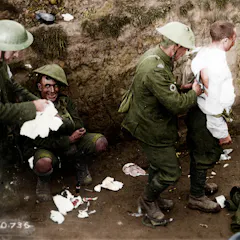
Mental health trauma has always been a part of war. Treatments have come a long way over the last century, but we still don’t understand why the responses change for different people and times.

The darknet, like the open internet, is not immune from illegal activity. But many darknet users are there in search of ‘hacker ethics’ values such as privacy and free speech.
Authors
-

Assistant Professor, Political Science and Geography, Old Dominion University
-
Professor of Public Budgeting and Finance, Old Dominion University
-
Assistant Professor of Political Science, Old Dominion University
-
Assistant Professor of Sociology & Criminal Justice, Old Dominion University
-
Professor of Oceanography, Old Dominion University
-
Research Associate Professor at the Virginia Modeling, Analysis and Simulation Center, Old Dominion University
-
Assistant Professor of Higher Education, Old Dominion University
-
Executive Director, Frank Reidy Research Center for Bioelectrics, Old Dominion University
-
Research Associate Professor, Old Dominion University
-
PhD Candidate, International Studies., Old Dominion University
-
Associate Professor of Education, Old Dominion University
-
Assistant Professor, Entrepreneurship & International Management, Old Dominion University
-
Assistant Professor of Sociology, Old Dominion University
-
Eminent Scholar and Professor of International Business, Old Dominion University
-
Assistant Professor of Sociology and Criminal Justice, Old Dominion University