

Each day in the control room of the Curiosity rover is jam-packed with important scientific decisions, as a NASA project scientist describes.
NASA

NASA’s vision: To reach for new heights and reveal the unknown so that what we do and learn will benefit all humankind.
To do that, thousands of people have been working around the world – and off of it – for 50 years, trying to answer some basic questions. What’s out there in space? How do we get there? What will we find? What can we learn there, or learn just by trying to get there, that will make life better here on Earth?
NASA conducts its work in three principal organisations, called mission directorates:
Aeronautics: pioneers and proves new flight technologies that improve our ability to explore and which have practical applications on Earth.
Human Exploration and Operations: focuses on International Space Station operations and human exploration beyond low Earth orbit.
Science: explores the Earth, solar system and universe beyond; charts the best route of discovery; and reaps the benefits of Earth and space exploration for society.
Links
Articles

Uma chuva de meteoros recém-identificada revela que o calor intenso está fragmentando um asteroide até agora ainda não detectado à medida que ele passa muito perto do Sol

A newly identified meteor shower reveals that intense heat is fragmenting a previously unknown asteroid as it passes too close to the Sun.

Meteoritos ricos em água contêm ingredientes essenciais para a vida, mas quase não aparecem nas coleções científicas. Uma pesquisa recente pode explicar o motivo.
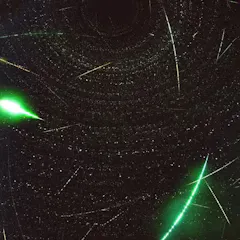
Water-rich meteorites contain key ingredients for life, yet they barely appear in meteorite collections. Recent research using shooting stars may explain why.

Some 7,000 years ago, West Antarctica’s ice sheet retreated, most likely driven by warmer ocean currents slipping under the ice. This could happen again – unless we cut emissions fast.
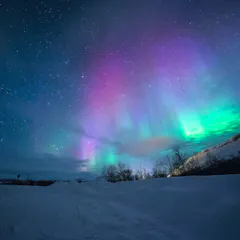
The aurora is one of nature’s most spectacular sights, a dazzling glow in the upper atmosphere driven by space weather.
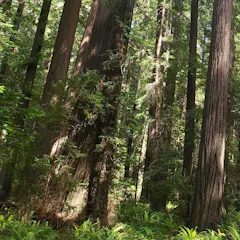
Millions of dollars have gone into California’s forest carbon offset program – with little new carbon storage to show for it, a new study suggests.
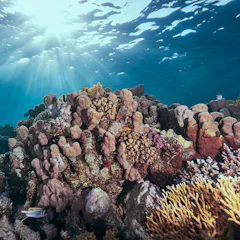
Marine heatwaves will happen so often that reefs will struggle to weather successive bleaching events.

A closer look at how ice cover changed through the months offers some important insights into the role of climate change and why every year isn’t a record.
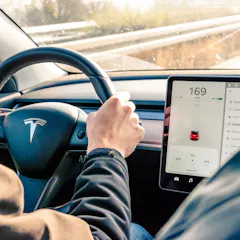
Tesla crashes and the investigations that follow generate a lot of headlines, but the dangers of automotive automation are industrywide. The common denominator is the human behind the wheel.
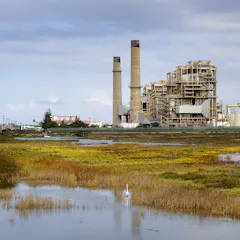
Scientists previously underestimated aquatic methane emissions. We must use this new information to stop methane derailing our attempts to stabilise the Earth’s temperature.
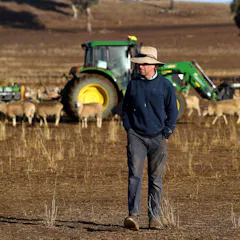
The US is formally back in the Paris climate agreement as of today. As one of the world’s largest greenhouse gas emitters, it has a lot of work to do, with food security, health and safety at stake.
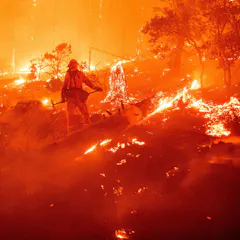
The 2020 wildfire season shattered records across the West. It’s part of a trend that’s headed in a dangerous direction.
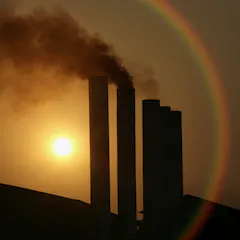
Nuestros últimos estudios sugieren que el metano, un gas de efecto invernadero más potente que el dióxido de carbono, se está acumulando en la atmósfera debido a la actividad humana.
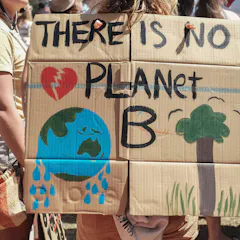
A new assessment found substantial warming is much more solidly assured than we thought.
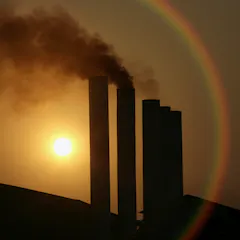
In Australia, methane emissions from fossil fuels are rising due to expansion of the natural gas industry, whereas agriculture emissions are falling.
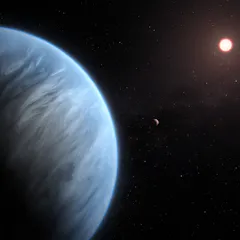
NASA scientists have discovered a new planet orbiting around a nearby star that is in a habitable zone. But does this planet have liquid oceans that can support life?
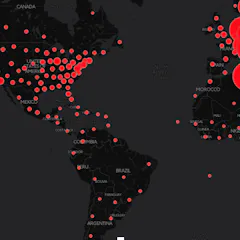
The deep and dark web can be a scary place, but modern open-source technologies funded by the Defense Department can help explore it.

Methane concentrations in the atmosphere are growing at a faster rate than any time in the past 20 years.
Authors
-

Associate Research Scientist in polar sea ice variability, NASA
-
Project Scientist, Mars Science Laboratory, NASA
-
Research Scientist, Ames Research Center, NASA
-
Research scientist, NASA
-
Director, Information Retrieval and Data Science Group and Adjunct Associate Professor, USC and Principal Data Scientist, NASA
-
Space Physicist, NASA
-
NASA Postdoctoral Fellow, NASA
-
Associate Research Scientist, NASA
-
Sea Ice Scientist and Deputy Project Scientist for NASA's Operation IceBridge, NASA
-
Postdoctoral Fellow in Planetary Sciences, NASA
-
Climate Scientist, NASA
-
Research Scientist of Planetary Studies, NASA
-
Research Psychologist, NASA
-
Principal Investigator on the Deep Space Atomic Clock Technology Demonstration Mission, Jet Propulsion Laboratory, NASA
-
Senior Research Scientist, National Snow and Ice Data Center, NASA