

Dans les régions qui avaient reçu le plus d'aide américaine, la probabilité d'un conflit a augmenté de 3,1 points de pourcentage par rapport au groupe de contrôle.
Ludwig Maximilian University of Munich

LMU Munich is one of the leading research universities in Europe, with a more than 500-year-long tradition. We build upon our success in the Excellence Initiative, a Germany-wide competition promoting top-level university research, to enhance our research profile over the next years and strengthen our position at an international level.
The know-how and creative intelligence of our academics form the foundation not only of our success in the Excellence competition, but also of LMU’s outstanding research balance as recognized by many national and international university rankings. The provision of equal opportunities for men and women is a key factor in increasing research and teaching quality over the long term; by implementing targeted equal opportunity measures, we are able to guarantee that the potential of its existing talent is utilized to the full.
Some 700 professors and 3,600 academic staff members conduct research and teach in the university’s 18 faculties, offering a wide and well-differentiated spectrum that covers all areas of knowledge, whether humanities and cultural sciences, law, economics and social sciences, or medicine and the natural sciences. As a genuine “universitas” LMU Munich has the unique opportunity and a deep obligation to deal with the ever more complex questions facing humankind, society, culture, the environment and technology by creating interdisciplinary solutions.
Links
Articles

In areas that had received the most American aid, the probability of conflict increased by 3.1 percentage points.
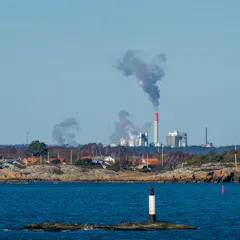
Identificar las medidas climáticas más eficaces, como ha hecho un reciente estudio en más de 40 países, permitiría a los gobiernos aplicar aquellas con mejores resultados.
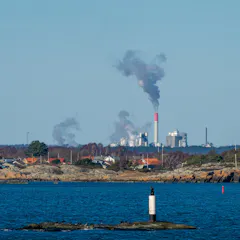
Policy research often looks at measures in isolation, ignoring the complex bigger picture.
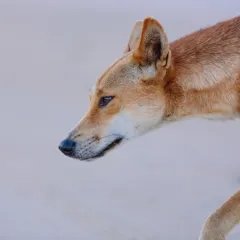
And how a new study may change how scientists think about animal hybrids.
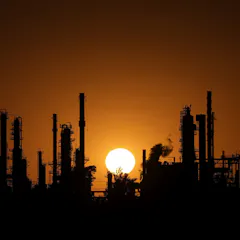
In 2025 the world has fallen short, again, of peaking and reducing its fossil fuel use. But there are many countries on a path to greener energy.
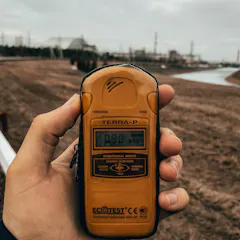
CC BY69.8 MB (download)
Kasus paparan zat radioaktif Cs-137 di kawasan industri Cikande menguak celah regulasi serta lemahnya tata kelola dan pengawasan limbah berbahaya di Indonesia.

A landscape historian explains how a Victorian tradition became a tool for social change in 19th- and 20th-century Philadelphia.

Os seres humanos evoluíram tardiamente na história da Terra. Embora esse momento tenha inspirado a conclusão de que a vida inteligente como a humana é uma improbabilidade cósmica, um novo estudo rechaça esta ideia

Humans evolved late in Earth history. While this timing inspired the conclusion that humanlike life is a cosmic improbability, a new study pushes back.

A century ago, physicists laid the foundations of quantum mechanics. One of them, Louis de Broglie, disavowed a famous theory. Why?
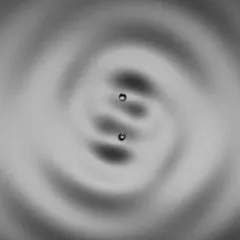
Il y a un siècle, les physiciens posaient les bases de la mécanique quantique. Non sans heurts.
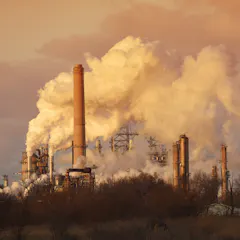
As world leaders gather at COP29 to consider reducing emissions, the latest global carbon budget shows CO₂ emissions from fossil fuels are still going up, not down, despite some promising signs.

Why does sport get a free pass when it comes to human rights?
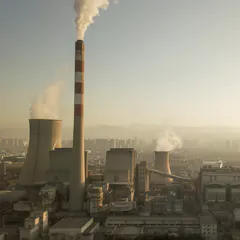
Kencangnya laju emisi mengurangi jatah CO2 yang bisa kita lepaskan untuk membatasi suhu Bumi 1,5°C. Dengan tingkat emisi saat ini, bujet karbon kita tersisa 7 tahun lagi.
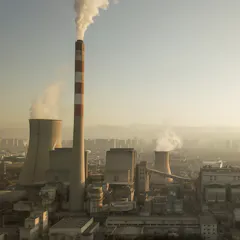
Les quantités de CO₂ que nous pouvons encore émettre tout en respectant l’objectif de l’accord de Paris se réduisent à une peau de chagrin : au rythme de 2023, nous aurons épuisé ce budget carbone dans sept ans.
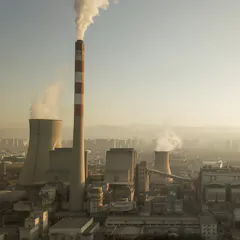
Record emissions are fast shrinking the remaining amount of carbon dioxide we can emit if we are to limit global warming. At current rates, we’ll use up the budget for a 1.5°C outcome in seven years.

Generations of readers have experienced the frustration of reading fragments when trying to access classics of ancient Mesopotamian literature.
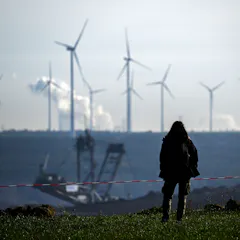
Aux niveaux actuels d'émissions, il y a 50 % de chances que la planète atteigne la hausse de température moyenne mondiale de 1,5 °C dans les 9 ans à venir.

Pada tingkat emisi saat ini, ada 50% kemungkinan bumi akan mencapai kenaikan suhu rata-rata global 1,5°C hanya dalam sembilan tahun.
Authors
-

Specialist physician, Internal Medicine and Tropical Medicine., Ludwig Maximilian University of Munich
-
Group Leader and Senior Scientist , Ludwig Maximilian University of Munich
-
Full Professor of Empirical Theories of Politics, Ludwig Maximilian University of Munich
-
Senior Researcher in Climate Science, Ludwig Maximilian University of Munich
-
Chair of Ancient Near Eastern Literatures, Ludwig Maximilian University of Munich
-
Professor of Physical Geography and Land Use Systems, Department of Geography, Ludwig Maximilian University of Munich
-
Professor of Palaeogenomics, Ludwig Maximilian University of Munich
-
Chercheuse en philosophie de la physique au Munich Center for Mathematical Philosophy, Ludwig Maximilian University of Munich
-
Postdoctoral Fellow, Ludwig Maximilian University of Munich
-
Global Health & Women's Health Researcher and FemTech Advisor, Ludwig Maximilian University of Munich
-
Chair Professor, Ludwig Maximilian University of Munich
-
Professor of Environmental Humanities, Ludwig Maximilian University of Munich
-
Research Associate, Ludwig Maximilian University of Munich
-
Professor, Economics Department, Ludwig Maximilian University of Munich
-
Senior Advisor, Ludwig Maximilian University of Munich