

Producers as far afield as Central Asia have been affected by Ukraine’s drones attacks on the e-commerce giant.
Independent Social Research Foundation

The Independent Social Research Foundation (ISRF) is a public benefit foundation funded by a group of private philanthropists with interests in academia and social science, founded in 2008. It is dedicated to advancing the social sciences through the promotion of new modes of inquiry and the development of interdisciplinary expertise and methods and through a better understanding of social entities and processes. The ISRF believes that interdisciplinary research - understood here as not just the simple combination of traditional approaches, but the conversation between established disciplines and the introduction of new modes of inquiry - is critical for the advancement of new knowledge and for solving contemporary theoretical and practical problems
Links
Articles

Every container opens onto its own distinct social world.
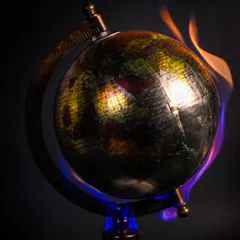
The story of oil is focused on the US. But our oil-centred world was made through wider global relations.

Once described as the ‘Balkans of central Asia’, Uzbekistan, Kyrgyzstan and Tajikistan have managed ethnic and territorial tensions with great success.
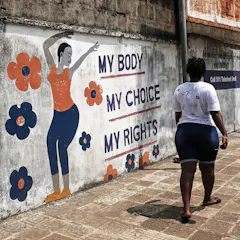
The new laws often shield the wealthy and punish the powerless, especially adolescent couples in relationships.

La difficulté à mettre en œuvre des politiques de durabilité dans les entreprises ne se résume pas à une question de volonté individuelle ou de structures inadaptées. Le problème est systémique.

When the language of racism lost scientific legitimacy, it changed shape and began targeting cultures instead.
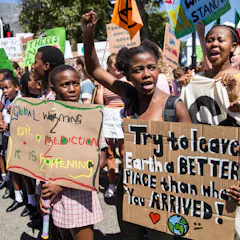
Young people are climate change activists, but largely excluded from global meetings, and aren’t taken seriously when they do get there.

Over six years, researchers have worked closely with 25 single-mother families living in the shadow of this policy - which even affects British citizens.

Lobbyists and petrostates want to avoid a strong focus on human health in the impending global treaty on plastic pollution.
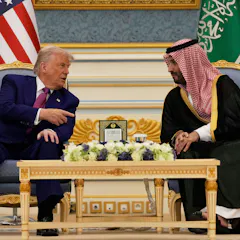
Oil money from the Middle East often goes straight to the US.

Plans to encourage more British workers into the sector have been described as under-funded and ‘years away from delivery’.

A global summit in London is set to decide on a new definition of energy security.

Children represent the future. In Gaza that future is being snuffed out.

Five years ago, at the start of 2020, I was looking forward to the publication of my book, Terraformed: Young Black Lives in the Inner City and eagerly anticipating a long-awaited holiday to Jamaica. But…
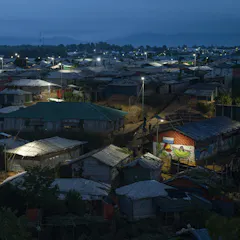
Refugees have launched shops, mobile phone charging stations – even cinemas.

The UK’s indulgence of kleptocratic elites from Russia and Eurasia is an acute example of the phenomenon of professional enabling.
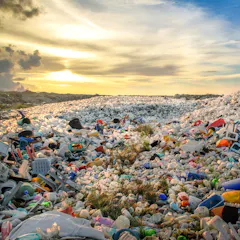
How oil changed capitalism.
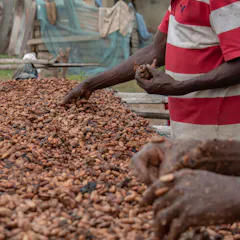
Cocoa prices surged to record highs over the past year, but they are not passing through to Ghanaian farmers.

The second world war forced eugenicists to retreat to the fringes of science - but still found ways to publish in journals.
Authors
-

Professor of Political Economy and Global Development, and Director of SOAS Middle East Institute, SOAS, University of London; Independent Social Research Foundation
-
Professor of Law, University College Cork; Independent Social Research Foundation
-
Associated Researcher, Social Anthropology, Independent Social Research Foundation
-
Research Associate, University of Sheffield; Independent Social Research Foundation
-
Senior Lecturer in Applied Social Sciences, University of Bedfordshire; Independent Social Research Foundation
-
Professor of International Management & Sustainability, King's College London; Independent Social Research Foundation
-
Lecturer in Politics, Manchester Metropolitan University; Independent Social Research Foundation
-
Assistant Professor, Vrije Universiteit Amsterdam; Independent Social Research Foundation
-
Professor of Political Geography, Newcastle University; Independent Social Research Foundation
-
Professor of International Relations, University of Sussex; Independent Social Research Foundation
-
Professor of Sociology, Social Research Institute, UCL; Independent Social Research Foundation
-
Lecturer in Public Policy, University of Edinburgh; Independent Social Research Foundation
-
Research Advisor on Humanitarian Energy, University of Oxford; Independent Social Research Foundation
-
Senior Lecturer in Development Economics, University of Manchester; Independent Social Research Foundation
-
Assistant Professor in the Centre for Advanced Studies South-East Europe, University of Rijeka; Independent Social Research Foundation