

People with poorly controlled asthma may be able to breathe easier by making a change in the kitchen.
Case Western Reserve University

At Case Western Reserve University, we spend each and every day asking—and discovering—how to solve the biggest issues of today and tomorrow. There’s a reason we’re ranked as one of the nation’s leading research universities: With programs spanning the arts and sciences, engineering, health sciences, law, management, and social work, our groundbreaking research and enriching education allow our students, faculty, staff and alumni to think beyond the possible.
Links
Articles

Because melatonin is sold as a dietary supplement rather than a drug in the US, there is little to no quality control over the wide array of product types.

Under a proposed policy – a departure from longtime practice that would cause significant disruption – green card applicants would no longer be able to apply for legal status from inside the US.
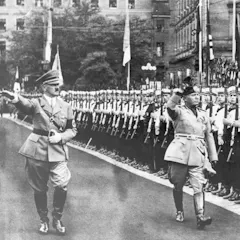
Loyalty outranks expertise, and reality bends to the leader’s word. From Nazi Germany to Imperial Japan, fascist war machines collapse on the same contradictions.

The NFL draft will bring increased demand and risks for trafficking. Here’s what Pittsburgh needs to know, from warning signs to local prevention efforts.
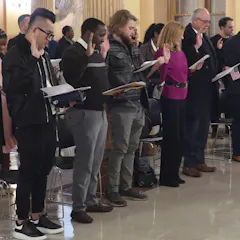
Denaturalization risks becoming a tool of political control, creating a permanent vulnerability for more than 20 million naturalized Americans.
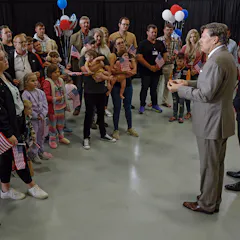
Australia, Canada and the US identified themselves as ‘white men’s countries’ in the early 20th century and coordinated immigration restrictions to keep them that way.
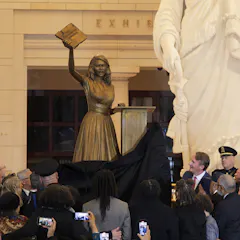
In December 2025, the statue of Barbara Rose Johns replaced that of Robert E. Lee as one of the two Virginians displayed in the U.S. Capitol. Here’s why.
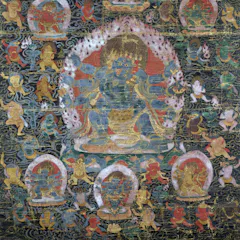
Rooted in the Buddhist teaching of the bardo − states of ‘in-between’ − the text offers a way to understand death, life and transformation as deeply intertwined.
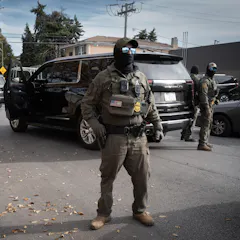
District courts have dismissed the administration’s efforts to detain virtually all undocumented immigrants without a bond hearing while they await deportation proceedings.

The former FBI director’s indictment breaks a principle that has protected American democracy for 50 years.

Hiding ICE attorneys’ names in immigration court proceedings violates a fundamental principle that has protected Americans for centuries: open courts.
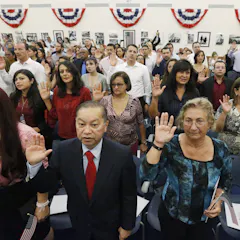
In 1967, the Supreme Court said the government usually cannot take away citizenship without a person’s consent.

The Supreme Court just made it harder for judges to block presidential policies nationwide, but lawmakers hold the key to changing that.
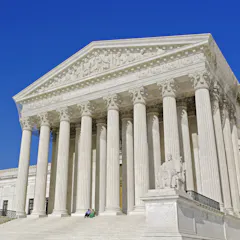
Arguments before the US Supreme Court on birthright citizenship – awarded to those born in the US – actually focused on the power of federal judges to impose nationwide injunctions.
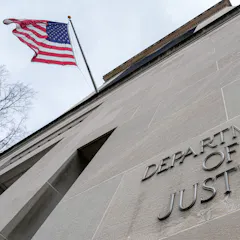
Some Department of Justice attorneys have recently been fired or have resigned, refusing to follow directives from the Trump administration that they felt violated the law, legal ethics or both.
Judge James Boasberg’s order stops short of holding any government officials in contempt, but leaves open the possibility for these sanctions.
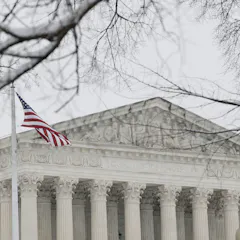
Do court-imposed nationwide injunctions, which stop policies for everyone across the country, give too much power to a single judge? Or do they protect important rights?
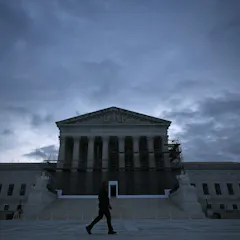
The current case focused on the deportation of Venezuelan immigrants raises concerns about whether the president will continue to respect the country’s legal system.

Politics in America have become more upsetting than ever for big chunks of the population, but there are ways to cope.
Authors
-

Professor of Medicine, Case Western Reserve University
-
Professor of Law, Case Western Reserve University
-
Assistant Professor, Case Western Reserve University
-
Professor of Law and Director of the Center for Professional Ethics, Case Western Reserve University
-
Professor and Director of the Begun Center for Violence Prevention Research and Education, Case Western Reserve University
-
Adjunct Assistant Professor of Psychological Sciences, Case Western Reserve University
-
Professor of Philosophy, Case Western Reserve University
-
Associate Professor of History, Case Western Reserve University
-
Professor Emeritus of Law and Adjunct Professor of Political Science, Case Western Reserve University
-
Assistant Professor of Religious Studies, Case Western Reserve University
-
Associate Professor of Applied Social Sciences, Case Western Reserve University
-
Associate Professor of Anthropology, Case Western Reserve University
-
Research associate, Carlow University; Case Western Reserve University
-
Associate Professor of Pediatrics, Case Western Reserve University
-
Professor of History, Case Western Reserve University