

Around half of the glacier ice in the Himalayas (equivalent to about two billion Olympic swimming pools) could melt by the end of this century.
British Antarctic Survey

British Antarctic Survey (BAS) is a component of the Natural Environment Research Council (NERC). Based in Cambridge, United Kingdom, it has, for over 60 years, undertaken the majority of Britain’s scientific research on and around the Antarctic continent. It now shares that continent with scientists from over thirty countries.
BAS employs over 400 staff, and supports three stations in the Antarctic, at Rothera, Halley and Signy, and two stations on South Georgia, at King Edward Point and Bird Island. The Antarctic operations and science programmes are executed and managed from Cambridge, and rely on a wide-ranging team of professional staff.
Ice-strengthened ships sustain the Antarctic operations. RRS James Clark Ross has advanced facilities for oceanographic research. RRS Ernest Shackleton is primarily a logistics ship used for the re-supply of stations. Four Twin Otter aircraft fitted with wheels and skis are operated from Rothera and Halley, while a wheels-only Dash-7 aircraft provides the inter-continental air-link from Rothera to the Falkland Islands, and flies inland to blue ice runways.
The current BAS science research strategy is called Polar Science for Planet Earth (PSPE). The strategy was based on proposals from staff and consists of 6 integrated programmes. In addition the competitive Antarctic Funding Initiative (AFI) provides access to Antarctica for BAS and NERC staff and the UK university community.
The total BAS budget for 2012-2013 is £48.8 million. Of this, £13.5 milllion is spent on the science programme, and £35.3 million spent on supporting the science, which includes the costs of running the ships, aircraft and research stations. The high costs involved highlight the challenges BAS faces in operating within a harsh and remote environment.
Links
Articles
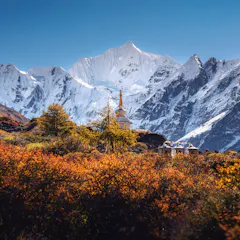
Researchers designed a new way of collecting data about snowfall in the Himalayas which is much more accurate than the ones used before.

If many countries take the stance that ‘we’re only contributing 1% of global emissions’, responsibility dwindles and action stalls.

There’s a greater need than ever to understand how climate change in Antarctica will have global consequences – but research if getting more difficult.

The warning lights from the cryosphere have been flashing red for several years and governments and policymakers ignore this at their peril.
Parte da poluição por plásticos permanece na superfície do oceano por mais de um século.

Some plastic pollution lingers at the ocean’s surface for more than a century.
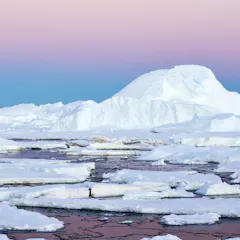
Humanity has lost control of West Antarctic ice-sheet melting.
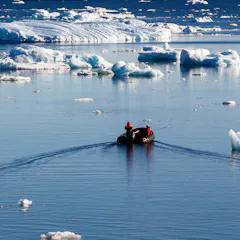
Sea ice extent in July 2023 has been around 10% below last year’s record low for the month.
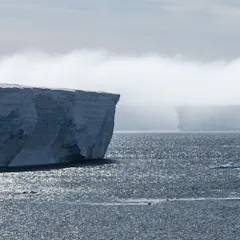
Freshening seawater around Antarctica is disrupting a global ocean conveyor which regulates the climate.
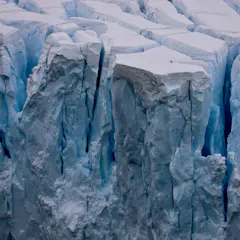
A transcript of an episode of The Conversation Weekly published on September 22, 2022.
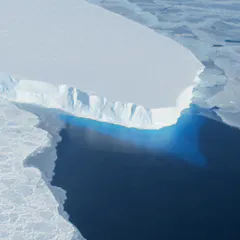
If and when the Thwaites Glacier melts, it will result in nearly 0.6 metres of sea level rise, but it holds back another three metres of sea level rise lurking within the Antarctic continent. Listen to The Conversation Weekly podcast.
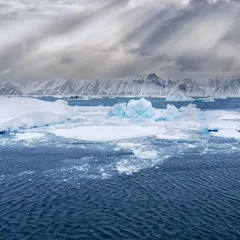
L’océan Austral constitue le principal réservoir de chaleur et de carbone de notre planète. Il abrite des formes de vie extraordinaires, des invertébrés microscopiques aux gigantesques baleines.
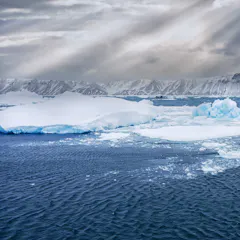
Lautan Selatan (Antarktika) merupakan penyimpanan utama panas dan karbon di Bumi, serta rumah bagi kehidupan laut yang menakjubkan seperti penguin, alga, dan paus.
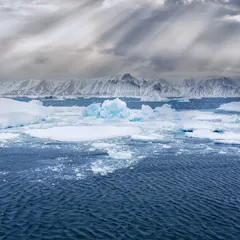
El Océano Austral (Antártico) es el principal almacén de calor y carbono de nuestro planeta, y es hogar de extraordinarias formas de vida, desde pequeñas algas y criaturas sin espinas hasta pingüinos, focas y ballenas.
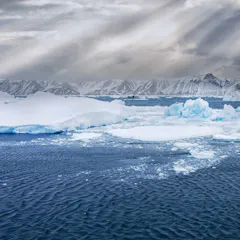
The Southern (Antarctic) Ocean is our planet’s primary storage of heat and carbon, and it’s home to extraordinary life forms, from tiny algae and spineless creatures to penguins, seals and whales.
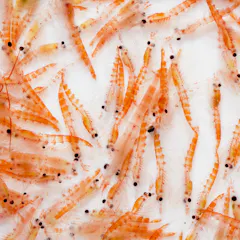
These small shrimp-like creatures are more than just whale food.

Preliminary results of a study have shown microplastics have reached in a newly revealed Antarctic environment.

Qui vivra en Antarctique quand la calotte glaciaire du continent blanc aura fondu ?

The continent’s ice caps are melting, and both native and alien species will soon colonise the newly uncovered areas.
Authors
-

Deputy Science Leader, Polar Oceans Team, British Antarctic Survey
-
Microbiologist, British Antarctic Survey
-
Data Interpretation Ecologist, British Antarctic Survey
-
Senior Sediment Scientist, British Antarctic Survey
-
Climate Scientist, British Antarctic Survey
-
Airborne Geophysics Group Leader, British Antarctic Survey
-
Marine Biogeographer, British Antarctic Survey
-
Postdoctoral Researcher, Antarctic Geography, British Antarctic Survey
-
Ocean-Ice Modeller, British Antarctic Survey
-
Honorary Associate Professor, School of Earth Sciences, University of Bristol; British Antarctic Survey
-
Ecological modeller, Postdoctoral Researcher, British Antarctic Survey; Queen Mary University of London
-
Ocean and Ice Scientist, British Antarctic Survey
-
Terrestrial Ecologist, British Antarctic Survey
-
Postdoctoral Physical Oceanography, British Antarctic Survey
-
Post Doctoral Research Associate at St. Edmund's College, University of Cambridge; British Antarctic Survey