
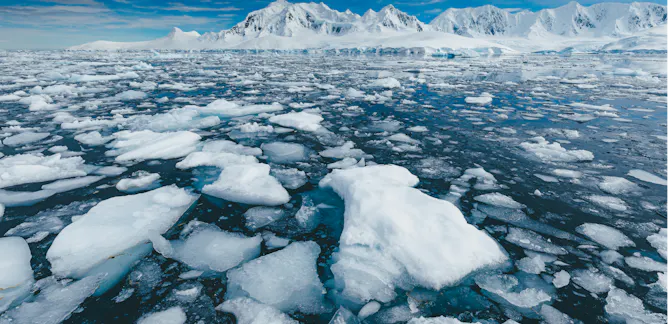
This remarkable seasonal change in Antarctic sea ice is like a heartbeat within our planet’s climate system. We need to better understand it.
Australian Antarctic Division

In the 100 years since geologist (Sir) Douglas Mawson’s 1911–14 Australasian Antarctic Expedition (AAE), Australia’s Antarctic science has earned a reputation for excellence in discovery, innovation and delivery on national and international goals.
The AAE pursued scientific investigation in a wide range of areas. On land and on the expedition ship Aurora, scientific research was conducted in geology, geography, cartography, geomagnetism, astronomy, meteorology, glaciology, oceanography, zoology, biology and botany. Data collected during this expedition is still used by scientists today for reference and comparison.
The early 1930s saw Mawson’s British, Australian, New Zealand, Antarctic Research Expedition (BANZARE) to east Antarctica, from Enderby Land to Oates Land, collecting scientific data on land and sea, including geology, meteorology, zoology and botany. Publication of the expedition’s reports ran to 13 volumes and was not completed until 1975, indicating the scope and scale of the scientific work undertaken on this expedition.
Today’s modern Australian Antarctic program continues the important scientific work begun by the AAE and BANZARE. As Antarctica grows in national and global importance, the Australian Antarctic Division conducts research in the Southern Ocean, the Antarctic and the subantarctic, addressing critical issues such as climate change, the human footprint on Antarctica and the increasing demands for food security caused by human population growth.
The diverse research program covers physical and life sciences in the atmospheric, terrestrial and marine domains, as well as human biology and medical research. It is also responsible for a broad suite of ongoing observational activities, including a network of meteorological facilities; ionospheric activity monitoring; seismic, magnetic and GPS networks; and hydrographic and bathymetric mapping.
Our science is directed by the Australian Antarctic Strategic Plan 2011–12 to 2020–21 developed in consultation with the Antarctic Science Advisory Committee and approved by the Australian Government on 19 July 2010.
In addition to this work, the Australian Marine Mammal Centre at the Australian Antarctic Division gives us a high-profile role in coordinated studies of Australia’s cetacean research.
Australia’s active membership of the Committee for Environmental Protection of the Antarctic Treaty is supported by a program of research into site remediation and environmental clean-up.
Australia’s role in the Convention for the Conservation of Antarctic Marine Living Resources, the International Whaling Commission and the Agreement on the Conservation of Albatrosses and Petrels requires the highest quality of science to provide credibility and accountability.
More than 100 projects are undertaken in Antarctica, the subantarctic and in Australia, involving scientists from some 28 countries and 176 institutions. About 90 Australian graduate students are also associated with the program.
Links
Articles
A new study found parts of Antartica could pass a tipping point for mass ice sheet losses as soon as 2050 – pushing sea levels 2 metres higher by 2300 than currently predicted.
A camada de gelo da Antártica tem quase o dobro da área da Austrália e contém água doce suficiente para elevar o nível global do mar em 58 metros.

The Antarctic ice sheet is nearly twice the area of Australia and holds enough freshwater to raise global sea levels by 58 metres.

Earth’s climate system is connected across hemispheres. When the Atlantic Meridional Overturning Circulation weakens and Europe cools, warming in New Zealand and southern mid-latitudes accelerates.
Since 1995, several ice shelves off the Antarctic Peninsula have abruptly disintegrated. A new analysis suggests that these events are triggered when ice shelves lose their buffer of floating ice.
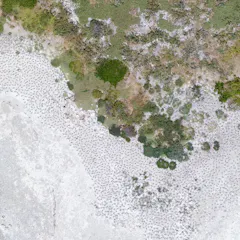
A few thousand fake ducks, a group of experienced wildlife spotters and a drone have proven the usefulness and accuracy of drones for wildlife monitoring.

Research comes with risk and uncertainty so getting the right message across to the people who matter can be a challenge for scientists. A new plan out today hopes to change that.

Polar ice isn’t all the same - it can be divided roughly into “land ice” and “sea ice”. What matters most for sea levels is how much ice slides off the land and melts in the sea.

Ice cores tell us vital information about how the world’s climate has changed - and how it will change in the future.

Researchers in East Antarctica have surveyed an area the size of New South Wales to study the behaviour of the region’s biggest glacier - and the secrets below the ice that could speed up its melting.
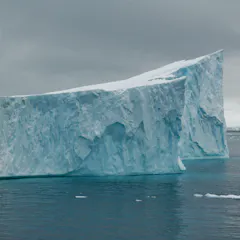
An international study of ice cores has helped researchers pave the way for a better understanding of how Antarctica’s volcanoes have affected the global climate over the past 2,000 years. The research…
A unique underwater sound that has been puzzling scientists since the 1960s has been identified as belonging to Antarctic…
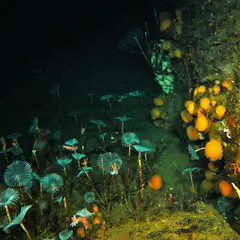
It is no secret that climate change is transforming the polar regions. Retreating glaciers, melting ice-caps and changing sea ice patterns are frequently reported in both the Arctic and Antarctic, and…
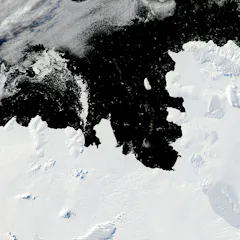
The Antarctic warming that signalled the beginning of the last ice age melt may have actually started between between two and four millennia earlier than previously thought, a new study has found. Previously…
Authors
-

Senior Research Scientist / Section Head, Australian Antarctic Division
-
Principal Scientist, Australian Antarctic Division
-
Palaeoclimatologist, Australian Antarctic Division
-
Senior Research Scientist in Antarctic Marine Ecology, Australian Antarctic Division
-
Program Leader, Terrestrial and Nearshore Ecosystems, Environmental Change and Conservation, Australian Antarctic Division
-
Leader, Sea Ice Section, Antarctic Climate Program, Australian Antarctic Division