
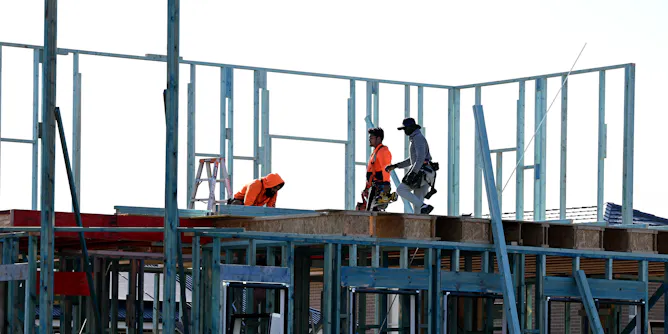
Limiting or scrapping negative gearing and the capital gains tax discount would help take the heat out of the market and give the government much more money to invest in social housing.
Articles on Housing series 2024
Displaying all articles

For the Commonwealth, the best measure is rent assistance. For the states, it’s a mix of two-thirds first homebuyer grants and one-third stamp duty discounts.

New estimates suggest that if just one state, New South Wales, scrapped its stamp duty, an extra 100,000 Australians would move homes each year.

Co-operatives make up only a small part of Australia’s accommodation stock but their users say the benefits warrant it being considered as a way of easing the housing crisis.
Helping adult children buy homes is risky, especially because what begins as a loan can turn into an unintended gift.

Australia builds only 45,000 new homes per quarter. If we really want to fix the rent crisis we’ll have to build more.

Neither investors nor super funds are prepared to wear the losses needed to put low-income Australians into housing. The government should double the size of its Housing Australia Future Fund.

The number of active short-term rental listings is a small fraction of the total number of dwellings in Australia – and many listings are not in the city areas of great housing need.
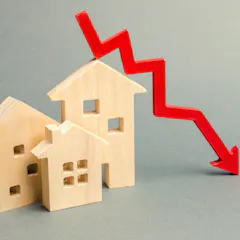
Despite different theories, there is no simple answer to whether prospective home buyers are better off buying before or after the expected interest rate drop in the next year.

Negative gearing is popular because it lowers home owners’ tax bills. But its critics say it has reduced affordable housing stock keeping the less well off out of the market.
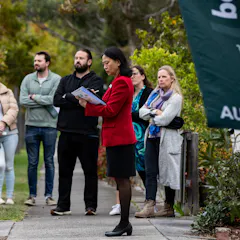
A new government housing assistance scheme risks becoming a lottery because many more people are eligible than the 10,000 places available each year.

Even changing the tax system won’t end steadily-climbing property prices. They are the result of urbanisation, and while COVID has eased some of the pressures, it has added some more.
Top contributors
-

Program Director, Housing and Economic Security, Grattan Institute
-
Associate Professor of Sociology, University of Tasmania
-
Postdoctoral Research Fellow, School of the Environment, The University of Queensland
-
Associate Professor, Deakin Business School, Deakin University
-
Senior lecturer, Canberra School of Government, University of Canberra
-
Visiting Fellow, School of Economics, UNSW
-
Associate Professor, Faculty of Business, Government and Law, University of Canberra
-
Research fellow, Centre of Policy Studies, Victoria University
-
Senior Lecturer in Sociology, University of Newcastle
-
Associate Professor of Accounting and Financial Planning, Western Sydney University
-
Assistant Professor, University of Canberra
-
Professor, Centre of Policy Studies and the Impact Project, Victoria University
-
Deputy Program Director, Housing and Economic Security, Grattan Institute
-
Professorial Research Fellow, Institute for Culture and Society, Western Sydney University
-
Associate Professor of Human Geography, The University of Queensland