

Municipal bonds are integral to Philly’s effort to make more affordable housing, but hidden costs and requirements can hurt taxpayers.
Economy – Articles, Analysis, Opinion
Displaying 376 - 400 of 3158 articles

Fears about supply, demand, profits and supply chains all combine into a volatile mix that delivers prices that are often higher in a crisis, but also change more rapidly and by larger amounts.

A feature designed to help Black-owned businesses may have hurt them. The increased visibility likely led to culture clashes and lower star ratings.
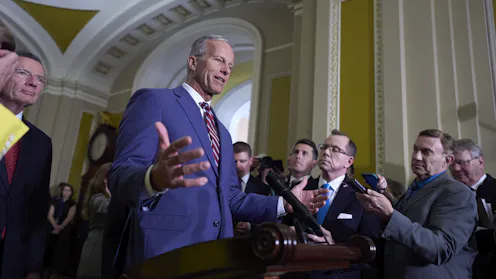
By using reconciliation, which was originally intended to rein in deficits, Republicans can pass the bill with a simple majority vote. But analysts expect it to lead to larger deficits.
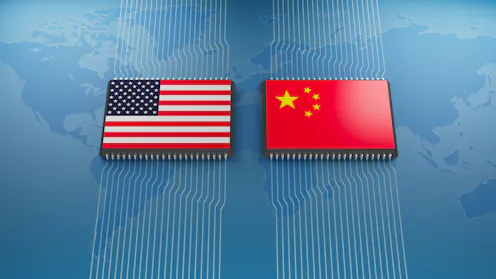
Supply-chain decoupling doesn’t stop rival nations from hacking each other and can make it worse. A cyber-espionage expert explains what does work.

Fishing was once more open to all off New England. After devastating fishery collapses, stricter rules helped fish stocks recover, but they also changed the face of fishing and the lives of fishermen.
My experience in the corporate world showed me how much the human element matters. I went into academia to translate theory into practice.

Giving to nonprofits engaged in education, health, arts, culture and humanities, the environment, and animals reached all-time highs.

The Trump administration is pulling back billions of dollars in industrial development money for carbon capture and storage projects. That may force industries to actually cut emissions instead.

Retiring is never easy – but for small business owners, today’s economic climate is making it even harder to step away.

When donors are better informed, they can accomplish more with the money they give away. But who should pay for that information?

Changes made to comply with executive orders could interfere with the mission of a program that has historically helped some of the people who most need a hand.

Witnesses to workplace mistreatment respond with both schadenfreude and empathy, an analysis of 158 studies found.

A survey of 1,300 businesses shows that employers are increasingly using internships and AI tools to evaluate candidates for full-time jobs.

Pharmaceutical companies have little incentive to sell drugs to countries that can’t afford them. But bargaining together can increase access to vital treatments worldwide.

Government R&D encompasses all innovative work the government directly pays for, regardless of who does it.

The typical worker on the verge of retirement is due roughly $412,000 in this under-the-radar wealth.

Tipped workers are more likely to see modest gains than a tax-free windfall.

The independent federal agency had been facilitating the work of approximately 200,000 volunteers a year, deploying them across the country through partnerships with thousands of nonprofits.

Forecasters already patch together very rough estimates, and ending NOAA’s ‘billion-dollar disasters’ list means less access to insurance data. Texas’ state climatologists explain why that matters.

Even the most advanced AI tools are useless if employees don’t feel confident using them. Building trust and boosting workers’ belief in their abilities is the real key to successful adoption.
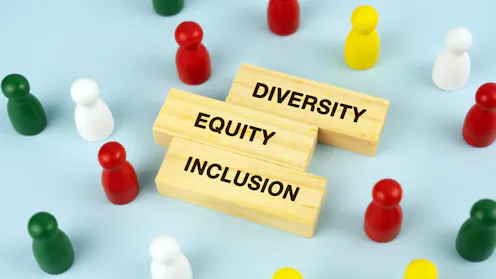
From civil rights to corporate boardrooms, efforts to expand inclusion have long shaped American life. What does research show about the returns – and limits – of today’s DEI programs?

A yearlong investigation shows the depth of the gun trafficking problem and how ATF oversight of gun dealers can reduce trafficking to Mexico – when the agency has resources.

As Walgreens goes private in a $10 billion buyout, experts weigh what private equity ownership could mean for pharmacy care.

Inside every smartphone and laptop are tiny specks of valuable materials, many of which are still lost even when you take your old electronics to a recycling center.