
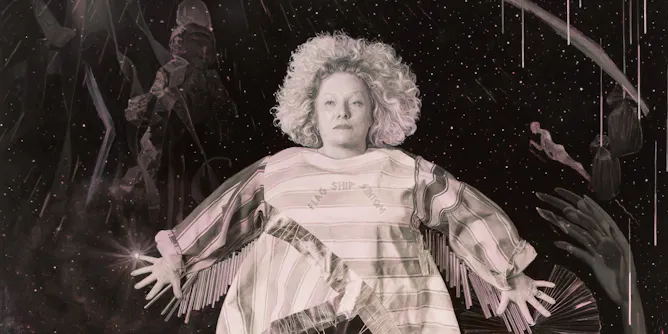
Justene Williams defined the universe in her art. Julie Fragar painted her doing this, and won the Archibald.
Articles on Wynne Prize
Displaying all articles
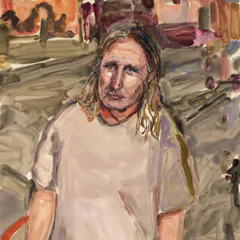
This year’s Archibald Prize-winning painting by Laura Jones is of an angst-ridden Tim Winton, contemplating the degradation of our planet
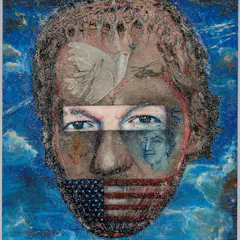
This year’s Archibald, Wynne and Sulman Prize exhibition is well worth a visit – something no self-respecting art critic would have said in the past.
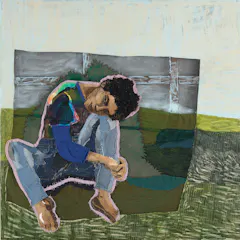
This year’s Archibald and Wynne Prize winners show that a new generation of artists have now entered the mainstream.
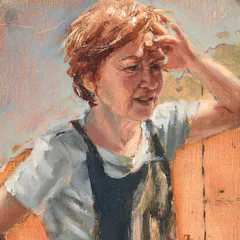
The Archibald Prize and the Royal Easter Show have a great deal in common. Both are enjoyed by the general public, but the entrants in the competitions are very serious about winning.
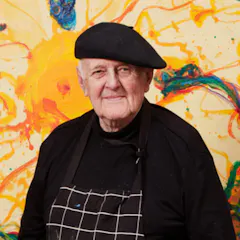
Some of the media response to the death of John Olsen has been to proclaim the late artist as a ‘genius’. He was more complex than that.

This year’s winning Archibald Prize portrait, Moby Dickens by Blak Douglas, encapsulates the justifiable rage felt by people living in flooded Bundjalung country
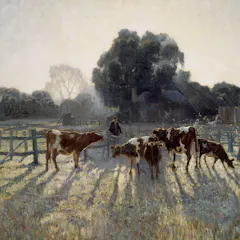
In 1895 the Wynne Prize was proposed as an award for a ‘landscape painting of Australian scenery’. Today it is more likely to be given to an Indigenous artist’s explanation of Country.
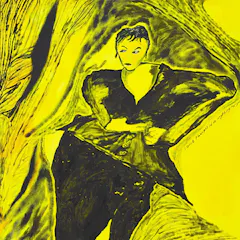
The lively reconfiguring of the Archibald, Wynne and Sulman exhibitions means it is harder to work out which paintings the judges are considering as potential winners.
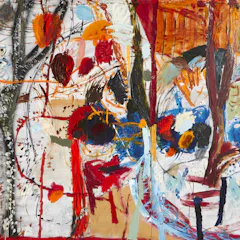
The standard of the 2017 Wynne finalists is as haphazard as previous years, hampered by a sense of tokenism and conventional landscapes, but works by Napanyapa Yunupingu and Juz Kitson stand out.
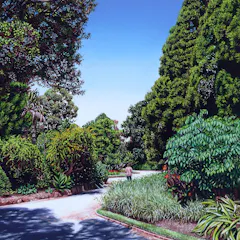
The Wynne Prize has been notoriously male-dominated. What does this year’s winning artwork by Natasha Bieniek tell us about the nature of this particular award and how we can improve it?
Top contributors
-
 Joanna Mendelssohn is a Friend of The Conversation.
Honorary Senior Fellow, School of Culture and Communication, The University of Melbourne
-
Lecturer and Researcher in Plant Humanities, UNSW