
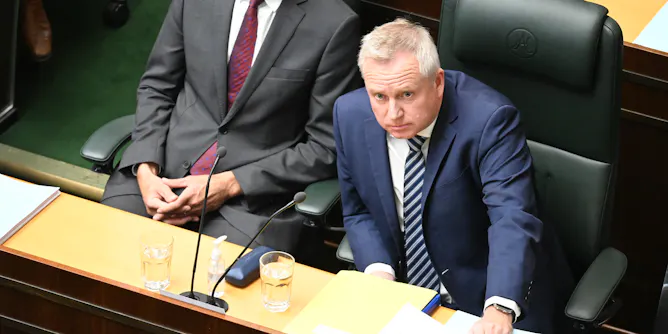
In spectacular political theatre that’s spanned two days, the parliament passed a vote of no confidence in Premier Jeremy Rockliff.
Articles on Westminster system
Displaying 1 - 20 of 23 articles

South Africa’s 2024 election was characterised by a shift in power and new threats to democracy – despite the majority still opting for the political centre.
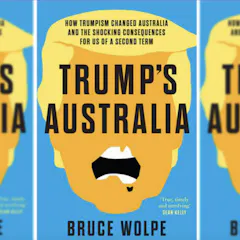
In this podcast, Michelle chats with Bruce Wolpe about the prospect of second Trump term, and what implications that will have for Australia

It was the first time in a Westminster democracy that citizens were given the chance to change their electoral system. The rest is history.
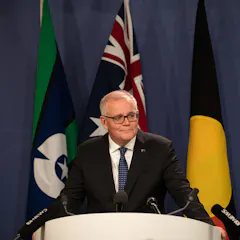
As shocking at Morrison’s behaviour was, it may be that the failure of the Coalition parties to clearly condemn it that inflicts the greater long-term damage.
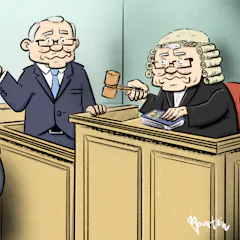
People who claim the law was not broken by the scandal are missing the point. It’s about the conventions and accountability that is embedded in the Westminster system.
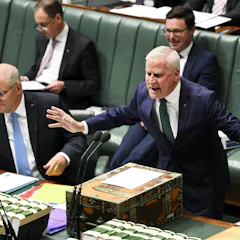
A review of Question Time in the House of Representatives aims to make it more democratic and more edifying. But it’s not the structure as much as the culture that needs fixing.
The fundamental structure of the current constitution, which is cast in classical Westminster conceptions, is unsuited for modern-day constitutionalism.
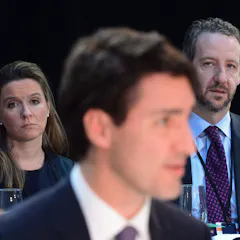
Canada has the largest cohort of political staff in any Anglo-Westminster country. Is it time for reform?
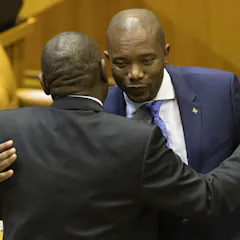
South Africa’s parliamentary system would make it difficult to achieve a fusion of parties.

Australia’s minimal legal and political regulation of ministerial advisers has led to an accountability deficit.

When Attorney-General George Brandis was asked on Q&A about a parliamentary vote on the decision to go to war, he said that was not part of the Westminster tradition. Is that right?

Australia’s Constitution sets the ground rules for its system of government. But many things one might expect to be in the Constitution are simply not there.
The public service is meant to be independent and bipartisan. But “political” appointments and funding arrangements can hamstring their ability to give fair and frank advice.

Across the world, debates have emerged around the extent to which the legislative branch should be involved in – and even have the final say on – authorisation of military deployment.
Political conventions may be challenged and redefined by every new government, but it is their role in promoting political accountability that ensures the health of our democracy.
The upper house has humiliated the government, and now there’ll be hell to pay – or will there?
Since 2007 Australia has not really had prime ministers of sufficient calibre. Instead, we have had an incessant struggle for power by those who believed they had the goods.
Collective responsibility – or cabinet solidarity – is an axiom of political prudence that has mutated into a constitutional convention of how ministers should behave.
Ed Miliband’s recent proposal to hold regular Prime Minister’s Questions (PMQs) with members of the public was met with derision from some commentators. In typical critical fashion, Telegraph blogger Dan…
Top contributors
-

Professor of Law, UNSW Law School, UNSW
-
Professor of History and Politics, School of Humanities and Social Inquiry, University of Wollongong
-
Professor of Sociology, University of the Witwatersrand
-
ANU Law, Australian National University
-
Professorial Fellow, The University of Melbourne
-
Associate Professor, Faculty of Law, Monash University
-
Professor, School of Economics, The University of Queensland
-
Laureate Professor Emeritus, Melbourne Law School, The University of Melbourne
-
Associate Professor of Politics, Richmond American International University
-
Emeritus Professor, Australian National University
-
Adjunct Professor at the University of Canberra, University of Canberra
-
Senior Fellow, Melbourne Law School, The University of Melbourne
-
Professor, Australian Studies Institute, Australian National University
-
Director, Vice-Chancellor's Centre of Public Ideas (CoPI) and Donald Horne Professor of History and Public Ideas, University of Canberra
-
Professor of Politics, Te Kunenga ki Pūrehuroa – Massey University