
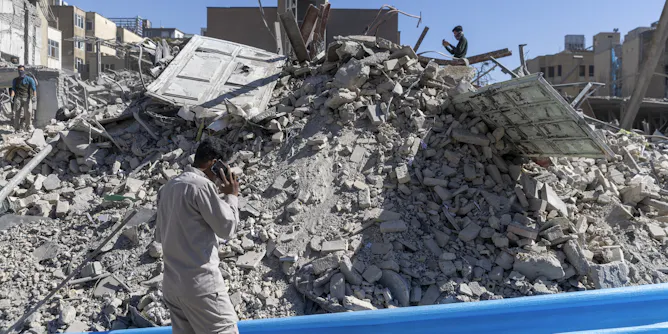
At the tail end of the Vietnam War, Congress engaged in a breathtaking act of legislative assertion, affirming that lawmakers held the power to declare war – not the president.
Articles on War Powers Act
Displaying all articles
Congress has a legal, constitutional and even moral responsibility to assert itself as a branch when it comes to military actions by the US, says an expert on war powers.
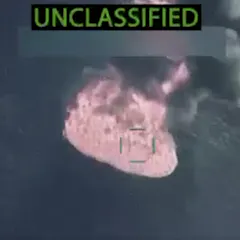
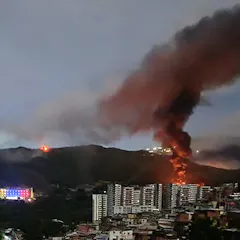
President Trump OK’d a naval buildup in the Caribbean, strikes on boats in international waters and covert operations in Venezuela. A military analyst can’t see a coherent strategy or objective.
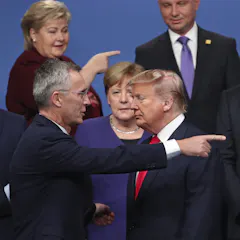
NATO’s primary tenet is that an attack on one member is an attack on all. Donald Trump has made clear that he won’t uphold that core principle, putting the future of NATO at risk if he’s re-elected.
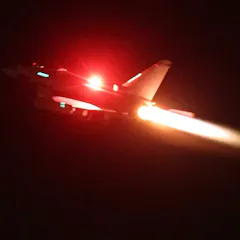
In the wake of US attacks against Houthi militants in Yemen, a scholar of presidential power to use the military examines the history and present of the laws around US military action.
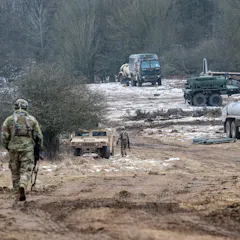
President Joe Biden is deploying 3,000 troops to support NATO in Eastern Europe. By doing so, Biden enters both a regional conflict and tangled legal territory.
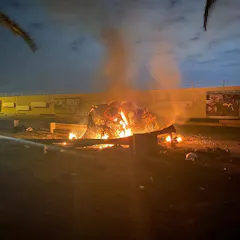
A new proposal also puts pressure on presidents to evaluate their foreign policy objectives more clearly to determine whether military action is, in fact, appropriate.
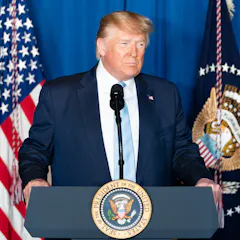
Both President Trump and President Obama used military force without informing Congress, or getting its approval. But the differences reveal more than the similarities.
Top contributors
-

Associate Professor of Political Science, Rochester Institute of Technology; Institute for Humane Studies
-
Professor of Political Science, Boise State University
-
Professor of Political Science, Kansas State University
-
Paterson Chair in International Affairs, Carleton University
-
Professor of Political Science, University at Buffalo
-
Professor of the Practice of Political Science and International Relations, USC Dornsife College of Letters, Arts and Sciences