

If fair and equitable pay is truly a Canadian value, attention to wage inequality cannot stop at gender.
Articles on Wage inequality
Displaying all articles

By 2025, 45% of full-time workers in Australia had ‘six figure’ earnings. But years of high inflation mean cracking this threshold doesn’t mean what it used to.

The richest 1% of Africans received 27% of the total revenue from growth on the continent. This is one of the inequalities that needs to change.

We found concerns about income inequality in Australia are strongly related to dissatisfaction with democracy. This suggests Australia’s satisfaction with democracy is at risk.
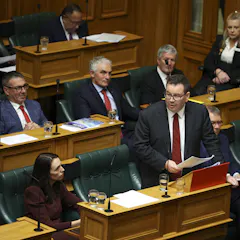
It’s potentially the biggest change to welfare since ACC and would favour those on higher pay – so why does the public know so little about it?

After the pandemic is over, grocery workers and nurses will still be essential. But will they be paid any better?

Nobody else, apart from CEOs, has enjoyed a similar rise in their fortunes since the 1980s.

The official figures show things are fine, but Australia’s most comprehensive tracking survey finds the typical household is worse off than ten years ago.
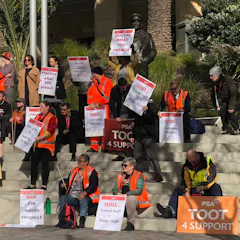
Last year, more than 70,000 workers walked off their jobs in New Zealand – the highest number of people on strike since the late 1980s. The reasons for the strike wave are political and economic.

Research suggests union membership by default could help reduce income inequality and its associated social ills.
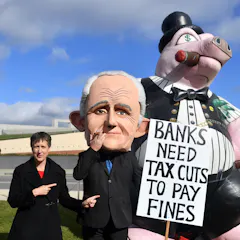
This is the first article in a series, Reclaiming the Fair Go, to mark the awarding of the 2018 Sydney Peace Prize to Nobel laureate and economist Joseph Stiglitz.

Over two centuries, capitalist ethos has swung from profit-taking for the few, to a distribution of wealth to the many, and back again. Is the pendulum poised to swing once more?

Governments can’t undo the technological changes behind frozen wages and rising inequality. The best policy is to invest in education and training to give workers skills of value in the new economy.

News that Australian CEO pay has soared to a 17-year high at a time when ordinary workers’ wages are flatlining is ultimately bad news for economic growth and prosperity.
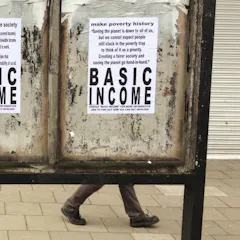
Despite a range of laws and policy measures, many gender inequities seem firmly entrenched. One innovative policy measure that could make a difference is basic income.

Refugee policy may well be a humanitarian issue. But it is also a development issue.

Even with the most favourable laws, unions will still need to confront the reality of a dramatic transformation in the world of work.
Top contributors
-

Lecturer in Management, Employment and Organisation, Cardiff University
-
Dean of Programs, EM Lyon Business School
-
Professor of Forced Migration and International Affairs, University of Oxford
-
Professor of Economics, University of Sydney
-
Visiting Fellow, College of Business & Economics, Australian National University
-
Professor of Business Studies, Trinity College Dublin
-
Professor of Political Economy, The University of Queensland
-
Distinguished Professor of Workplace Law, RMIT University
-
Professor and Head of School, School of Economics, University of Sydney
-
Lecturer in Law, University of the West of England
-
Law Student, Te Herenga Waka — Victoria University of Wellington
-
Adjunct Research Fellow, School of Government, Te Herenga Waka — Victoria University of Wellington
-
Visiting Fellow, Crawford School of Public Policy, Australian National University
-
Affiliate Research Associate, School of Political and Social Sciences, University of Glasgow
-
Professor, University of Waikato