
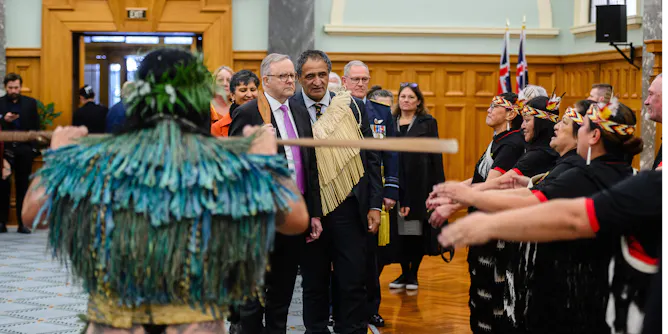
Despite the claim ‘there is no comparable constitutional body like this anywhere in the world’ many countries have similar institutions to the proposed Voice.
Articles on Voice to Parliament referendum
Displaying 21 - 40 of 70 articles

One interviewee told us: ‘Today our lives are being governed by a bureaucrat who hasn’t seen a Blackfella in their life or haven’t spoken to one.’
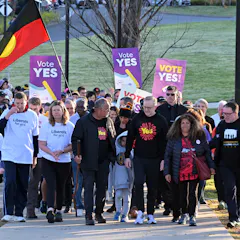
It is notoriously difficult for referendums to succeed in Australia – but there are lessons from those that have gone before about how to improve their chances.
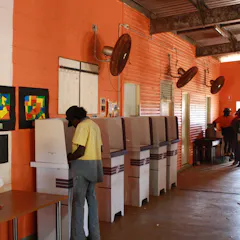
From a legal standpoint, there is a difference between a state and a territory, and for some that justifies giving territory voters less say over changes to the national constitution.

While most repeat referendums fail, it is possible to succeed if the referendum proposal is altered or untethered from an unpopular element.
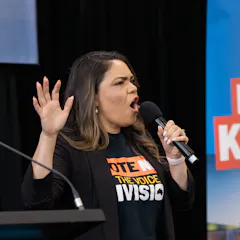
The ‘no’ side is successfully engaging young people on TikTok by combining volume (posting multiple TikToks a day) with authenticity, use of personal narratives and humour.
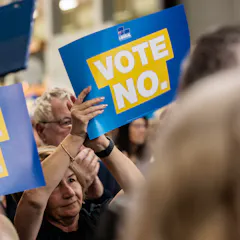
Unfortunately we’re a bit out of practice in how to conduct ourselves in a referendum. These seven rules may help.
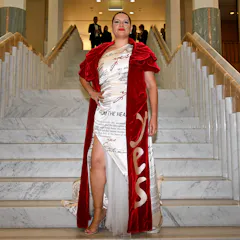
It would have amazed campaigners from 1967 to see people today wearing outfits that overtly describe the movement.
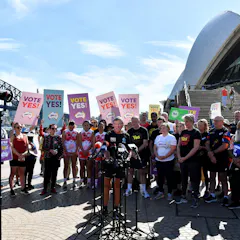
It might sound like difficult terrain, but ideas of nationhood can be progressive as well as regressive, and could help bind Australians ahead of the Voice referendum.
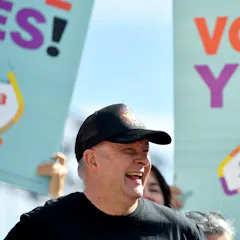
Three political scientists update us on the Voice campaign and how it’s tracking in the news, on social media and in the polls.
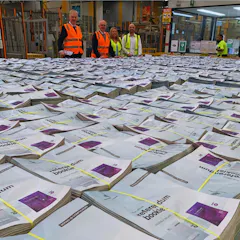
The “yes” and “no” cases have outlined their arguments to be sent out to Australian voters. Here, legal experts examine the claims by both sides to see if they stack up.
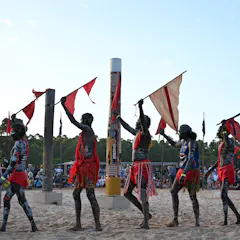
This week on Word from The Hill, @michellegrattan and @amandadunn10 discuss the coming date for the Voice referendum, the Intergenerational report and Labor's national conference
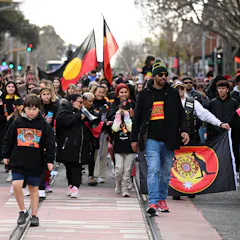
A Productivity Commission report released this week highlighted the continued lack of agency First Australians have - even though a comprehensive framework is already in place to try to Close the Gap
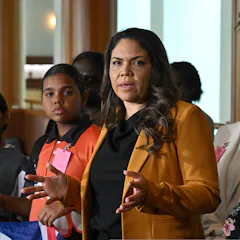
Waging a war on ‘woke’ on issues from climate change to Anzac Day, the right-wing answer to ‘GetUp!’ is leading the ‘no’ vote against a Voice to Parliament.
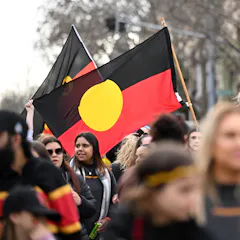
The broad-ranging criticism is contained in the commission’s first review of the 2020 “National Agreement on Closing the Gap”

For those who promote ‘no’ to the Voice, ATSIC is either an example of why we don’t need a Voice, or of government duplicity not to be trusted.

While the ‘yes’ case relies on the authority of experts, the ‘no’ case hopes that sheer weight of arguments will win votes.
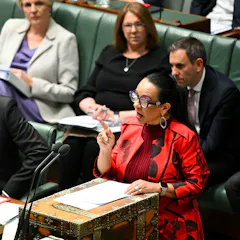
The parliamentary week showed that if the government is to maximise the chance of a “yes” vote, it needs to sharpen its performance – in particular, that of Linda Burney.
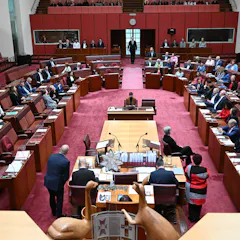
The vote took place with the public gallery crowded with supporters, and was received with long applause.
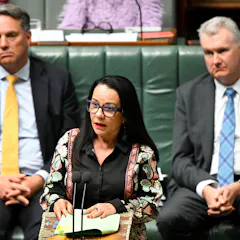
Meanwhile, the Liberal Party continues to deal with the fall-out from last week’s accusations against Senator David Van.
Top contributors
-

Professorial Fellow, University of Canberra
-
Professor Emerita in Constitutional Law, University of Sydney
-
Associate Professor, Faculty of Law & Justice, UNSW
-
Professor of Law, UNSW Law School, UNSW
-
Senior Lecturer of Indigenous Studies, Indigenous Education and Research Centre, James Cook University
-
Professor of Political Communication; Director CAJII, The University of Melbourne
-
Honorary Professor, University of Sydney
-
Professor in Human Rights and International Law, University of Newcastle
-
Director, La Trobe Centre for Global Security, and Professor of International Relations, La Trobe University
-
Election Analyst (Psephologist) at The Conversation; and Honorary Associate, School of Mathematics and Statistics, The University of Melbourne
-
Principal Research Fellow, James Cook University
-
Translational Fellow Nulungu Research Institute, University of Notre Dame Australia
-
Lecturer, Griffith Law School, Griffith University
-
Associate Professor, Macquarie University
-
Senior Lecturer, School of Humanities and Social Sciences, Deakin University