
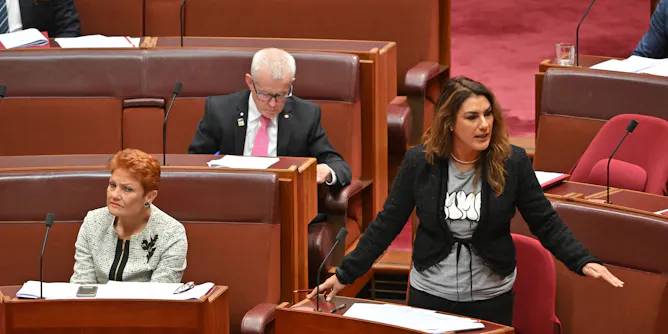
A ‘mini-public’ of regular citizens has been proven to be an effective way of translating complex policies to the general public in an accessible, trustworthy way.
Articles on Voice to parliament
Displaying 81 - 100 of 172 articles
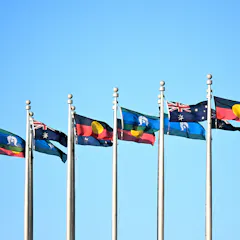
Mis- and disinformation about the Voice to Parliament proposal are rife. Here, experts address 10 of the most common myths.

While sports bodies are notable advocates of a Voice to parliament, they might want to consider how much of a voice Indigenous athletes have in their own organisation.
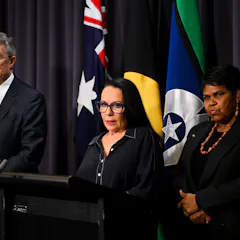
The polls are showing wildly different results for the likelihood of the Voice to parliament succeeding - which may be explained by who they are polling.

These histories remind us how long First Nations people have waited for political recognition in this country – and that, compared to other former colonial sites, Australia is the exception, not the rule.
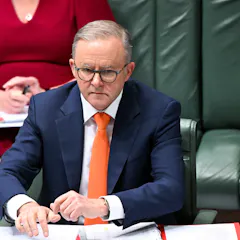
The Labor government maintains a healthy lead in the polls, but support for the Voice to parliament appears to be slipping.
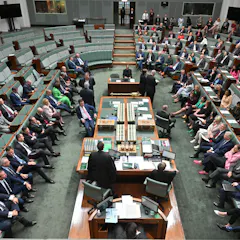
The final vote was 121 in favour and 25 against. The bill now goes to the Senate where it is assured of passage later this month

Journalism only exists to serve the public, and every serious journalist feels this in their bones, just as we all know how often we fall short.

It’s important to understand that a First Nations consultative body such as the Customary Senate doesn’t pose a ‘threat’ to democracy or the rule of law.

Labor’s post-election honeymoon shows no sign of ending, but the Voice referendum is on shakier ground.
Maintaining impartiality does not require the media to publish nonsense, and certainly does not require them to publish nonsense without drawing attention to the facts or contrary evidence.
History shows the “yes” vote tends to drop off as referendum day nears, and the government will need to maintain its strong polling lead for the vote to succeed.
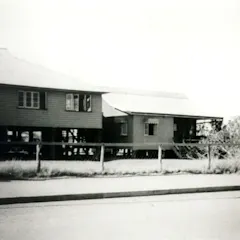
Research conducted with Gkuthaarn and Kukatj community members helps paint a picture of the lives of eight young Aboriginal people who lived during early colonial expansion.
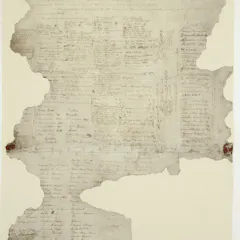
Far from expanding its jurisdiction or having a veto over parliament, the powers of New Zealand’s Waitangi Tribunal have been steadily reduced in recent decades.
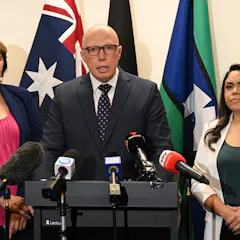
Menzies created the Liberals from the rubble of its once successful but ultimately dysfunctional forebear, the UAP. It wasn’t the first time the centre-right reinvented itself. It could happen again.

There are lessons from history in how to hold the Liberal Party together – and it’s about more than just opposing everything the government does.
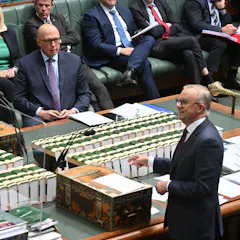
A round-up of the latest polls shows the Albanese government continues to ride high, while polls on the Indigenous Voice to parliament vote are mixed.

The solicitor-general said the model is compatible with responsible government, and an ‘enhancement’ of the system.

The latest Essential poll also gave federal Labor a 52-43 two party lead.
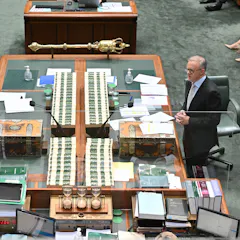
Legislation is an unsatisfactory way to institute a Voice to Parliament because, among other reasons, it would make the body insecure and vulnerable to the whims of different governments.
Top contributors
-

Election Analyst (Psephologist) at The Conversation; and Honorary Associate, School of Mathematics and Statistics, The University of Melbourne
-
Professorial Fellow, University of Canberra
-
Professor of Law, UNSW Law School, UNSW
-
Professor Emerita in Constitutional Law, University of Sydney
-
Lecturer, Griffith Law School, Griffith University
-
Professor, Australian and Aboriginal History, Faculty of Arts, Design and Architecture, Convenor: Indigenous Land & Justice Research Group, UNSW
-
Principal Research Fellow, James Cook University
-
Senior Lecturer in Law at the University of Queensland, The University of Queensland
-
Adjunct Professor, Stout Research Centre, Victoria University of Wellington and Auckland University of Technology, Professor of Political Science, Charles Sturt University
-
Professor of Political Communication; Director CAJII, The University of Melbourne
-
Pro Vice-Chancellor Indigenous UNSW and Professor of Law, UNSW ; University of Pennsylvania
-
Associate Professor, UNSW
-
Associate Professor, Faculty of Law & Justice, UNSW
-
Associate Professor, Macquarie University
-
Honorary Professor, University of Sydney