

An expert in the field of cryptocurrencies answers the question: Is crypto really here to stay or is it just a fad?
Articles on US Federal Trade Commission
Displaying 21 - 40 of 43 articles
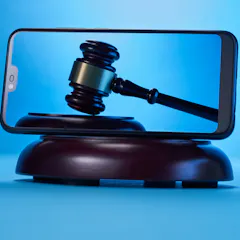
The US government regulates many industries, but social media companies don’t neatly fit existing regulatory templates. Systems that deliver energy may be the closest analog.

Even a burner phone paid for with cash can reveal your identity and where you’ve been. A data privacy expert explains.

Deceptively labeled buttons, choices that are hard to undo, web designs that hide options – these dark patterns are how some websites trick people into giving up their money and information.

While noncompetes may make sense for well-paid executives who possess trade secrets, they make less sense for low-paid workers – yet many are subject to the agreements.

The Federal Trade Commission is rattling its saber at the technology industry over growing public concern about biased AI algorithms. Can the agency back up its threats?
What made Facebook grow big wasn’t what its targets would have been without it, it was what they were able to do with it.
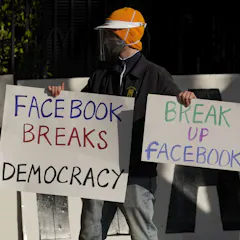
American antitrust proceedings against Facebook represent a dramatic pivot, one that aligns the U.S. government with the global movement seeking greater public oversight of Big Tech.

While relying on internal documents can be controversial, Zuckerberg’s emails are so detailed and specific that they’re impossible to ignore.

The T-Mobile-Sprint merger is the latest example of weakened enforcement of antitrust laws, which reduces competition and exacerbates already-record levels of inequality.

There’s no way an independent assessor will be able to actually monitor how Facebook might violate or abuse users’ privacy in key ways.

Tobacco companies are enlisting the help of social media influencers to promote traditional cigarettes and their brands to young people.
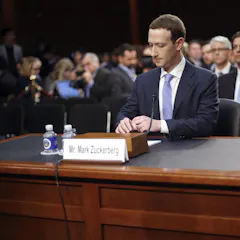
Facebook is realizing it has broad obligations to society. Here’s how it could start meeting them.

US privacy laws focus on informing consumers what’s happening with their data; other countries specifically restrict data collection and analysis.

Digital innovations are making it easier to give to charity and for donors to become informed before they support nonprofits.

The deal escaped scrutiny because the two aren’t direct competitors, yet Amazon’s huge marketing platform will help Whole Foods steamroll rivals. In the past, the Supreme Court has said this violates antitrust law.
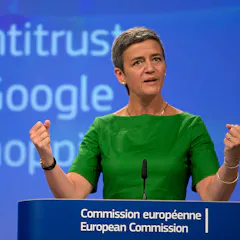
Europe’s approach to antitrust enforcement picks up where the US left off in the 1980s, when the view that breaking up monopolies hurt innovation took hold.
A new agreement between the European Union and the U.S. would provide more protection of Europeans’ data against American mass surveillance than was required before.
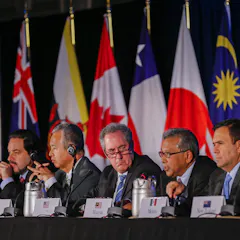
Before the last round of negotiations, only a handful of issues remained in the way of concluding the TPP. A potential deal-breaker for Australia was intellectual property protections for biologics.
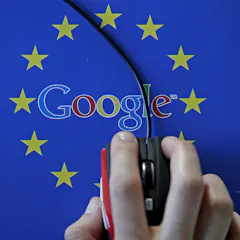
The EU is accusing Google of abusing its dominance in search, yet a similar antitrust case in the US led to a settlement. What counts for the divergent outcomes?
Top contributors
-

Professor Emeritus of Management, Colorado State University
-
Professor of Economics, Monash University
-
Teaching Professor at WVU
-
Professor of Information Systems, Michigan State University
-
Professor of Law, University at Buffalo
-
Investigative Journalist, The Conversation
-
Assistant Professor of Law, University of Kentucky
-
Director of Energy Studies, University of Florida
-
Professor of Cyber Security and Policy, Tufts University
-
Affiliated Faculty Member, Institute for Computational and Data Sciences, Penn State
-
Professor of Business Law and Ethics, Indiana University
-
Grosscurth Professor of Intellectual Property Law and Technology Transfer, University of Louisville
-
Assistant Professor of Business Ethics and Law, California State University, Northridge
-
Professor of Political Science and Founding Director, Center for Environmental Politics, University of Washington
-
Associate Professor of of Media Production, Management and Technology, University of Florida