

Politicians have long raised concerns about the extent to which international human rights law affects UK migration policy.
Articles on UK immigration policy
Displaying all articles
Migrants were less likely to understand their rights and responsibilities after immigration rules recently changed.

Nando Sigona and Michaela Benson argue Britain’s Rwanda plan was brought about as a result of a Brexit-made policy failure. Listen on The Conversation Weekly podcast.

Making election promises about migration numbers is much easier than keeping them.

An expert on immigration law explains the latest developments with the safety of Rwanda bill.

Immigration policy treats some people’s family life as less legitimate than others’.
As long as there is war and persecution, there will be people in need of protection.

The new proposals will be devastating to any British citizen who falls in love with a foreign partner.

Leaving the European convention on human rights would not automatically make the Rwanda plan lawful or easier to implement.

Semi-carceral facilities accommodating irregular migrants are designed to be hostile spaces that expose people to substandard conditions and keep them on the move, detached from wider society.

This judgment is a victory for refugees and the organisations that support them.

Facing incentives to leave and high unemployment at home, Albania’s young people are migrating in large numbers.

After Brexit, the UK has had fewer migrants from the EU, but they have been far outstripped by people coming from elsewhere.
Net migration numbers tell us little about the effectiveness of migration policy.
UK law says that detention should only be used when deportation is imminent.

Short-term Home Office facilities are holding people seeking refuge in overcrowded, unsanitary conditions and for far too long. This crisis has political roots.
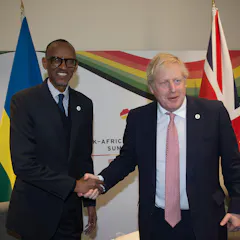
Richer nations are increasingly looking to offshore their immigration processing and further their own economic and political interests at the same time.
Top contributors
-

Senior Lecturer in Law, UNSW
-
Researcher, Centre on Migration Policy and Society (COMPAS), Deputy Director, Migration Observatory, University of Oxford
-
Professor of Law, University of Bristol
-
Host, The Conversation Weekly Podcast, The Conversation
-
Associate Professor, School of Geography, Earth and Environmental Sciences, University of Birmingham
-
Lecturer in Law, King's College London
-
Professor of Migration Studies, University of Bristol
-
Associate Professor of Architecture and Urban Studies, University of Cambridge
-
Professor, Department of Politics, University of Liverpool
-
Professor of Hispanic, Cultural and Migration Studies, Queen Mary University of London
-
Senior Lecturer in Sociology and Policy, Aston University
-
Senior Visiting Research Fellow, UCD Sutherland School of Law, University College Dublin
-
Professor of International Migration and Forced Displacement and Director of the Institute for Research into International Migration and Superdiversity, University of Birmingham
-
Professor of Migration Law, University of Exeter
-
Senior Researcher, Migration Observatory, University of Oxford