
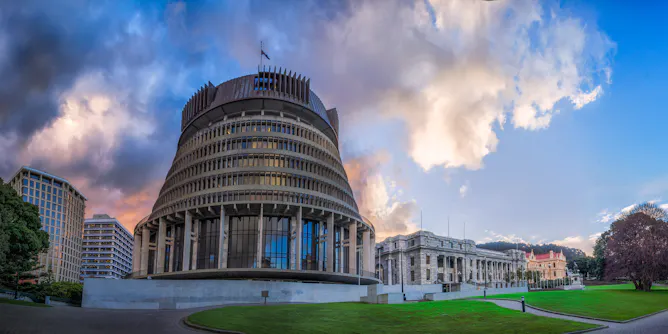
Calls for an overhaul of New Zealand’s freedom-of-information rules have gone largely unheeded for years. But momentum for reform seems to be building.
Articles on Transparency International
Displaying all articles
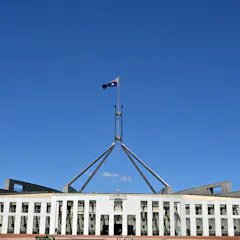
The latest annual Corruption Perceptions Index shows Australia has reversed its decade-long slide, ranking back in the top 10 least corrupt countries.

New Zealand has dropped six points on the main global index of perceived corruption. To turn that around, the government must guard against state capture by vested interests.

A review of Transparency International’s recently released global corruption ranking confirms that corruption fuels war, and vice versa.
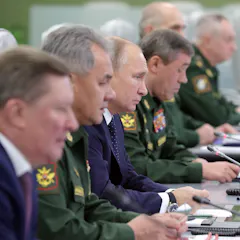
Russia’s botched invasion of Ukraine vividly demonstrates the real-world impacts of corruption, with Russian soldiers forced to eat rations years out of date while their leaders bought mega-yachts.

Increasing perceptions of corruption in Australia could be suppressing economic growth by as much as 0.6%
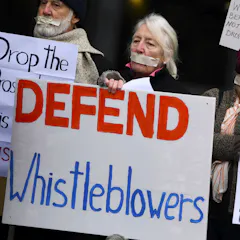
Australia has plummeted in Transparency International’s corruption perception index over the past decade. It’s time our leaders commit to real reform.

Former presidents Obasanjo and Mbeki have arguably made the most important contribution to Africa in the 21st Century by promoting peace, democracy, regional integration and pan-Africanism.
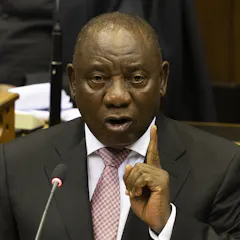
Those in charge in South Africa following its recent election should focus on improving governance and weeding out corruption.
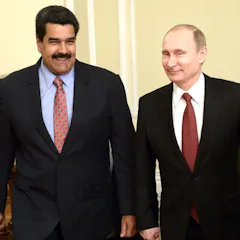
The rankings in Transparency International’s 2018 index shows that highly democratic countries tend to have low levels of corruption. Is there something inherent in corruption that can kill democracy?

The Siemens scandal needs to be remembered because it’s emblematic of what needs to be done to stop corruption.

Public sector corruption is a major challenge to doing business in Africa and players are mostly ill-equipped to deal with it. Business schools can teach the skills to tackle it.

Protests in Tunisia and Morocco show underlying causes of the Arab uprisings remain intact.
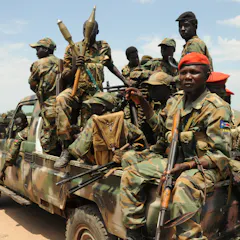
There’s still hope South Sudan can avoid becoming a full failed state. This will require radical changes in Juba’s mindset and bolder action from regional and international players.
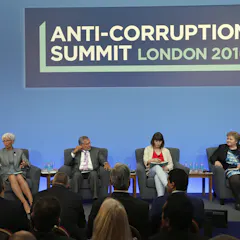
Follow the money behind the likes of Transparency International and a picture starts to emerge.
Two recent events have highlighted the potential pitfalls of miners doing business in developing states. The first was the departure of Tom Albanese as Rio Tinto’s Chief Executive following a $13.3 billion…
Top contributors
-

Professeur / Professor, Audencia
-
Professor of Public Policy & Law, Centre for Governance & Public Policy, Griffith University
-
Fellow in Historical Studies, The University of Melbourne
-
Honorary Research Fellow, School of Social Sciences, University of Aberdeen
-
Senior Lecturer in International Relations, University of Aberdeen
-
Director of the Centre for Global Development and Professor in the School of Education, University of Aberdeen
-
Senior Research Fellow, Norwegian Institute of International Affairs and Visiting Professor University of Buckingham, Norwegian Institute of International Affairs
-
Director, The Future of Diplomacy at the Institute for the Future of Knowledge, University of Johannesburg
-
Extraordinary Senior Lecturer at the School of Public Leadership, Stellenbosch University
-
Professor of International Business & Strategy, Auckland University of Technology
-
Lecturer in Politics and International Relations, University of Aberdeen
-
Senior Lecturer in Journalism, Auckland University of Technology
-
Senior lecturer, University of Sydney
-
Associate Professor of Strategy & IB, University of Bath