

Partly in response to the so-called ‘reproducibility crisis’ in science, researchers are embracing a set of practices that aim to make the whole endeavor more transparent, more reliable – and better.
Articles on Transparency
Displaying 141 - 160 of 195 articles

Policing culture is often associated with a lack of transparency and a resistance to external examination.

Past presidents have made strange requests of the FBI, some of which were documented by J. Edgar Hoover.

Crime data reflect only what crimes are identified by the police – not all the crimes that occur. So decisions based on crime data are necessarily biased and incompletely informed.
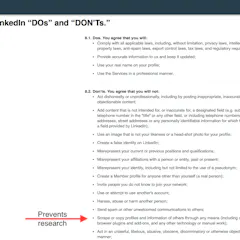
Algorithms can have enormous consequences on people’s lives, yet a federal law prevents us from studying whether they may be biased, unfair or discriminatory.

A study that suggested Chronic Fatigue Syndrome was more psychological than physical has been debunked. How did the data get doctored?

Can social media create opportunities to identify and challenge government pitfalls and problematic policies?

Politicians should be subject to a penalty regime similar to the far more stringent one that applies to company directors.

A European Union law will require human-understandable explanations for algorithms’ decisions. A team of researchers has found a way to provide that, even for complex calculations.

South Africa’s mining industry is on an unsustainable trajectory and needs to undergo fundamental transformation that emphasises transparency, equity, and community participation.

The government has announced it will accept recommendations to make the university admissions process more transparent. But that alone isn’t enough.

A historian and biographer of J. Edgar Hoover answers questions on how FBI director James Comey is handling a position with a dark past.

China will have to play by international rules on transparency and accountability if it wants to secure its place as a leader for economic development in Asia.

The World Bank risks looking hypocritical and becoming redundant if it doesn’t improve its own management.

The financial products offered by the shadow banking sector allow investors to be further removed from their investments and banks to escape regulation, increasing the risk in the sector overall.

The government should follow through on setting up a register of beneficial ownership of companies if it wants to get serious about tax evasion.

Why is it that we want strong democracies for ourselves, but “economic czars” for others?

A new report from Sense About Science reveals the scale of politics before evidence.

Data-driven algorithms drive decision-making in ways that touch our economic, social and civic lives. But they contain inherent biases and assumptions that are too often invisible to the public.

Pay transparency laws are the latest effort to eliminate the still-yawning gap between the salaries of men and women. Do they work?
Top contributors
-

Democracy Deputy Program Director, Grattan Institute
-
Professor of Public Policy & Law, Centre for Governance & Public Policy, Griffith University
-
Professorial Fellow, University of Canberra
-
Associate professor, Department of Family and Community Medicine, University of Toronto; York University, Canada; University of Sydney
-
Chief executive officer, Grattan Institute
-
Senior Research Fellow in Commercial Determinants of Health, The University of Melbourne
-
Professor of Information Systems, Michigan State University
-
Postdoctoral Research Fellow in Psychiatry and Behavioral Sciences, Medical University of South Carolina
-
Professor of Medicine and Public Health, University of Colorado Anschutz
-
Professor of Public Affairs and Administration, Rutgers University - Newark
-
Associate Professor, Accounting, University of Technology Sydney
-
Professor of Law, University of Baltimore
-
Lecturer, Accounting Discipline Group, University of Technology Sydney
-
Professor of Law, University of Waikato
-
Associate, Grattan Institute