
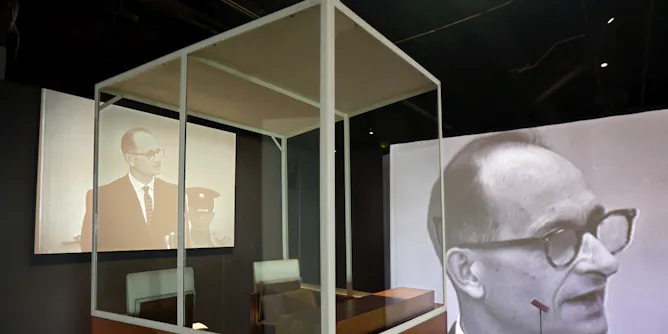
As a child of Hungarian Jews, reading Eichmann in Jerusalem was a revelation to Peter Christoff. Yet might the ‘Eichmann problem’ of criminal disregard apply, today to those exploiting fossil fuels?
Articles on The book that changed me
Displaying all articles

Pierre Hadot sees philosophy as a guide to improving our contemporary lives.

All over the world, the territories of Indigenous peoples map onto regions of the richest and most persistent biodiversity. A book about hunter-gatherer Arctic peoples shows why.

Augustine’s Confessions has become a modern classic because it feels so immediate and familiar to our current desire for self-understanding.
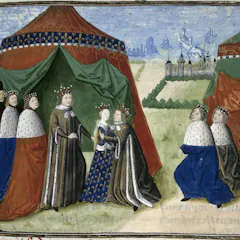
When Stephanie Trigg was a young reader, The Gentle Falcon, set in 1396, introduced her to the beauty and danger of the medieval world.
From the 18th century, historians taught us to understand the world as a story of linear progress. But this viewpoint made them architects of empire. History, writes Yves Rees, has blood on its hands.
The old-fashioned Hollywood femme fatale leaps off the leopard skin rug to hijack the narrative in this lurid, avant-garde novel.
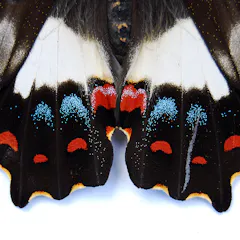
There are 900,000 described species of insects in the world. Field guides help us make sense of them.
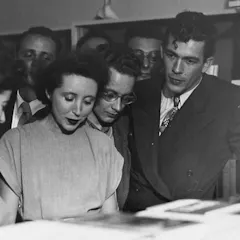
To a 17-year-old girl fresh out of convent school, Anaïs Nin’s diaries were a revelation. Nin found the words to describe inner worlds.
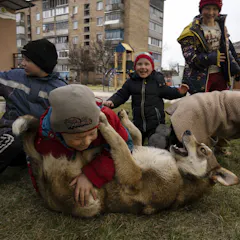
The poems in The Honey of Man may cast a harsh light on human cruelties and stupidities, but they avoid hopelessness or helplessness.
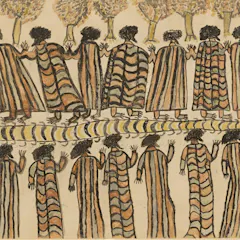
Can a poem tell us more about the past than a history book?
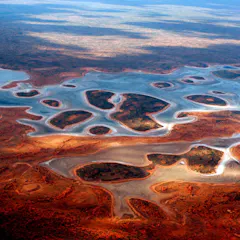
John Woinarksi’s copy of this 1935 classic of environmental writing is older than him, mostly broken, much read and priceless.
Top contributors
-

Senior Research Fellow and Associate Professor, Melbourne Climate Futures initiative, The University of Melbourne
-
Professor in Public History, University of Technology Sydney
-
Professor in Philosophy, Australian Catholic University
-
Associate Professor in Archaeology and Space Studies, Flinders University
-
Distinguished Professor Emerita of Creative Practice, Faculty of Arts and Design, University of Canberra
-
Senior Lecturer in History, La Trobe University
-
Associate Professor in Creative Writing, Griffith University
-
Professor of Conservation Biology, Charles Darwin University
-
Associate Professor in Entomology, University of Sydney
-
Research Fellow and ARC DECRA Fellow, Institute for Religion and Critical Inquiry, Australian Catholic University
-
Redmond Barry Distinguished Professor of English Literature, The University of Melbourne
-
Honorary Principal Fellow, Human Geography, University of Wollongong