

Why is there such a great discrepancy between what scholars of education have been telling us and what happens in the classroom?
Articles on Tertiary education
Displaying 81 - 100 of 119 articles
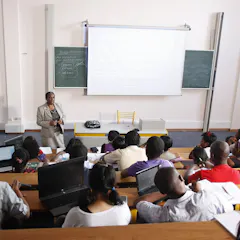
Ghanaian traditional gender norms are the main barrier to Ghanaian women pursuing academic careers.

Student loans offer access to higher education, but should low performing students face restrictions on borrowing? Our research suggests not.

Prisons seem an unlikely source of outstanding university students, but it is. What’s more, those who have done such study are much less likely to reoffend when they get out.

CC BY-NC-ND11.2 MB (download)
Skills, knowledge and a qualification does not ensure successful employment outcomes for graduates.

Universities expand economies, support democracy and promote sustainability.

The tertiary qualifications target requires higher education providers, schools and communities to work together. But higher education can also help close the gap in the other target areas.
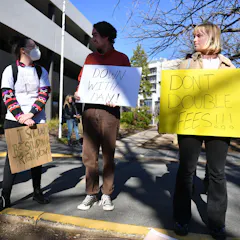
Three decades ago, in another time of upheaval in higher education, 7% of working-age Australians had a degree. Today 33% have one. More people than ever have a stake in what happens to universities.
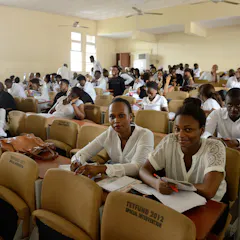
The assumption has always been that students would enjoy online learning but our research, during COVID-19 lock down, found otherwise.
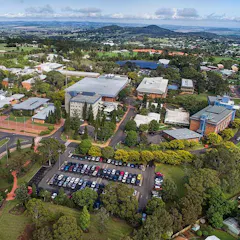
All universities face job losses. But the impacts of these job losses are greatest for regional communities.

India’s new National Education Policy is impressive, and could create opportunities for Australian universities. The key issues, however, relate to implementation.

The government wants more power over university appointments, using financial management as the reason.

More can be done to ease transitions for West African students in the United Kingdom.

Many of the privileges that middle-class students enjoy are not obvious, even to themselves.

For years, we’ve heard Australia’s spending on tertiary education is some of the lowest in the OECD. This is only true if you ignore GDP growth. Real spending was actually going up, until 2016.

In April 2019, the government-commissioned Joyce review made 71 recommendations to reform the VET sector. Here’s what the report said, and what the government is doing about it.

As students return to campuses this week, new research shows universities could save money by not asking professors to teach tutorials because they are no more effective than student instructors.

Many young Australians and their parents don’t consider VET as a potential post-school pathway, even if it might be more suitable for them than university.

Australian tertiary education policy and funding debates are better served by domestic data.
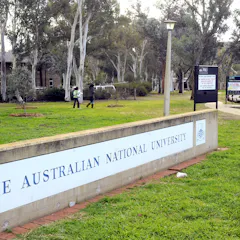
From 2020, ANU will require students to meet co-curricular requirements alongside ATAR. This significant policy shift is meant to improve equity of access, but won’t change much.
Top contributors
-

Professor of Higher Education Policy, Monash University
-
Professor and Director, Mitchell Institute, Victoria University
-
Policy Fellow, Mitchell Institute, Victoria University
-
Professor of Education Policy and Practice, Youth Studies, Monash University
-
Honorary Senior Fellow, Centre for the Study of Higher Education, The University of Melbourne
-
Honorary Senior Fellow, Melbourne School of Psychological Sciences, The University of Melbourne
-
Professor of Public Humanities and Director of the ANU Humanities Research Centre, Australian National University
-
Senior Lecturer, Melbourne Graduate School of Education, The University of Melbourne
-
Research Fellow, Centre for Social Policy Research, Australian National University
-
Lecturer, School of Nursing, University of Wollongong
-
Associate Professor, School of Nursing, University of Wollongong
-
Professor, Child and Youth Development and Longitudinal Studies, Australian National University
-
Senior Lecturer in Education, Deakin University
-
Associate Professor, The University of Western Australia
-
Associate Professor, College of Information & Communication Technology, School of Engineering and Technology, CQUniversity Australia