
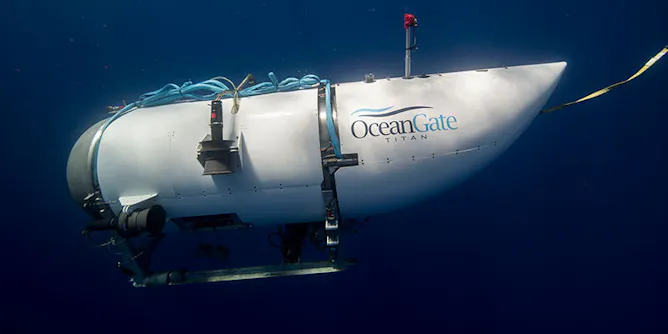
Advances in technology have allowed tourists to go to places and do things they couldn’t in the past. But in extreme environments, the consequences of failure are high.
Articles on Submarines
Displaying 21 - 40 of 89 articles
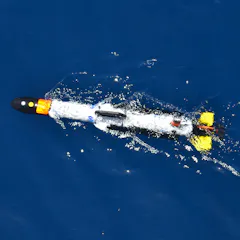
Dramatic improvements in computing, sensors and submersible engineering are making it possible for researchers to ramp up data collection from the oceans while also keeping people out of harm’s way.
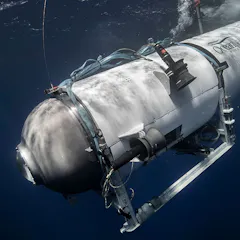
An expert explains some of the best and worst case scenarios facing the missing commercial watercraft.

There’s nothing about the deal that locks Australia into actions future governments cannot withdraw from.
In the first year of the pandemic, Australians were given a glimpse of a truth so unnerving that economists and politicians normally keep it to themselves.
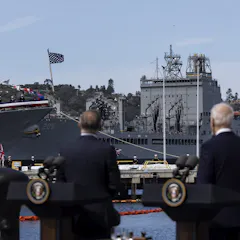
On the face of the announcements made so far, the deal complies with international law, despite accusations to the contrary from China and other critics.
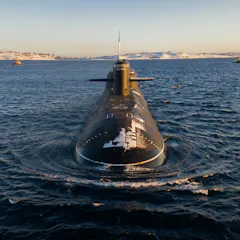
The first AUKUS-class submarine will be delivered in the 2040s. We may only get about a decade of use before adversaries can easily detect the new boats.
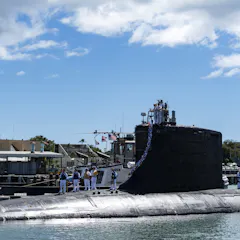
The Australian government has been careful not to over-hype the progress, talking about “stabilising” the relationship, rather than using stronger language
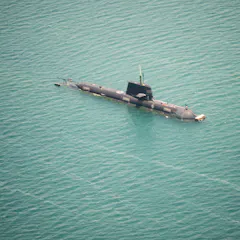
Albanese is expected to visit Washington in the next two weeks to announce the roadmap for the AUKUS submarine agreement.
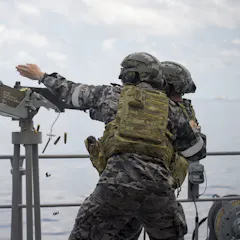
The long-awaited plan for Australia to get nuclear-powered submarines is expected next month, as are recommendations from a major strategic review into our defence force.
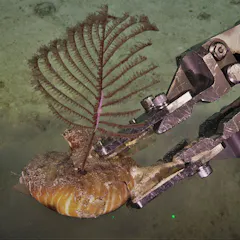
Black corals provide critical habitat for many creatures that live in the dark, often barren, deep sea, and researchers are learning more about these rare corals with every dive.
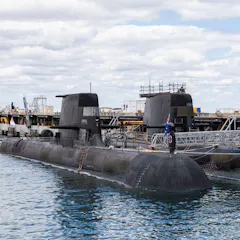
If an interim capability is employed, there’s no consensus regarding what it would look like.
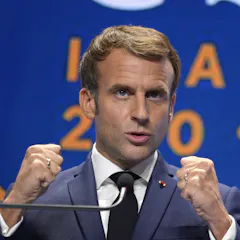
French President Emmanuel Macron has called Australia’s Prime Minister Scott Morrison a liar on the world stage.

Researchers used an old theory on vibrating plane wings to study how fish swim so well. They were able to double the swimming efficiency of their robotic fish over a range of speeds.
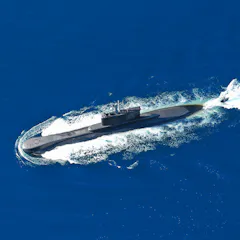
The perception in France of a reversal of strategy is in fact a coherent move for Australia, in line with 200 years of Australian diplomatic tradition – for better or worse.
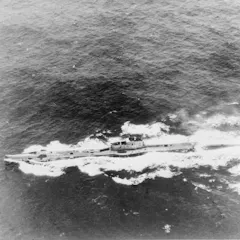
It took nearly two years for the Royal Navy to tell the story of the heroic voyage of the crippled submarine HMS Triumph.
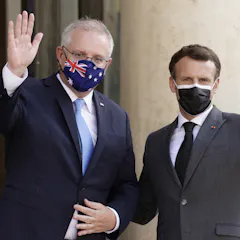
The French submarine deal offered Australia a way to diversify its international partners beyond its traditional allies, the US and UK. Now, this relationship is in tatters.
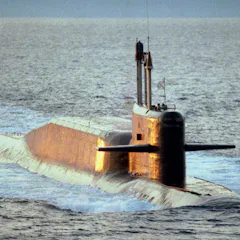
Nuclear submarines are powered by a miniature onboard fission reactor. They can go for decades without refuelling, making them faster, stealthier and much more expensive than conventional submarines.
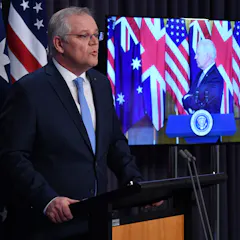
The secrecy surrounding this major announcement is troubling, and there are many questions still to be answered.
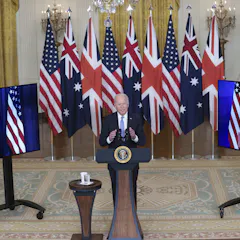
The so-called AUKUS pact will include a fleet of nuclear-powered submarines to counter the growing threat posed by China.
Top contributors
-

Professorial Fellow, University of Canberra
-
Professor, Strategic and Defence Studies Centre, Australian National University
-
Lecturer, Public Safety, University of Tasmania
-
Professor, University of Technology Sydney
-
Associate Professor, School of History, ANU / Chercheur Associé at the Centre d’Histoire de Sciences Po, Australian National University
-
Associate Professor, Strategy and Australian Defence Policy, Australian National University
-
Pro Vice-Chancellor Research and Professor of International Studies, La Trobe University
-
Adjunct Professor, Australia-China Relations Institute, University of Technology Sydney
-
Adjunct Professor in Naval and Maritime Strategy and Policy, Australian National University
-
SEACAMS R&D Project Manager, Centre for Applied Marine Sciences, Bangor University
-
Adjunct Lecturer, Faculty of Economics, Hosei University
-
Visiting Fellow, Adelaide University
-
Professor of International Politics, University of Leicester
-
Associate Professor, Politics and Public Policy, Flinders University
-
Professorial Fellow, Melbourne School of Government, The University of Melbourne