

Any work to ease current shortages and price hikes while the Strait of Hormuz remains closed will take years and billions of dollars.
Articles on Strait of Hormuz blockade
Displaying all articles
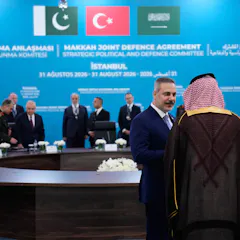
The pact with Turkey and Pakistan has evolved quickly from a vague political commitment. Riyadh hopes it will help it navigate a thorny Middle East crisis.
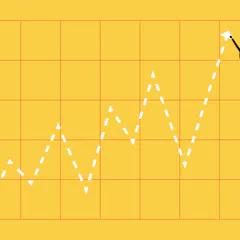
Seven months into the US conflict with Iran, with no clear end in sight, the global oil market has now largely exhausted the safety measures that exist to keep a lid on petroleum prices.
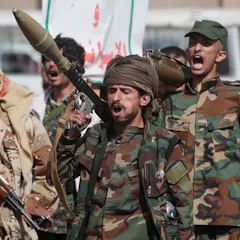
The resumption of fighting, paired with the ongoing closure of the Strait of Hormuz, complicates regional strategy and energy policy for the Gulf powerhouse.
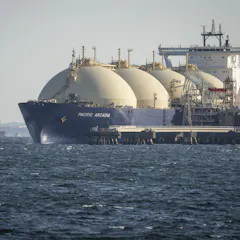
Japan is one of the countries most affected by restrictions placed on one of the world’s most important choke points.

With the declining power of financial sanctions, many countries are now physically boarding ships to enforce scattershot rules of trade, conflict and commerce.

Unable to defeat Iran, Israel shifts its focus to Lebanon, fearing U.S. negotiations with Tehran could limit operations against Hezbollah.
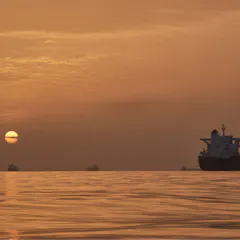
The Strait of Hormuz is closed for the first time in the life of the Islamic Republic. Restoring the brake requires a credible diplomatic offer from the West.
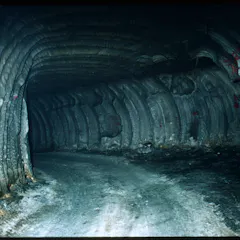
Geologist Scott Montgomery tells The Conversation Weekly podcast how strategic oil reserves work and why the U.S. keeps oil in underground salt caverns.
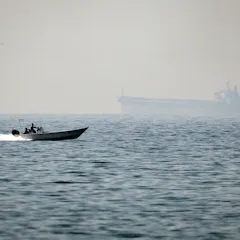
Iranian tariffs in the Strait of Hormuz may change how oil is traded and priced, with implications for currencies, alliances and global economic power.
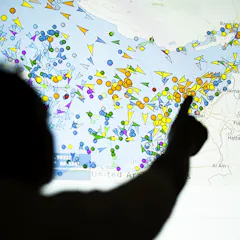
Iran’s decision to levy tolls on ships passing through the crucial choke hold has an unlikely connection to the site of Shakespeare’s ‘Hamlet.’
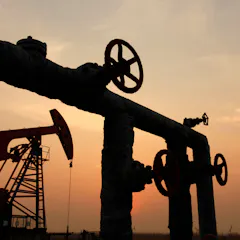
Closing down oil wells can cause long-term damage, which is difficult to reverse.
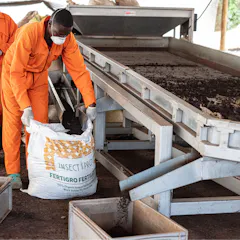
African food systems import 80% of the fertiliser they need. With Iran as a major producer, supplies are now limited and farming with less fertiliser is important.

Tehran and Washington look to different rules to govern their conduct in the key choke point.
A lack of trust, failure to agree to the grounds on which discussion is taking place and Israel’s de facto veto provide insurmountable barriers.
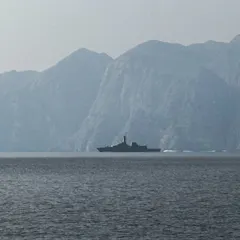
The pivotal waterway is much more than a global economic choke point. It is a politically and culturally dynamic region with its own dangerous undercurrents.
Top contributors
-

Assistant Professor of International Relations, American University
-
Associate Professor of Marine Affairs, University of Rhode Island
-
Senior Lecturer in International Relations, University of Pennsylvania
-
Visiting Fellow in the School of Integrative Plant Science, Cornell University
-
Executive Co-Director, Institute for Water, Environment and Health (UNU-INWEH), United Nations University; Technical University of Hamburg
-
Chair in Flow in Porous Media, Imperial College London
-
Associate Professor of Law, University of Colorado Boulder
-
Associate Professor in Global Studies, University of Auckland, Waipapa Taumata Rau
-
Host, The Conversation Weekly Podcast, The Conversation
-
Assistant Professor, Operations Management, McMaster University
-
Lecturer in International Studies, University of Washington
-
Professor of History and Peace Studies, University of Notre Dame
-
Fellow for the Middle East at the Baker Institute, Rice University
-
Adjunct Professor, School of Foreign Service, Georgetown University
-
Professor of Public Affairs, The University of Texas at Austin