

Australia’s progressive tax system is designed to ensure that those who earn more contribute more accordingly. One of the biggest challenges is ensuring it stays fair over time.
Articles on Stage 3 tax cuts
Displaying 1 - 20 of 23 articles

Interest rates and inflation are lower than expected this time last year. The next set of predictions is likely to be brighter still.
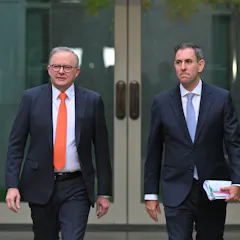
Many of the party’s more ambitious proposals – like free cancer treatment and dental care for pensioners – were abandoned after the 2019 election, and have not resurfaced.
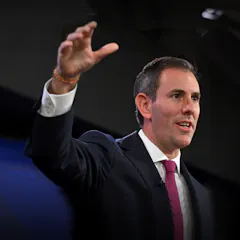
Genuine reform should include tackling tax concessions on superannuation, capital gains and trusts and redesigning the GST.
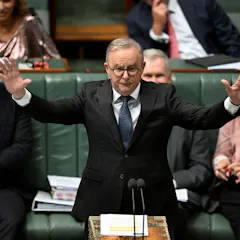
With polling showing strong support for Labor’s new tax changes and the opposition in a difficult position, the prime minister is back in the political ascendency.

A large majority of Australian taxpayers will benefit from the revised tax package, despite the impact of bracket creep over the next decade. But long term, these tax cuts come at a high price.
While two-party preferred polling is steady, a majority of Australians support Labor’s changes to the stage 3 tax cuts.
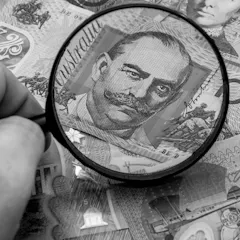
An ANU economic model finds even among the highest earning households, the policy change produces more winners than losers.
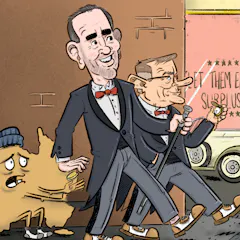
High earners aren’t particularly highly taxed by historical standards, and the earlier stage didn’t do much for low earners.
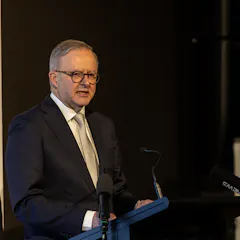
In the government’s dramatic recalibration of stage 3 all taxpayers will get a cut, rather than just those earning more than $45,000.
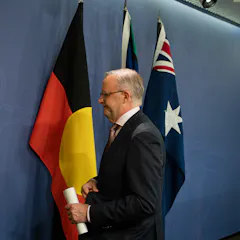
All prime ministers break promises. But there are some whose breaches go into the history books – and Anthony Albanese has just joined that group.

Australia’s tax and transfer systems do less to redistribute income than those in Canada, the United States, the United Kingdom and New Zealand.
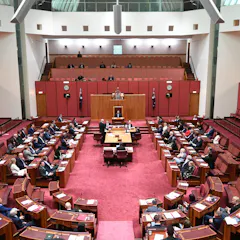
A proposed Senate election reform would be little to fix the unequal representation of the states and territories in the upper house - in fact, it would make it worse.
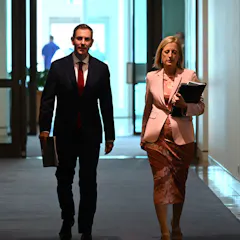
Life hasn’t been this unaffordable in Australia in 40 years. There’s still time to redesign tax cuts starting next July – which would give $9,000 to high earners but just $1,000 to ordinary earners.
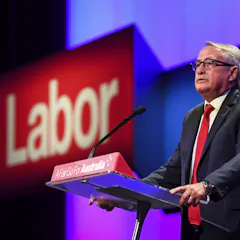
In this podcast we talk with Wayne Swan, the Labor Party National President. Swan was treasurer and deputy prime minister in the Rudd and Gillard governments.
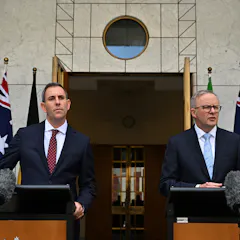
The Albanese government had no intention of giving the Low and Middle Income Tax Offset a further lease of life. It just would have preferred that a pesky journalist hadn’t highlighted the fact
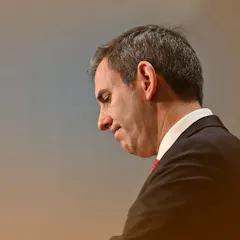
Grattan Institute estimates point to deficits without end, growing with the need for greater spending on health, defence and natural disasters. We’ve presented the treasurer with 13 costed options.
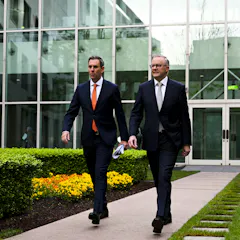
In superannuation, the detail matters, although Treasurer Jim Chalmers would argue there are always points to be nailed down with such changes
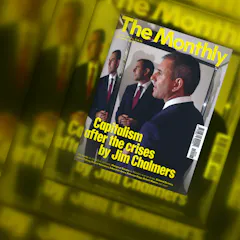
For average Australians, the stagnation of real wages has been the most tangible manifestation of the failure of neoliberalism. Yet “wages” are only mentioned four times in Chalmers’ Monthly essay.
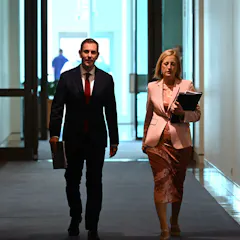
Stage 3 has long been built into both federal budget planning and market expectations. Drawing on the British experience is more a convenient argument than a meaningful parallel.
Top contributors
-

Professorial Fellow, University of Canberra
-
Visiting Fellow, Crawford School of Public Policy, Australian National University
-
Professor, School of Economics, The University of Queensland
-
Democracy Deputy Program Director, Grattan Institute
-
Program Director, Housing and Economic Security, Grattan Institute
-
Election Analyst (Psephologist) at The Conversation; and Honorary Associate, School of Mathematics and Statistics, The University of Melbourne
-
Economist and Director, Centre for Future Work, Australia Institute; Honorary Professor of Political Economy, University of Sydney
-
Associate Professor, POLIS@ANU Centre for Social Policy Research, Australian National University
-
Chief executive officer, Grattan Institute
-
Associate Professor, University of Sydney
-
Fellow, Grattan Institute
-
Deputy Program Director, Housing and Economic Security, Grattan Institute
-
Visiting Fellow, Tax and Transfer Policy Institute, Crawford School of Public Policy, Australian National University