
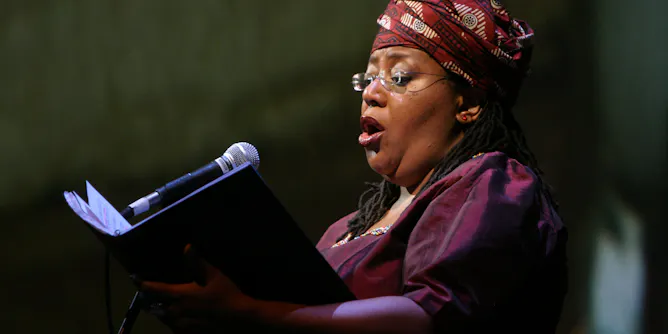
Both choirs and classical music were childhood influences on a stellar career that would leave behind major new recordings in these areas.
Articles on South African music
Displaying 41 - 58 of 58 articles
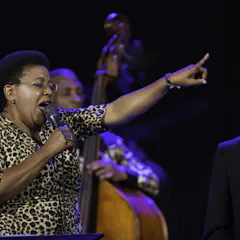
She was a vocalist who sang in every style – from Carmen to UShaka – with equal mastery, popularising classical forms and epitomising ‘the new South Africa’.
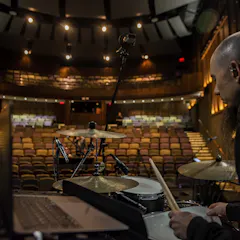
The plight of live music mapped in the new survey should concern anyone looking to the return of the country’s diverse live music scene.

Like Pata-Pata, Homeless and Mbube, the song Jerusalema is elevated by a historical moment in time and has the power to cross over to different audiences.

During the coronavirus pandemic the Jerusalema dance challenge enacted a way for communities to connect - repetitive enough to be picked up and varied enough to tease.
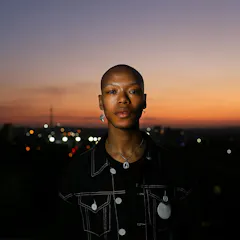
The artist’s body of work, through its very public focus on queer masculinity, offers alternative ways of thinking about what being a man is.
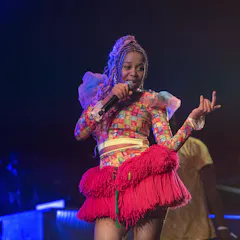
The live streaming of music events online is full of potential – but right now few artists or hosting venues are earning much from it.

His talent took him across the world - he was Ray Charles’ regular drummer - and the music he was exposed to sparked innovation when he returned home.

Her sensitive new album is rooted at home in South Africa while at the same time journeying to Mali, where it was recorded and co-produced with Salif Keita.
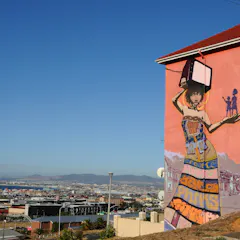
There aren’t a lot of studies on South Africa’s cultural economy. A new one finds a cluster of creative firms in Cape Town with high levels of innovation.
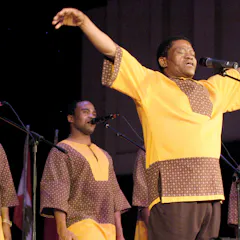
A period of intense dreaming in 1964 shaped the entire body of the late Joseph Shabalala’s songs. In these rare in-depth interviews, he spoke of his beliefs and inspirations.
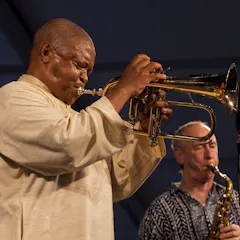
There are many sub-genres of Hip Hop, so why is all non-Anglophone music lumped under the label ‘world music’?
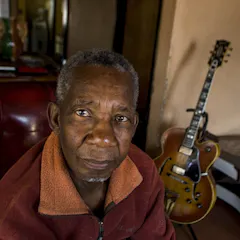
Philip Tabane was unlike any other musician. His music was intimately woven into his cosmology and spirituality.

Kwaito music star Mandoza was an important symbolic figure in the post-apartheid cultural scene. His success and his refusal to relinquish his tsotsi identity redefined what kind of man could be respected in a free South African.
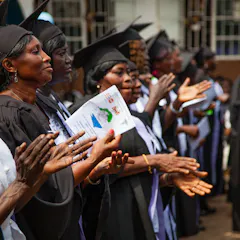
A Latin song takes centre stage at graduation ceremonies around the world, including in South Africa. Isn’t it time the continent used its own methods to celebrate major events?

While the debate seems not to be solvable, three academics look at the question of whether artists should provide entertainment or write for their own pleasure.
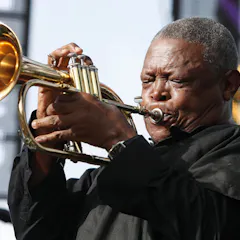
Concert organisers began to compete for government contracts. Often these contracts came with conditions as to who, among musicians, was desirable at government events.
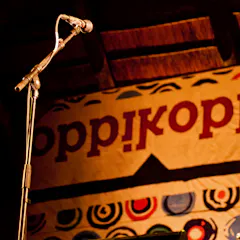
The Oppikoppi Music Festival, one of the biggest and most popular in South Africa, holds on to the musical memories of the past and provides a musical map to the future.
Top contributors
-

Associate of the Gordon Institute for Business Science, University of Pretoria
-
Senior Research Fellow, Institute for Humanities in Africa, University of Cape Town
-
Senior Lecturer, South African College of Music, University of Cape Town
-
Lecturer in Musicology, University of South Africa
-
Extraordinary Professor, Stellenbosch University
-
Lecturer, University of Fort Hare
-
Associate Professor, Department of Music, University of Venda
-
Professor Emeritus, Social Anthropology, University of the Witwatersrand
-
Programme Director for New Archival Visions, Centre for Humanities Research, University of the Western Cape
-
Senior Lecturer, Stellenbosch University
-
Assistant Professor of African and African Diaspora Studies, The University of Texas at Austin
-
Professor of Economics and Researcher at the South African Cultural Observatory, Rhodes University
-
PhD Candidate, University of the Free State
-
Associate professor, University of KwaZulu-Natal
-
Poet and lecturer in Creative Writing, University of the Witwatersrand