
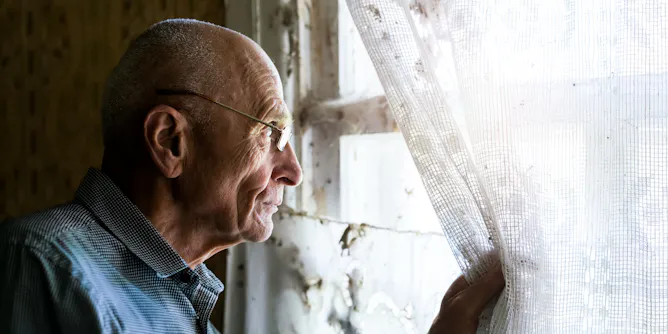
Over the course of the pandemic, there’s been an increase in many aspects of social cohesion.
But this may be slipping as lockdowns drag on. Here’s how we measured social cohesion, and why.
Articles on Social cohesion
Displaying 41 - 60 of 83 articles
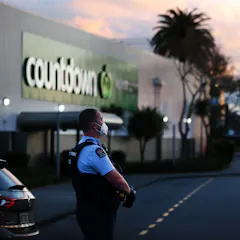
In the wake of the Christchurch and Auckland attacks, should official definitions of terrorism conflate the actions of a white supremacy extremist and a radical Islamist extremist?

Parents and caregivers are central to promoting child safety. Improving their ability to prevent injury to children is key.
International student demand for places in Australia has fallen by a third over the course of the pandemic, while for our key competitors demand has remained stable or even increased.

Hunger is not the cause of the current social upheaval. But, taken along with other deep-rooted structural inequalities, it provides additional fuel for socio-political conflagration.

The low levels of familiarity with key historical events indicate that there are serious shortcomings in the development of national collective memory in South Africa.

The country still has a way to go in addressing the challenges of social inequity. But there has been some progress in every sphere of government.

The Freedom Charter process was an imperfect but impressive attempt at capturing the will of the people and articulating an alternative vision to apartheid South Africa.

It’s the simple, everyday encounters and experiences – a friendly wave, a helping hand – that refugees say makes them feel part of the Australian community.
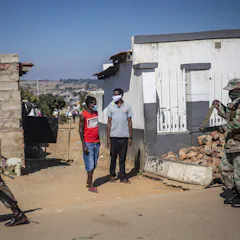
Ramaphosa’s call for a new social compact will fall on deaf ears unless there are some fundamental changes to the way in which the pandemic is being managed.

Almost half of apartment residents in Australia are families, but few high-rise dwellings were built with them in mind. Many find these apartments present barriers to building social connections.

Australian society is made up of people from different backgrounds and faiths. Teaching school children about religious diversity and traditions makes them more tolerant of religious minorities.

There are several ways to deal with discrimination, from initiating national dialogues to training teachers to identify their own biases.

While social media can serve to amplify social divisions, it can also be a tool for resolving conflict between groups.
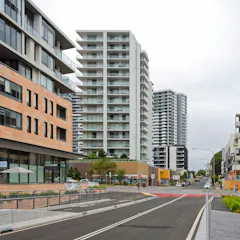
The combination of higher-density living and increasing cultural diversity means we need to think about how to build social cohesion and make the most of the opportunities of apartment living.

Planning matters. The 2005 riots in France started in badly designed housing projects, while innovative planning helped Medellín, Colombia, shed its reputation as the most violent city in the world.
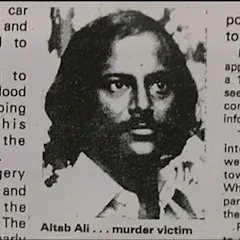
Forty years after Altab Ali’s racist murder in Whitechapel, the story of how it mobilised the Bangladeshi community.
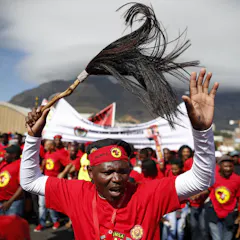
South Africa marks 24 years of freedom amid continuous contests over over governance, economic justice as well as reconciliation and inclusion.
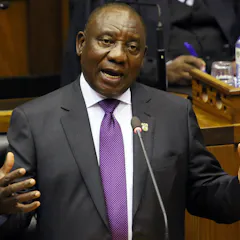
The speech was delivered with panache and confidence. It had style, declaring to the nation and the world that he, Cyril Ramaphosa, was in charge.

Trust has returned to areas with a higher concentration of ethnically diverse migrants significantly since 2005, but more must to be done if we want to avoid another Cronulla riot.
Top contributors
-

Emeritus professor, Monash University
-
Emeritus Professor of Sociology, University of Technology Sydney
-
Professorial Fellow, University of Canberra
-
Distinguished Professor/UNESCO Chair-holder; Founding Director, Deakin Institute for Citizenship and Globalisation (ADI)
-
Associate Professor of Law, National Security College, Australian National University
-
Research Director: Developmental, Capable and Ethical State (DCES) research division, and Coordinator of the South African Social Attitudes Survey (SASAS), Human Sciences Research Council
-
Professor of Sociology, University of the Witwatersrand
-
Professor of Education, Queen's University Belfast
-
Visiting Fellow, Coral Bell School of Asia Pacific Affairs, Australian National University
-
Lecturer, Australian College of Applied Psychology
-
Senior Lecturer in Sociology, Swinburne University of Technology
-
Professor of Social Psychology, University of Sydney
-
Professor of Media and Cultural Studies, University of Technology Sydney
-
Research Affiliate in Legal and Political Philosophy, University of California, Davis
-
Senior Research Fellow, City Futures Research Centre, UNSW Sydney, UNSW