
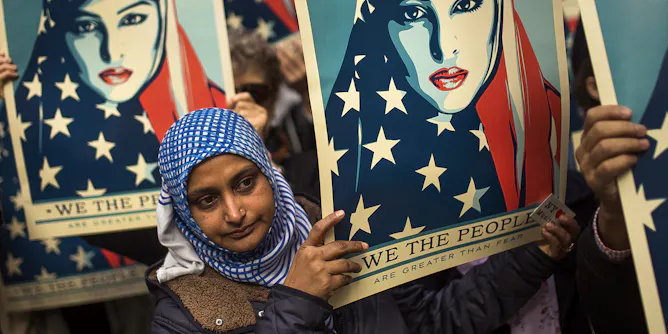
New survey data show that Muslim Americans are the most negatively perceived religious group in the US and are often victims of Islamophobic attacks. How are they responding? By getting organized.
Articles on Seven country ban
Displaying all articles
A professor of constitutional law gives a preview of what to expect when the travel ban cases reach the highest court this fall.

The revised ban allows entry to citizens of Iraq, but continues to block citizens of six other Muslim majority nations.
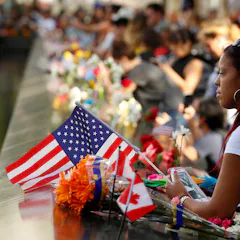
Data on violent incidents in the US reveal that our focus on Islamist extremism since 9/11 may be misguided.
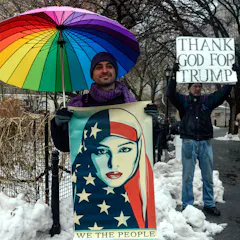
Data since 1950s show Americans have always been wary of refugees. A public opinion expert explains current attitudes toward Syrian refugees and what it means for building consensus on policy.
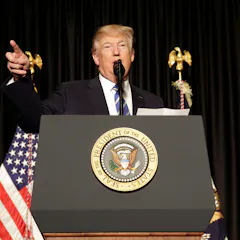
The Trump administration may do well to make a friend of the federal bureaucracy it’s so intent on gutting, according to an expert who studies the role of civil servants in government.
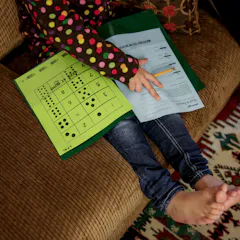
Ban or no ban, finding a Syrian refugee in the U.S. isn’t easy.
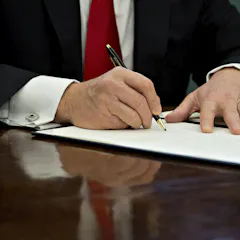
In a crisis, governments often act just to be seen to be doing something. The difference with what Trump’s doing is that there is no crisis.
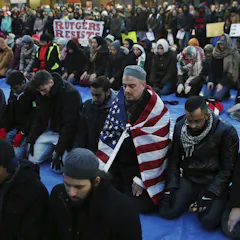
Our panel of experts examines whether immigration leads to more crime using data from across 200 metropolitan areas and 20 years of research.
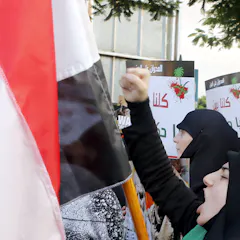
Gulf countries have a history of using migrants’ rights as a tool in their geopolitical strategy.
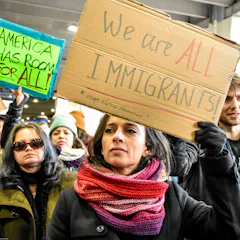
Trump has pointed the finger at Obama for creating the list of seven countries in his new travel ban.
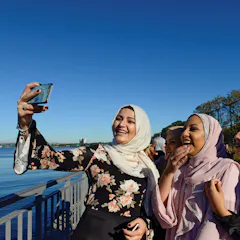
We must know people as they would like to be known, not as some dominant power has decided we shall know them.
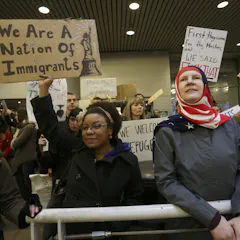
For decades, the US has used international education to support democracy and positive relations with countries. For most of the 1970s, Iran sent more students to America than any other country.
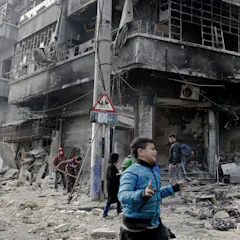
This roundup from our archives explains some of the major conflicts unfolding in the seven countries singled out by Trump’s executive order.
Top contributors
-

Professor of Criminology and Criminal Justice and Interim Dean of the School of Social Work, University of Alabama
-
Assistant Professor of Sociology and Political Science, Northeastern University
-
Dean and Professor of Higher and International Education, Executive Director of SUNY's Strategic, Academic, and Innovative Leadership (SAIL) Institute, and Co-Director of the Cross-Border Education Research Team, University at Albany, State University of New York
-
Professor of Anthropology, The Ohio State University
-
Reader in Constitutional Law and Human Rights, University of Birmingham
-
Professor of Constitutional Law, University of Montana
-
Associate Professor and Director of the Terrorism Research Center, University of Arkansas
-
Professor and Chair of Sociology, William & Mary
-
Professor of Criminal Justice, City University of New York
-
Visiting Lecturer, Georgia State University
-
Associate Professor and Department Chair of Sociology, University at Buffalo
-
Assistant Professor of Criminal Justice, Seattle University
-
Associate, German Institute for International and Security Affairs
-
Associate Professor of Practice, Center for Learning and Teaching, American University in Cairo
-
Professor of Criminal Justice, Michigan State University