

This year’s New South Wales selective school tests have featured police, tears and months of tutoring. What is the impact on students?
Articles on Selective schools
Displaying all articles

A few Ivy League schools say the tests enable them to find students of promise from low-income families. But not all sociologists agree.
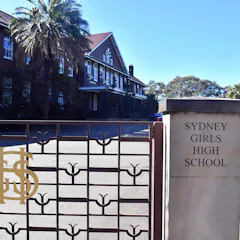
The NSW state government has just announced a major overhaul of its selective school program. This aim is to make it fairer for children from disadvantaged backgrounds to secure a coveted spot.

Some students in higher-ability classes said they felt more confident and motivated, but students in lower streams reported conforming to teachers’ low expectations for achievement.

Selective schools are known for producing some of the highest final-year academic results. But it’s unclear whether students would get the same outcomes anyway, regardless of school.
School zones are a logical way to manage school enrolments, and the policy helps to create schools that are community hubs, ones that reflect the local areas they serve.

New research shows that low-income students who qualify for the federal Pell Grant tend to go to non-selective colleges – and why that hurts their chances of graduation.

When the wall fell – education equality did too.
Over the last 150 years, NSW has responded to the demand for public secondary schooling differently from the rest of Australia.

Selective schools aim to give all gifted students, particularly those from disadvantaged backgrounds, opportunities they may not have had otherwise. But that’s not what’s actually happening.

Caregivers using privilege to buy their children’s way into, and through, education is not a Hollywood anomaly, nor the domain of elites. The middle class have been doing it in Australia for decades.

Selective schools have never operated in isolation from broader historical forces — including Australia’s connected histories of racial exclusion and immigration.
Analysis of MySchool data shows that selective public schools are selecting fewer students from the most disadvantaged backgrounds, thus worsening inequality in the school system.
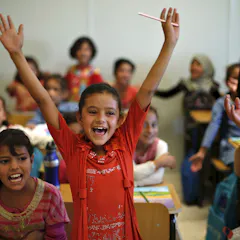
Immigrant pupils do not cause a decline in education standards, according to a new OECD report.

Inequality and its rise across many developed societies poses threats of alienation and marginalisation and has been a feature of numbers of recent publications. Now research led by Simon Burgess at the…

England’s 164 state grammar schools form a distinctive but controversial part of the nation’s education system. These schools are distinctive in terms of their high levels of performance – one consequence…
Top contributors
-

Associate professor in Social and Political Sciences, University of Technology Sydney
-
Associate Director of the Centre for Performance Evaluation and Resource Management and Honorary Visiting Professor, University of York
-
Professor of Education, University of Sydney
-
Associate Professor, University of Sydney
-
Doctoral Fellow, University of Pennsylvania, University of Pennsylvania
-
Professor of Sociology, Wake Forest University
-
Lecturer in Sociology of Education, University of Cambridge
-
Professor of Higher Education, University of Pennsylvania
-
Associate Head of School, School of Education, Charles Sturt University
-
Lecturer in Education, University of Exeter
-
Research Fellow, Mitchell Institute, Victoria University
-
Lecturer, School of Education, Edith Cowan University
-
Reader in Human Development and Education Policy, University of Strathclyde
-
Lecturer in Sociology, University of Cologne
-
Professor of political socialization, Department of Education, Practice and Society, UCL Institute of Education, UCL