
Secular people, including atheists, in Indonesia have to assume multiple identities: they step into a religious persona for the religious family and friends, and a real one for trusted peers.
Articles on Secularism
Displaying 61 - 80 of 84 articles
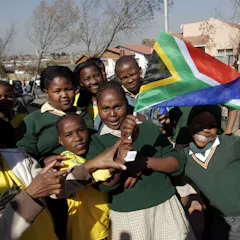
The judgment recognises that religion plays a large role in South African society. The right to follow a religion is embedded in the constitution. This means that South Africa isn’t a secular state.

Moral disputes are a product of independent minds with independent agendas. Thus, there is little reason to see ourselves as unbiased sources of righteousness.
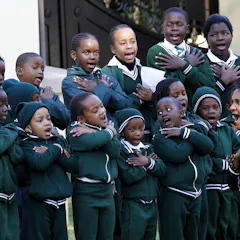
A civil society organisation, OGOD, wants South Africa’s public schools to stop calling themselves Christian and to outlaw their religious practices.
In recent years, Australians appear to have become both more willing to declare themselves religious, and more willing to say they have no religion.
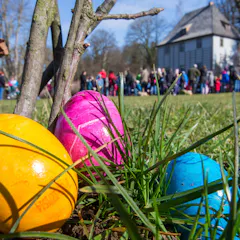
Once again, Nigel Farage and his conservative allies are rushing to the defence of ‘British values’. Needlessly, as it turns out.
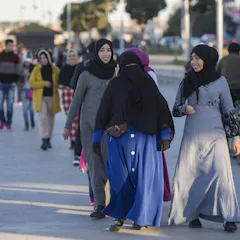
The recent burqa ban in Morocco highlights tensions between radical Salafists and a moderate Islamic government that has taken steps to further women’s rights.

Europe is at a crossroads in how it integrates religious minorities. But there are lessons to be learned beyond liberal secularism.
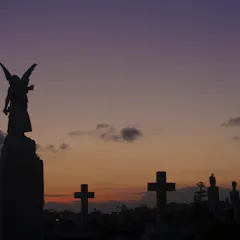
We are a secular nation, yet we acknowledge god in our Constitution. When it comes to religion, Australians tend to be pluralist and (relatively) tolerant.
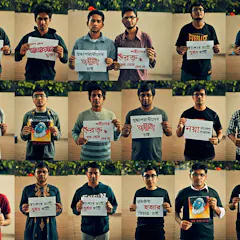
The deadly attack on Holey bakery in July 2016 and a recent spate of crimes against minorities show that Bangladesh’s commitment to secularism and pluralism are at stake.
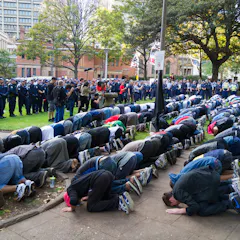
One Nation has built on the racism of its original anti-Asian platform by linking Australia’s secular society to its Christian origins and presenting Islam as incompatible with this way of life.
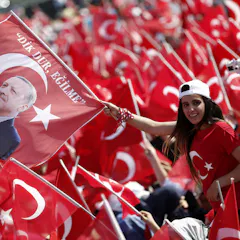
There is potential to transform the country into a pluralist and inclusive democracy.

With tensions already high, telling Muslim women not to dress a certain way at the beach will only make things worse.

Local collaborations between the fiercely secular state and religious groups have a long history.

An ‘us and them’ narrative pervades reporting about British Muslim attitudes, but there remains lack of understanding about what the separation of the church and state really means.
Complex issues require a greater degree of literacy.
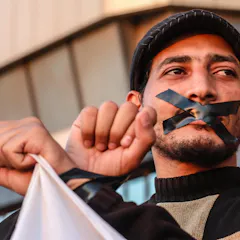
The rise of Islamic State and its declaration of the caliphate can be read as part of a wider story that has unfolded since the formation of modern nation states in the Muslim world.
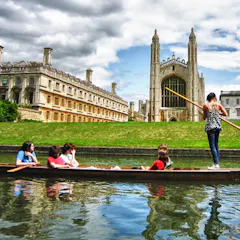
Secularism must be part of the debate about religion, not the end of the debate.

When he interred four anti-racist and secularist icons in Paris’s Panthéon, François Hollande perhaps hoped some of their legacy would rub off on him.
Australia has a form of secularism where religion is allowed in the public sphere. As long as religion remains one voice and one option among many, the nation will still be secular.
Top contributors
-

Professor of Sociology and Secular Studies, Pitzer College
-
Senior Lecturer, The University of Western Australia
-
Anthropologist & Assistant Professor, Department of Marketing Communication, Emerson College
-
PhD Candidate (Theology and Religious Studies), King's College London
-
Research Fellow, University of Antwerp (Belgium) and University of the Free State (South Africa), University of the Free State
-
Assistant Professor, Faculty of Education, Concordia University of Edmonton
-
Senior Lecturer in Politics, King's College London
-
Canada Excellence Research Chair in Migration and Integration, Toronto Metropolitan University
-
Professor of Political Science, Jawaharlal Nehru University
-
Professor of Sociology of Religion, Coventry University
-
Professor of International and Comparative Politics, London School of Economics and Political Science
-
Adjunct Research Fellow, Humanitarian and Development Research Initiative, Western Sydney University
-
Professor, Université Sidi Mohammed Ben Abdellah
-
Research Fellow, Middle East Studies, Deakin University
-
Reader in French Studies, University of Warwick