
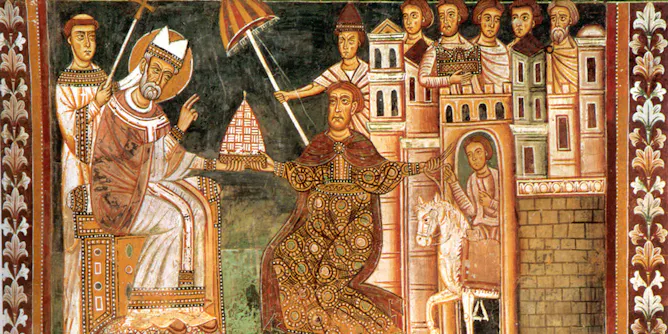
There has never been a singular Christian perspective on how religion, power and politics ought to relate to each other – not even in medieval ‘Christendom.’
Articles on Saint Augustine
Displaying all articles

Just war theory, a centuries-old field of ethics, deals with how and when to start conflicts. It can also guide decisions about how and when to end them.
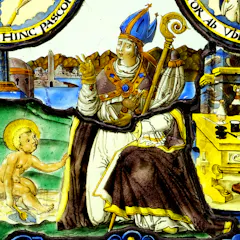
In choosing his motto and coat of arms, Leo references the Order of St. Augustine, to which he belongs. He uses the identifying symbol of Augustine, a heart pierced by an arrow.
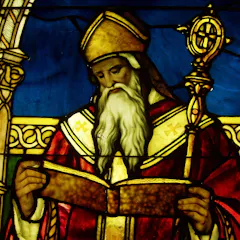
Augustine had divisive opinions – and didn’t mind sharing them. But his writing also has lessons about talking to people who don’t see eye to eye.
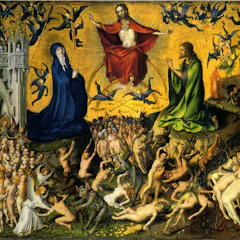
Easter celebrates the Christian belief that Jesus Christ rose from the dead. And for centuries, this resurrection was seen as a guarantee that our own bodies would do the same.
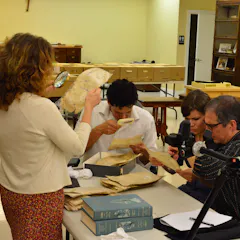
Catholic Church records document the earliest black history in the US, going back to the 1590s. These records tell the histories of Africans, free and enslaved, who were part of Spanish expeditions.

Meister Eckhart was a 14th-century Dominican friar, who gave sermons on the direct experience of God. His words are finding resonance among today’s spiritual seekers.

In early Christian texts, God gives birth to Israel and is described as a woman in labor and a mother comforting her children.
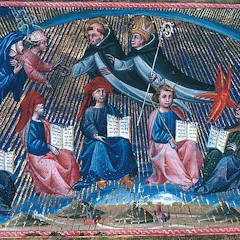
Different cultural groups respond with numerous, often conflicting, answers to questions about life after death. An expert explains the Christian idea of heaven.
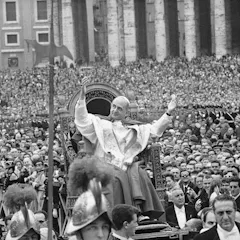
July marks 50 years of Pope Paul VI’s encyclical prohibiting contraceptive use. For many years prior to it, the church had not been so explicit on its stance. How did it become such a thorny issue?

Most religions have a fundamental belief that all human life belongs to God.
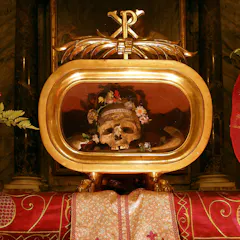
Valentine’s Day originated as a feast to celebrate the decapitation of a third-century Christian martyr, or perhaps two. It took a gruesome path to becoming a romantic holiday.

We disapprove of distraction and consider attention as being valuable. What if they were, in fact, morally charged words, referring to the same behavior? Here’s what early Christian monks thought.
Top contributors
-

Professor of Religious Studies, College of the Holy Cross
-
Associate Professor, University of California, Berkeley
-
Professor of History and Gender Studies, Boise State University
-
Dean’s Professor of Religion & Professor of History, USC Dornsife College of Letters, Arts and Sciences
-
Professor Emerita of Religious Studies, College of the Holy Cross
-
Visiting Assistant Professor, Albertus Magnus College
-
Professor of History, Vanderbilt University
-
Associate Professor, Political Science, Colgate University
-
Centennial Professor of History, Vanderbilt University
-
Emeritus Professor in the History of Religious Thought, The University of Queensland
-
Executive Director of the Program for Leadership and Character, Wake Forest University
-
Distinguished Professor of Humanities Emerita, College of the Holy Cross
-
Professor of History, University of North Carolina at Chapel Hill