

A century ago, Russian leaders staged mock trials on rape and abortion to educate citizens about new Soviet laws and values. Then, as now, victim-blaming and ‘he said, she said’ marred the verdict.
Articles on Russian revolution
Displaying 21 - 40 of 40 articles
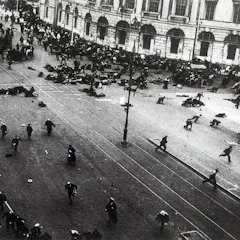
The physical and political space of cities can be shaped from above or below, but few have had more revolutionary changes, first under the tsars, then the communists, than St Petersburg.

Russian revolutionary Nadezhda Krupskaya, like other leading women in the new Stalin-led state, was marginalised. But in her case, because she was Lenin’s widow.
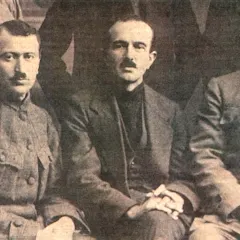
When push came to shove, Turkey’s young Communist Party didn’t get the unwavering support from Moscow it might have expected.
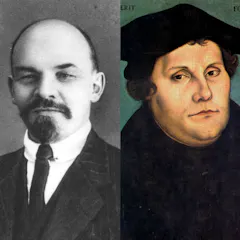
Two revolutions, 400 years apart, set in chain processes that claimed millions of lives.
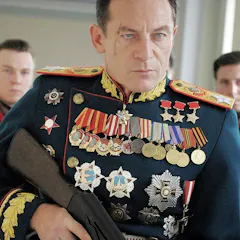
Armando Iannucci plays fast and loose with history in his farce The Death of Stalin. But its depiction of the cult of personality that can develop around political leaders is bitingly relevant.
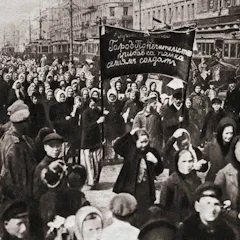
How a journalist from Nebraska chased the ‘Soviet dream’ all the way to Russia, only to be expelled on accusations of espionage.
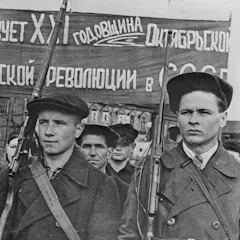
Several key figures travelled to Soviet Russia in its early days to witness the socialist state in action.

The certificate gave a new form of international protection to stateless Russian and Armenian refugees.
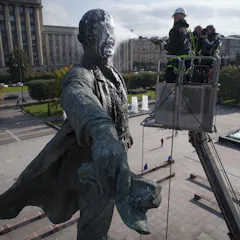
Because the Kremlin hopes to project strength and unity, history isn’t used as much to inform as it is to inspire, with events cherry-picked to fit within a fuzzy framework of ‘Russian greatness.’
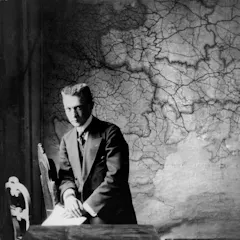
Stephen Kerensky on why he thinks his grandfather’s legacy has been so maligned.
CC BY-ND46.9 MB (download)
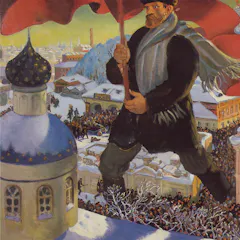
It’s been 100 years since revolution swept through Russia and we have dedicated The Anthill 18 to this seminal moment in world history.
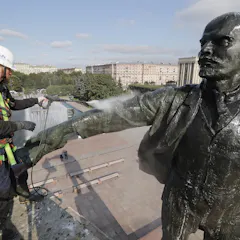
Four empires fell, a world was shaken, a new order arose – and the long 20th century really began.
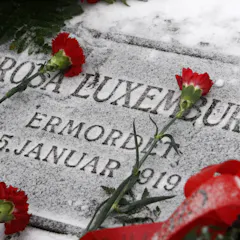
If Rosa Luxemburg and her comrades had been successful with their German revolution in 1919, history would most probably have taken a very different course, avoiding the rise of fascism in Europe.
Sergei Rachmaninoff fled the Russian revolution 100 years ago. Spending the remainder of his life in the US, he composed what is perhaps his greatest work in 1940, the Symphonic Dances.
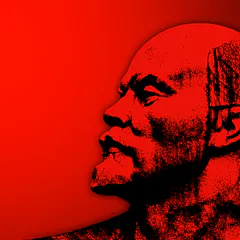
When women are remembered as part of the Communist or any other political tradition it’s often as an afterthought, or as part of the support system of the revolution.
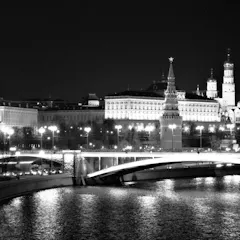
Radical political change is not something Putin wants to celebrate.
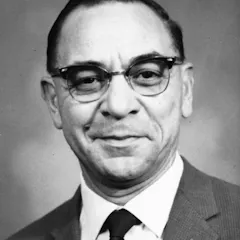
Alie Fataar exemplifies the type of teacher South Africa sorely requires today if its classrooms are to be used to develop a new generation of critical, engaged students.
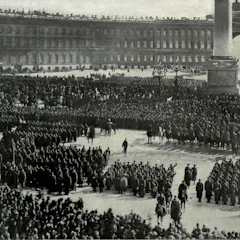
How is Vladimir Putin - for whom uprisings are anathema - treating this year’s centenary of the Russian revolution?
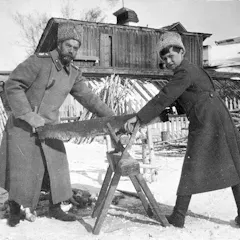
As the remains of the Tsar and Tsarina are exhumed, why their story continues to enthral.
Top contributors
-

Senior researcher, Centre for Social Change, University of Johannesburg
-
Professor of Modern (Russian) History, Lancaster University
-
Reader in International Journalism, City St George's, University of London
-
Hansen Professor in History, The University of Melbourne
-
Associate Professor in Modern European History, Anglia Ruskin University
-
Lecturer in Modern European History, Queen's University Belfast
-
Associate Professor of American Studies, The University of Texas at Austin
-
Senior Lecturer in Modern European (Russian) History, Cardiff University
-
Senior Lecturer in International Conflict, University of Kent
-
University of Cape Town
-
Professor of International Relations, Keele University
-
Senior Lecturer in Russian History, University of Exeter
-
Assistant researcher, University of Sydney
-
Professor of History, Goldsmiths, University of London
-
Adjunct Professor, School of Global Studies, Social Science and Planning, RMIT University