
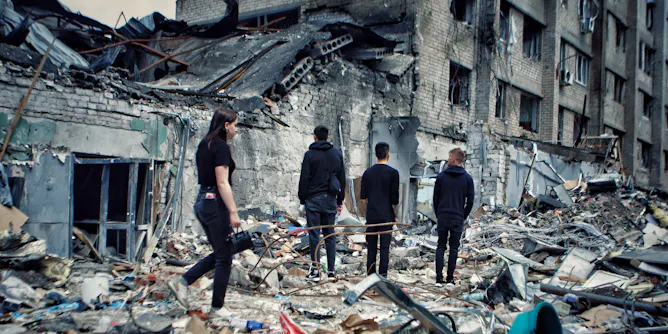
Calling something a ‘tragedy’ serves to minimize human responsibility for its causes, which can be convenient for the people who are causing the ‘tragedy.’
Articles on Russia-Ukraine
Displaying 141 - 160 of 366 articles
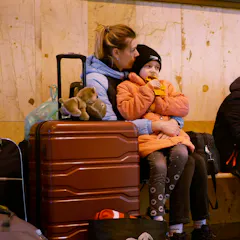
The things that people are able to bring with them often take on a heightened significance, reflective of both their old and new lives.
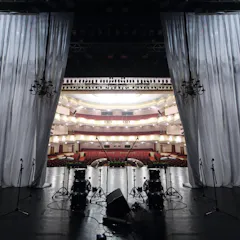
Theatre has now been fully instrumentalised by the Russian state in line with its new patriotic cultural policy.
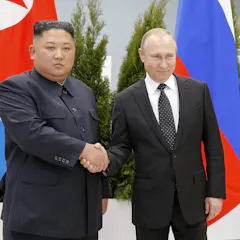
Russia is not only looking for much-needed ammunition, it is trying to counter Western influence wherever it can.
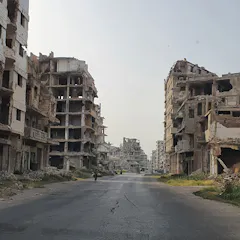
Wars are no longer fought in the trenches, they’re fought in the streets and civilians are on the frontline.

African must make its collective voice heard on Russian mercenaries in African conflicts.

Russia has long been a ‘paramilitarised’ regime, where the state can be challenged and undermined, but is not completely destroyed, by paramilitary or criminal groups.
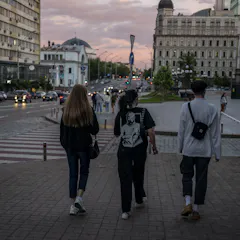
A scholar of Eastern Europe spent time talking with Ukrainians in Kyiv during a recent trip and observed that people are scarred from the war – but still determined to fight back against Russia.
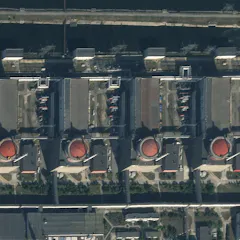
As long as nuclear power plants continue to operate, we are frighteningly vulnerable not only to severe accidents, but also to the weaponisation of these facilities.
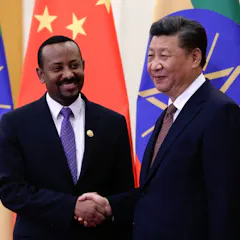
There is increased demand to join BRICS in the emerging world order, partly as a countervailing power to “the west”.
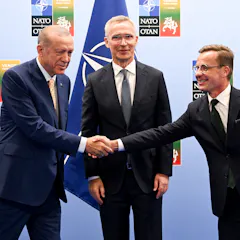
All Nordic states are now members of the military alliance, bolstering key border regions with Russia.
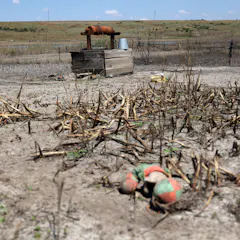
Breaching the Kakhovka Dam and reservoir had all the hallmarks of a scorched-earth strategy. Two expert observers of the Russia-Ukraine war explain this event’s destructive long-term effects.
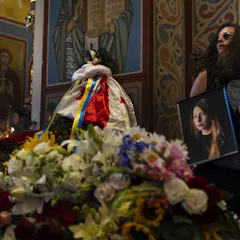
Victoria Amelina died 1 July, from injuries she received during a Russian rocket strike on Kramatorsk. Her work addressed questions of individual and collective responsibility.
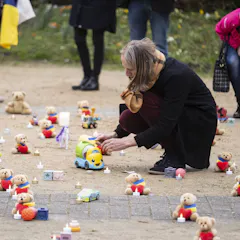
Russia’s systematic manipulation of children dates back long before the war in Ukraine, to when the Soviet Union first made false promises to its large population of orphans.
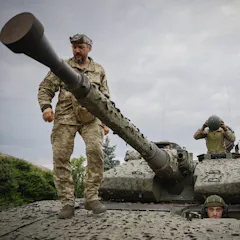
Euphoria in the West about the short-lived revolt by the Wagner Group hasn’t yet resulted in military gains for Ukraine.

Elizabeth Gilbert’s decision to cancel the publication of her latest novel needs to be understood in the context of a long history of symbolic protest.
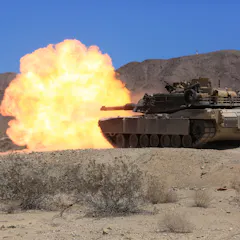
Depleted uranium munitions are bad news for enemy tanks, but are not nuclear weapons, and studies have shown that they pose low risks of radiation or chemical exposure.
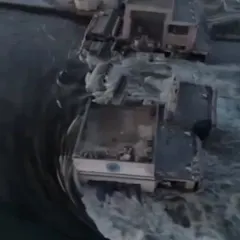
The ongoing war in Ukraine has forced the Russian military to reassess its ability to defend its territorial gains. The flooding of the Dnieper River gives the Russians a natural defense.
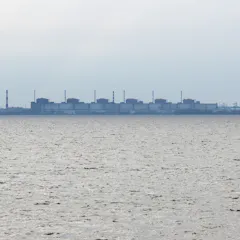
The International Atomic Energy Agency says the plant has enough water to last for several months. What happens afterward or if the remaining water is lost to the war could lead to a disaster.
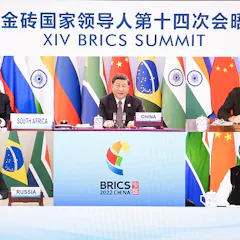
Geopolitics is forcing BRICS countries to balance respect for international law, self-determination, sovereignty and peaceful resolution of disputes with their friendly relations with Russia.
Top contributors
-

Associate Professor of Instruction in the School of Interdisciplinary Global Studies, University of South Florida
-
Professor of Military History, University of Calgary
-
Associate Professor (Adj), Griffith Asia Institute; and Fellow, Strategic and Defence Studies Centre, Australian National University
-
Professor of Law, University of Waikato
-
Professor of International Security, University of Birmingham
-
Founding Director, Modern War Institute, United States Military Academy West Point
-
Professor of History and Political Science, University of Michigan
-
Professor of Political Science, Penn State
-
Professor of Political Science, Boise State University
-
Associate Professor of Political and Social Sciences, Universitat Pompeu Fabra
-
Associate Professor and Edward and Emily McWhinney Professor in International Relations, Simon Fraser University
-
Distinguished Professor of Anthropology; Director, Center for the Study of Genocide and Human Rights, Rutgers University - Newark
-
Professor of International Security, Jean Monnet Professor of European Security, National University Odesa Law Academy
-
Professor of History, Australian Catholic University
-
Professor of Government and International Affairs, Virginia Tech