
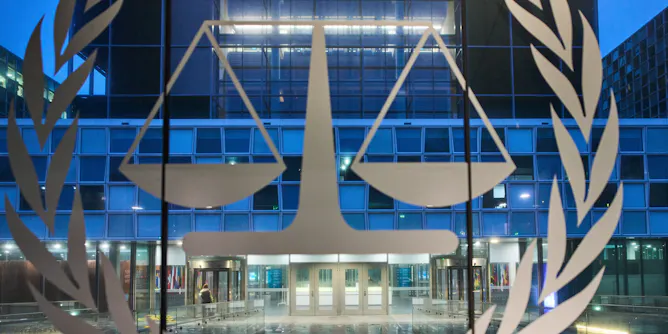
The US State Department calls the ICC an ‘intolerable threat to US sovereignty’. And it can significantly disrupt the court’s work.
Articles on Rules-based order
Displaying all articles

The FIFA decision to suspend Folarin Balogun’s red card is a compact case study in how power can shape the application of rules without ever rewriting them.

Mark Carney’s support for the U.S.-Israel war against Iran seems hypocritical, but it’s consistent with Canada’s longstanding support for a rules-based order that only applies when convenient.

Everyone who cares about climate action must now grapple with how climate politics can function in a new world of uncertainty.
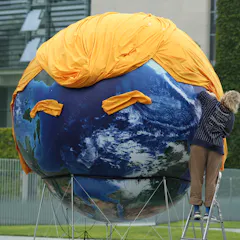
NZ is already successfully managing strong relationships with China and the US. By building on its Pacific influence, it can chart a carefully non-aligned course.

The old system of US-led multilateralism has ended. What will replace it remains unclear.
New Zealand foreign policy has long sought to balance various alliances with a commitment to the rules-based international order. It now faces its greatest test in decades.
The US is sending a message to its allies: he’s putting American interests first – not theirs. And this means dealing with Russia. So, how will Europe respond?
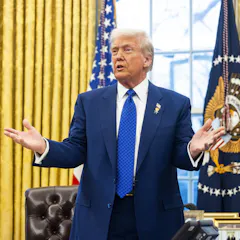
From Washington DC to the Cook Islands, New Zealand foreign policy is finding itself between a rock and a hard place. Diplomatic silence won’t be an option forever.
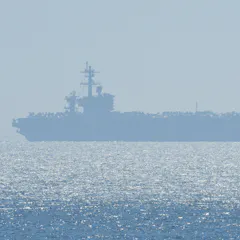
The protracted deliberations over joining AUKUS pillar two suggest New Zealand is hoping questions of security, trade and domestic opinion will be solved in time. That’s unlikely.
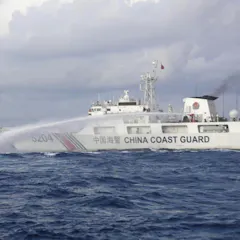
Understanding China’s perspectives on ocean governance – and where they come from – is vital to forging a path forward on disputes over contested waters.
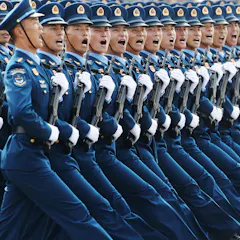
The Chinese Communist Party sees liberal values as a threat to its rule and needs many of them to be suppressed. Its approach? Co-opt, ignore and selectively exploit global institutions.
Top contributors
-

Professor of International Relations, University of Otago
-
Professor of Law, University of Waikato
-
Director, Lowy Institute's Public Opinion and Foreign Policy Program, and Fellow, National Security College’s Futures Council, Australian National University
-
Senior Lecturer in Politics and International Relations, University of the Sunshine Coast
-
Postdoctoral Fellow in China Studies, Australian National University
-
Senior Lecturer in International Relations, University of Waikato
-
Professor of Political Science and Co-Director of Environmental Governance Lab, University of Toronto
-
Professor, Strategic and Defence Studies Centre, Australian National University
-
Adjunct assistant professor, Carleton University; L’Université d’Ottawa/University of Ottawa
-
Professor, and Executive Director: Institute for International Trade, and Director of the Jean Monnet Centre of Trade and Environment, Adelaide University
-
Assistant Professor, Sport Management, Brock University
-
Senior Research Fellow, Institute for International Trade, Adelaide University
-
Senior politics lecturer, Australian National University