
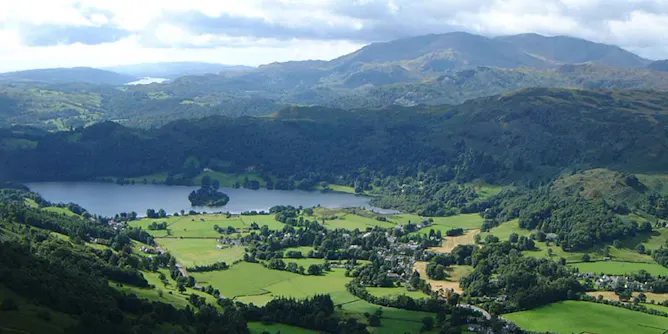
The idea that human activity threatens nature, and that it is important to protect wild places, dates back to the dawn of the Industrial Revolution.
Articles on Romantics
Displaying all articles

The possibilities of ‘more human than human’ artificial intelligence and the dangers of playing God and are not new – they’re the subjects of one of the world’s first science-fiction novels.

‘Dark Souls’ draws on the literary theme of the ‘last man’ that emerged from the work of French author Jean-Baptiste Cousin de Grainville and those inspired by him.
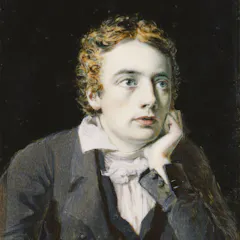
The doctor-turned-poet died 200 years ago.

Interviews with young hiloni, secular Israeli-Jews, shows many have complicated feelings about Palestinians.

That none of his collections were published in apartheid South Africa testifies to the police state’s censorship.

It’s not just a modern fad – plant-based diets have a long and colourful political past.
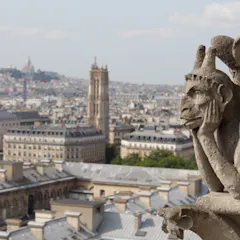
Looking nostalgically to the past, a young architect sought to revive the building as a bulwark to the uncertainty of the Industrial Revolution.

Through his art and his travels, 19th-century French Romantic painter Eugène Delacroix sought to understand the chaos of an era he called ‘the century of unbelievable things.’
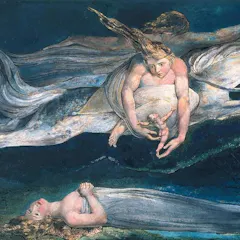
The Romantics - including poets William Blake and William Wordsworth - lived in the 18th century, but their passionate ideas about imagination and nature are still influential today.
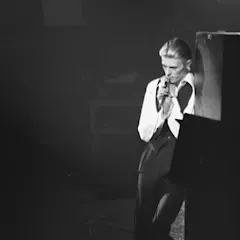
The singer had Romantic notions in common with the poet – as well as with William Blake, Mary Shelley, and John Keats.

A volcanic eruption in 1815 triggered a year without a summer – prompting a flowering of nature writing that is all too relevant today.

Better to be deceived in your motivation than not to give to charity at all, or so the 18th-century Romantics would have it.
Top contributors
-

Lecturer in Literature, Australian Catholic University
-
Lecturer in English, University of Exeter
-
Professor of Environmental Humanities, University of Leeds
-
Professor of Art History, Columbus State University
-
Lecturer in English, University of Exeter
-
Political Scientist, University of the Western Cape
-
Foundation Professor of Environmental Humanities, Arizona State University
-
Senior Lecturer in Conflict Studies and Co-Director, Centre for the Study of Divided Societies, King's College London
-
PhD Candidate of English, Dalhousie University
-
Lecturer in Politics and International Relations, University of Sydney
-
PhD Candidate in History, University of York
-
Professor of English Literature, Aberystwyth University
-
Assistant Professor of Art History, Binghamton University, State University of New York