
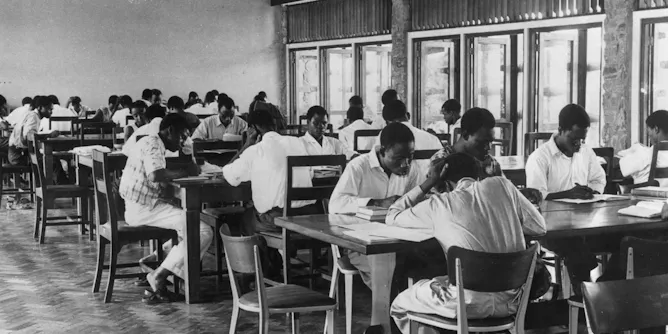
Societal challenges may be national or global in scale, but need local knowledge and local partnerships to solve at the local level.
Articles on Role of Universities
Displaying 1 - 20 of 26 articles
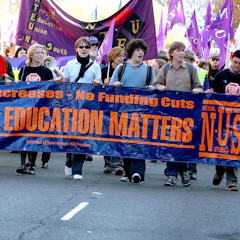
After 50 years as a university teacher, researcher and student, Raewyn Connell wrote a book, The Good University. Today, universities face a more toxic set of challenges than she has ever seen before.
In a volatile and uncertain world, academic freedom is the foundation of universities’ capacity to be responsive to all of the challenges we face today.

More than 90% of universities in the world have been built since 1949. The vast majority built large campuses outside city centres, and all for much the same reasons.

The way in which Australians think about leadership in the education sector has changed throughout the pandemic. It’s seen as a public good, with ethics and accountability gaining in importance.
A post-war funding crisis forced universities to take the initiative in making their case to the public. A new history explores how universities did it and the changes they brought about.

More innovative teaching and learning is needed to disrupt the current techno talk about the fourth industrial revolution.

Populist movements are on the rise. Their supporters distrust the establishment, elites, authority and official sources. The post-truth world is a post-expert world.

The decolonisation debate in South Africa’s universities raises critical issues about the relationship between power, knowledge and learning.
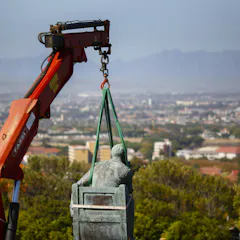
Calls for the decolonisation of countries, institutions, the mind and of knowledge are not new. In South Africa, these changes are crucial and long overdue. But they must be carefully thought through.
Competition can be a force for positive change. But in its current form, it’s setting universities back rather than moving them forward.

University graduates have the power to enable dignified lives for others in a society. What skills and qualities do they need for this to happen?
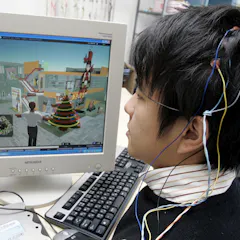
Educational technology is not science fiction. Lecturers need to ensure that they adapt to a future which has already arrived.

Indonesia should cultivate a culture of peer-review to support academics produce basic social research, essential in creating good policies in the world’s fourth most populous country.
When talking about the role that higher education can play in developing Africa, it’s important not to forget the continuing and crucial role of the continent’s flagship universities.
University protests in South Africa have showed that the countries students are hungry for real change. This desire can be harnessed to create a generation of “citizen scholars”.
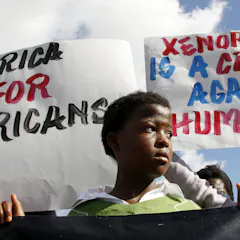
South African university students are as guilty of xenophobia as anyone else. Three approaches through teaching and research could make a huge difference.

Evidence-based solutions to our systemic dilemmas won’t be conjured out of thin air. Universities, governments and businesses all have to work together.
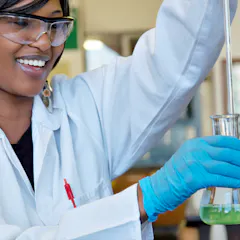
More and more African universities are realigning themselves to tackle their countries’ societal and economic problems.
Universities may be facing a crisis of relevance but a growing number of academics are tackling this issue head on.
Top contributors
-

Executive Director: Gauteng City-Region Observatory, University of the Witwatersrand
-
Professor of Higher Education, University of KwaZulu-Natal
-
Assistant Professor at the Faculty of Social and Political Sciences, Universitas Indonesia, Universitas Indonesia
-
Professor and Director, International Centre for Higher Education Management, School of Management, University of Bath
-
Professor of International Affairs and the Vice-Provost and Associate Vice-President (Academic), Carleton University
-
Professor and Dean of Humanities, University of the Witwatersrand
-
Vice Chancellor, University of Hertfordshire
-
Professor of Teaching and Learning, University of Johannesburg
-
Visiting Fellow, University of Sussex
-
Assistant Vice Provost for Digital Education and Innovation, University of Michigan
-
Professor of Sociology, Western Connecticut State University
-
Visiting Assistant Professor, Department of Design and Innovation Weatherhead School of Management, Case Western Reserve University
-
Professor in Cultural and Social Analysis, Western Sydney University
-
Emeritus Professor of Higher Education Research, The Open University
-
Executive director, Africa Institute of South Africa, Human Sciences Research Council