
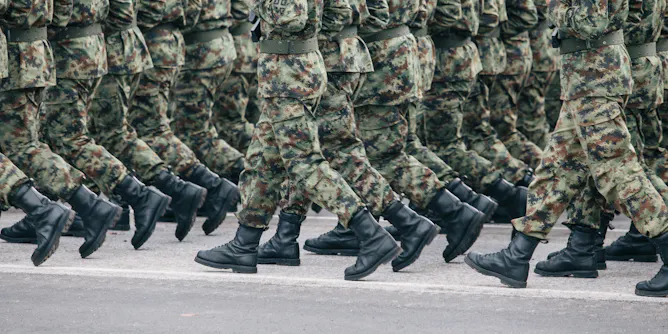
Popular discontent with the performance of a president should not be grounds for a military coup.
Articles on Religious minorities
Displaying 1 - 20 of 24 articles

Respectful relationships are key to students’ sense that their spiritual identity is welcome on campus. Schools can help foster those connections.
The violence that overwhelmed Sweida in July 2025 reflects challenges under the transitional government, but also age-old tensions over Druze autonomy.
Today, most of the Druze community is split between three countries: Lebanon, Syria and Israel.
The fall of the Assad regime marks a turning point in Syria’s history. But it also opens a ‘chapter fraught with peril’ for the country’s minorities, an expert on religious minorities writes.
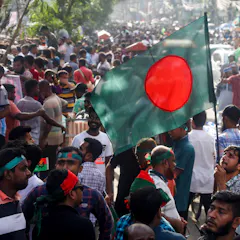
Bangladesh has avoided total collapse, but what step the country takes next remains to be seen.
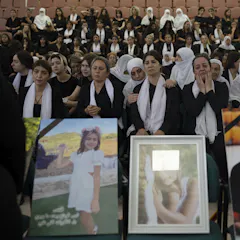
Druze are often held up as the best-integrated of Israel’s Arab minorities. But members of the faith who live in the Golan Heights have an especially complicated relationship with Israel.
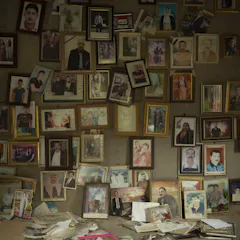
Yezidis are an example of what one scholar calls ‘liminal minorities’: faith communities whose religions’ legitimacy is denied by more powerful groups.

Archival documents show that in the 1980s, British education officials refused to engage with Muslim communities about funding faith-based schooling.
With the Taliban again in power in Afghanistan, minorities like the Hazara may have the most to lose.
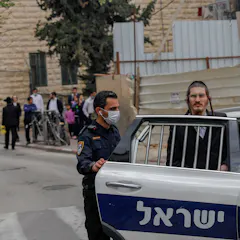
Persecution is central to Jewish collective memory. So when armed police entered ultra-Orthodox areas of Jerusalem to close synagogues due to COVID-19, some residents reacted with fear and suspicion.
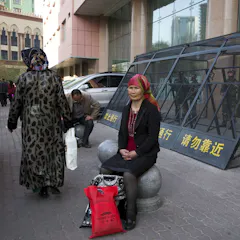
A scholar who spent 24 months in the Uighur-dominated regions of China recalls when the Chinese crackdown on Uighurs started in 2017 – people were picked up and never returned.
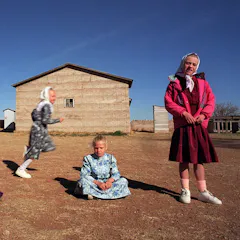
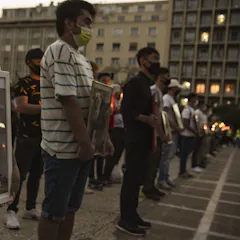
Chronic violence was dampening the holiday spirit in Chihuahua, Mexico. So the Mennonite community planned a ‘Parade of Lights’ and holiday party where neighbors could celebrate safely even at night.

Interviews with the Yazidi survivors of IS attacks that killed 3,100 people in 2014 reveal the emotional, cultural and spiritual scars of religious persecution.
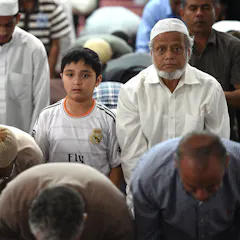
Many scholars agree it is impossible to have a clear, universal definition of religion. Given this ambiguity, passing new laws using a specific concept of religion can have serious repercussions.
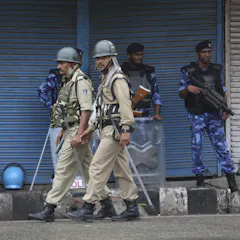
India’s Prime Minister Narendra Modi said he’s ushering in a ‘new India.’ But this new era is of ethnic majoritarianism and erases differences, dissent and the rights of minorities.
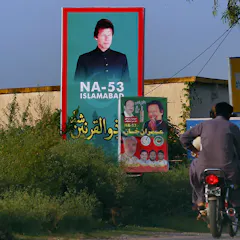
A religious minority of Pakistan, the Ahmadis have been boycotting elections for decades. Casting a vote would require that they denounce themselves as ‘non-Muslims.’

An expert on Islam and democracy examines the threat to the world’s largest Muslim majority country.
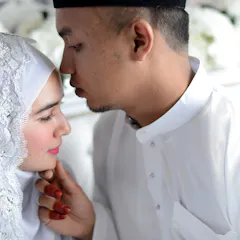
Although South Africa has taken steps to rid itself of the apartheid-era view of marriage as only heterosexual and monogamous, discrimination against religious marriages persist.
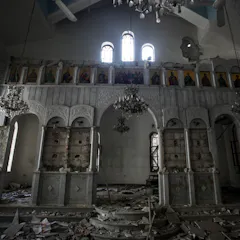
Prioritising groups of refugees, such as Syrian Christians, over others will only create further polarisation.
Top contributors
-

Professor and Director of the School of Politics and Global Studies, Arizona State University
-
Religion, Forced Migration, and Minority Rights Researcher, UCL
-
Associate Professor, University of Kansas
-
Professor of Religion, Wesleyan University
-
Professor of Spanish and Comparative Literature, University of South Carolina
-
Adjunct and Professor Emerita, Politics, University of Victoria
-
Assistant Professor of International Relations, Boston University
-
Professor, Department of Global Studies, University of North Carolina – Charlotte
-
Associate Professor of Religious Studies, Florida International University
-
Professor of Legal Pluralism, Religious Family Laws, and Human Rights, University of Cape Town
-
Professor, Soran University
-
Instructor, University of Colorado Boulder
-
Lecturer in Secondary History Education, University of Birmingham
-
Professor of Political Science, The University of Texas at Austin
-
Ph.D. Candidate, University of Central Florida