

Referees would need to be superhuman to be immune to the risk of bias – maybe that’s something all sports fans could agree on.
Articles on Referee
Displaying all articles

No amount of technology will ever remove the role of human judgement in refereeing the messy, complex world of football.

The two-referee system was introduced to improve the flow of the game. So where’s the evidence to say dropping one ref would be any better for the game?

Technology in sport is a constant source of controversy as players and officials struggle to keep up.
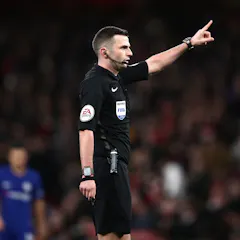
It’s no wonder so many referees are quitting their jobs.
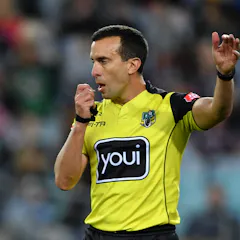
It’s not easy being a ref. Everyone’s your critic, and you have to run more than 8km each match to keep up with the play.

Serena Williams challenged decades of stereotypes when she revealed her anger after she disagreed with a U.S. Open umpire. A racist caricature and calls to boycott her playing by umpires followed.
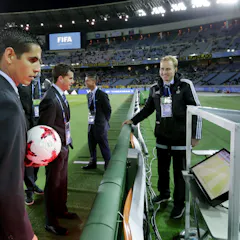
Video assistant referees have led to some controversial decisions at the World Cup. Rather than improving the quality of decision making by on-field refs, VAR could undermine it instead.
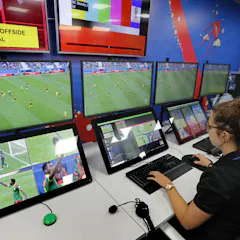
VAR is part of a wider trend of digitalisation that threatens to make football less natural and spontaneous.
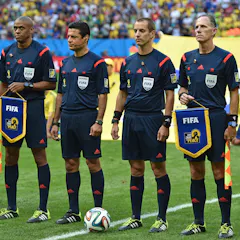
Video Assistant Referees at the World Cup finals in Russia might help African teams to do better than they have done so far.

Even back in the 90s, researchers were trying to alert hiring managers to the ineffectiveness of this as a tool, noting some major problems.

The data shows NRL referees get it right most of the time. So why do they still cop criticism?
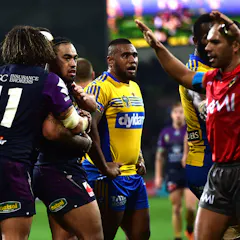
A centralised video ref for next year’s NRL season aims to reduce the dramas surrounding refereeing decisions in the game. But how often do the on-field refs get it wrong?
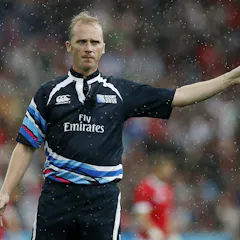
Controversial refereeing decisions dogged the later stages of the last couple of World Cups. Little wonder that teams are doing their homework on officials like never before.
Top contributors
-

Senior Lecturer - Faculty of Health (School Exercise & Nutrition Sciences), Queensland University of Technology
-
Associate Professor in Sport and Exercise Psychology, Edinburgh Napier University
-
Senior Lecturer, Graduate School of Business and Law, RMIT University
-
Lecturer, The University of Melbourne
-
Professor of Communications, Howard University
-
Senior Lecturer in Skill Acquisition and Motor Control, University of Technology Sydney
-
Digital Operations Project Manager (KTP Associate), Manchester Metropolitan University
-
Lecturer in Business Information Systems, The University of Queensland
-
Lecturer in Psychology, University of Huddersfield
-
Associate Professor, Centre for Business in Society, Coventry University
-
Senior Lecturer in Philosophy, University of Waikato
-
Senior Lecturer in Management, University of Sussex Business School, University of Sussex
-
Professor in Information Systems, The University of Queensland
-
PhD Candidate, Social Justice Education, Ontario Institute for Studies in Education, University of Toronto
-
Professor of Philosophy, University of Auckland, Waipapa Taumata Rau