
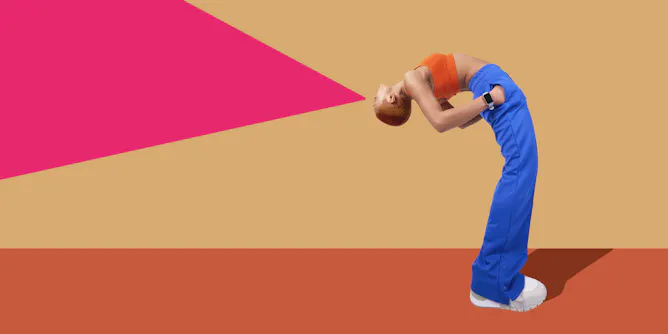
Queer theory tells us that people’s identities are complex. If all research subjects are approached this way, we can understand their responses more fully.
Articles on Queer theory
Displaying all articles

A new theory of desire bridges the gap between psychoanalysis and queer theory on a quest to make a science out of sexuality.

The many visual errors in the latest Pokémon games have led to an unexpected glitch-chasing frenzy.

Judith Butler’s work has been enormously influential and, at times, controversial, but it is grounded in a commitment to justice and equality.

For the sake of all employees, school communities and children, our school systems need to find a space in which LGBTQ+ educators might re-imagine their professional and political identities.

It is vital to make room for “queer” ideas about same-sex marriage.

The prefix ‘cis’, meaning ‘on this side of’ is commonly used in chemistry and geography. More recently, it has become a way of referring to a person’s gender identity.
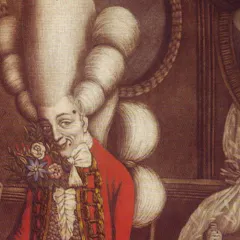
The flamboyant 18th-century ‘Macaronis’ were so called because they were said to prefer continental pasta to good old British roast beef.
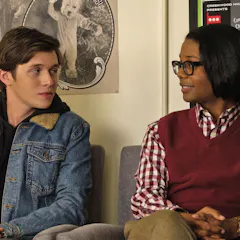
Given the progress gay rights have made over the last 40 years, we might believe we live in queer friendly North America and that homophobia is dead. But it’s not. It is just in disguise.
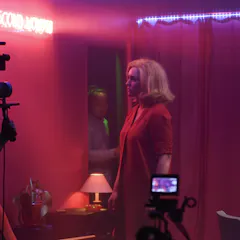
In The Second Woman, actor Nat Randall replays the same scene, across 24 hours, with 100 different men. Leaving the audience to join her on stage is a thought-provoking experience.

The distinctive visual style of Robert Mapplethorpe’s beautiful, oversized images seems now more classical than shocking. But he can still reveal the subconscious of an era we think we have outgrown.

The ‘privilege of unknowing’ allows onlookers to learn not to see, or otherwise sense, queer difference.

Tumblr might the weird cousin of the other social media platforms, but it also makes a safe space for queer kids to hang out and understand their sexuality.
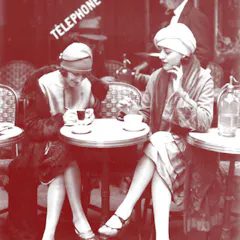
Unlike earlier lesbian and gay movements whose politics depended on visible identities, queer theory grew out of a critique of this – and perhaps that’s where Djuna Barnes sits.

In what ways do our sexual pleasures and fantasies inform the way we see the world?

Perhaps we can think of the love letter and other gestures of romantic love as forms or techniques that mediate the violence of time, dispossession and exclusion.

The narrative of monogamous coupledom exerts much force in our imaginative and social worlds - even queer films are dominated by love plots. But The Lobster, a savagely funny film about heterosexual love, is a welcome exception.

A new book documents how the gay rights movement has catered to a certain type of LGBT person: white, gay, male and middle-class.

Germaine Greer’s comments that “post-operative transgender men are not women” have provoked outcry from transgender activists. So let’s have a meaningful discussion about gender, sex and the complex relationship between the two.
Top contributors
-

Executive Dean of the Faculty of Arts and Social Sciences and Pro-Vice-Chancellor, University Schools, University of Sydney
-
Lecturer of Applied Linguistics, University of Johannesburg
-
Senior Lecturer in Media Studies, Swinburne University of Technology
-
King's College London
-
Senior Lecturer in African Literature, University of the Witwatersrand
-
Professor of Modern History, Keele University
-
Senior Lecturer in American Studies/Literature, Northumbria University, Newcastle
-
PhD student, Gender and Cultural Studies, University of Sydney
-
Associate Professor in Sociology, Monash University
-
Professor of Law, Keele University
-
Professor, Film Studies, University of Sydney
-
Associate Professor, History, Macquarie University
-
Postdoctoral research fellow, University of Technology Sydney
-
Lecturer of Women, Gender & Sexuality, University of Virginia
-
Lecturer in Gender Studies, Adelaide University